
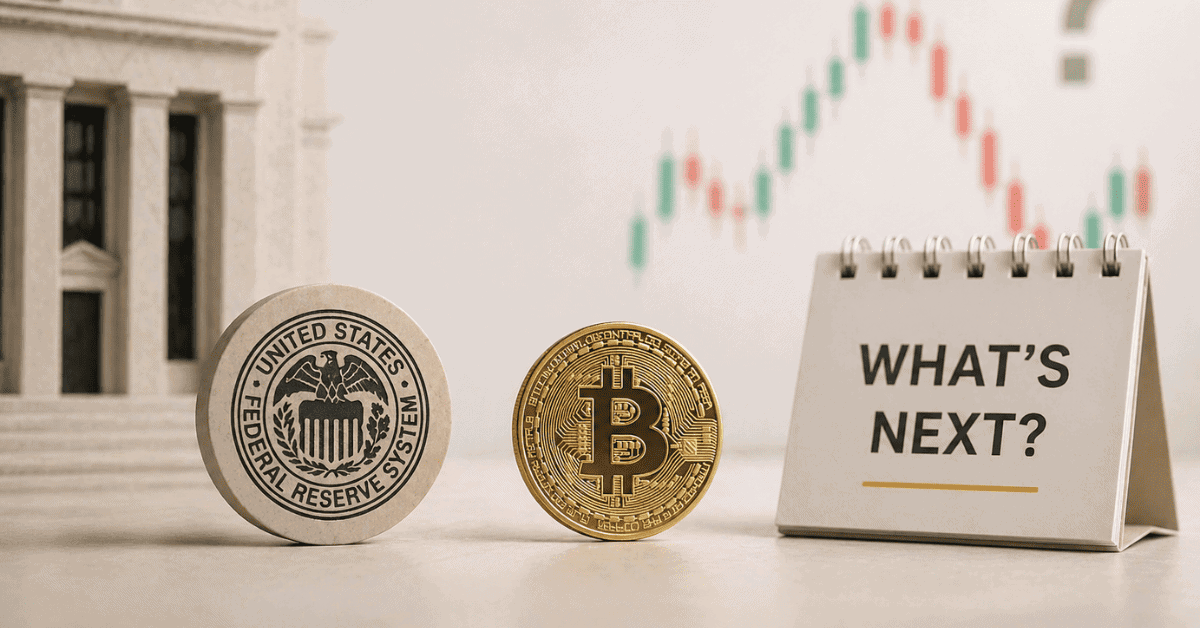
The Federal Reserve held interest rates steady at 3.5% to 3.75% in what is expected to be Jerome Powell’s final policy meeting as chair, giving markets the pause they expected but not the clarity they wanted.
The decision keeps rates unchanged for a third straight meeting, reflecting the Fed’s difficult position. Inflation remains above target, oil prices have been pressured by geopolitical tensions, and policymakers are split over how quickly the central bank should move toward cuts.


For crypto markets, the decision matters because Bitcoin, Ethereum and high-beta altcoins remain deeply sensitive to liquidity expectations. When traders believe rate cuts are coming, risk assets often benefit. When the Fed sounds cautious, crypto usually has to work harder for upside.
Why This Meeting Was Different
Powell Leaves the Chair Role With the Fed Still Divided
Powell’s final meeting as chair was not a quiet handoff. The vote exposed unusual disagreement inside the central bank, with several officials pushing back against the Fed’s policy language and one official reportedly favoring an immediate cut.
That matters because the next Fed chair will inherit a committee that is not moving in one clear direction. Some policymakers worry inflation could remain sticky, especially if energy prices stay high. Others worry that keeping rates elevated too long could weaken the labor market and slow growth.
For investors, that division makes the path of future rate cuts harder to predict. The Fed is no longer debating whether inflation has improved from its worst levels. It is debating whether it has improved enough to justify easier policy.
Powell Is Not Leaving the Fed Entirely
Powell also said he plans to remain on the Federal Reserve Board of Governors after his chair term ends. That is notable because his governor term runs beyond the end of his chairmanship.
His continued presence could matter for policy continuity, especially if the next chair takes a different tone. It also keeps Powell inside the institution during a politically sensitive period for central bank independence.
For markets, this creates an unusual transition. Powell may no longer lead the Fed, but he will still be part of the board as the central bank debates inflation, growth and future cuts.
What This Means for Bitcoin and Crypto
No Rate Cut Means No Easy Liquidity Signal Yet
Crypto traders were not expecting a rate cut at this meeting, so the hold itself was not a major surprise. The more important signal is that the Fed is still cautious.
Bitcoin often performs well when investors expect looser financial conditions. Lower rates can make cash and short-term bonds less attractive, pushing capital toward riskier assets. That can support Bitcoin ETFs, crypto equities, altcoins and DeFi activity.
But when rates stay higher for longer, liquidity remains tighter. Investors become more selective, leverage becomes more expensive, and speculative assets can struggle to maintain momentum.
The Fed’s hold keeps crypto in a waiting pattern. The market now needs softer inflation data, weaker labor data or a clearer dovish shift before traders can confidently price a new easing cycle.
Bitcoin May Hold Up Better Than Smaller Altcoins
Bitcoin may be better positioned than most crypto assets in this environment because it now has deeper institutional access through spot ETFs and stronger macro recognition.
Altcoins are usually more sensitive to liquidity. If the Fed stays cautious and real yields remain elevated, smaller tokens may find it harder to attract sustained inflows unless they have strong project-specific catalysts.
That does not mean altcoins cannot rally. It means broad market rallies may need more than speculation. Traders will likely favor tokens with real volume, strong narratives, exchange listings, protocol revenue or major upgrades.
The Next Fed Chair Will Shape Market Expectations
Kevin Warsh Is the Name Markets Are Watching
Kevin Warsh is widely expected to succeed Powell as Fed chair, and markets will closely watch how he frames inflation, growth and rate cuts.
A more hawkish tone could pressure risk assets by making investors believe cuts are further away. A more dovish tone could support crypto if traders believe liquidity will loosen faster than expected.
The challenge is that the next chair will not act alone. The Fed is a committee, and the recent split shows that internal disagreement is already significant. Even if the new chair wants a clearer direction, inflation data and committee politics will still matter.
Crypto Needs More Than a Chair Change
Some crypto traders may hope that a leadership transition automatically means easier policy. That is too simple.
The Fed’s next move will depend on inflation, oil prices, employment, credit conditions and financial stability. A new chair can influence tone, but data will still drive decisions.
For crypto, the better question is not who leads the Fed. It is whether the macro backdrop becomes friendly enough for capital to move back into risk assets at scale.
What Comes Next
The next major signals will come from inflation reports, jobs data and any comments from Powell’s successor. If inflation cools and the labor market softens, rate-cut expectations could return quickly.
Crypto investors should also watch Bitcoin ETF flows. If ETF demand remains strong despite a cautious Fed, that would suggest institutional buyers are looking through short-term rate uncertainty.
The second signal is stablecoin supply. Rising stablecoin liquidity often points to more capital available for crypto trading, while flat or falling supply can suggest weaker risk appetite.
The third signal is the dollar. A stronger dollar can pressure crypto by tightening global liquidity, while a weaker dollar often supports risk assets.
For now, Powell’s final meeting leaves crypto with no dramatic shock, but also no green light. The Fed is holding steady, inflation is still a concern, and the market is waiting for the next clear sign that liquidity is about to loosen.
Disclaimer: This article is for informational purposes only and does not constitute financial, investment, or legal advice. Always conduct your own research before making any investment decisions.