Pump.fun generated $12.48 million in protocol fees during the week of 17 to 23 August, up 16% on the previous week and its second consecutive best week since late January.
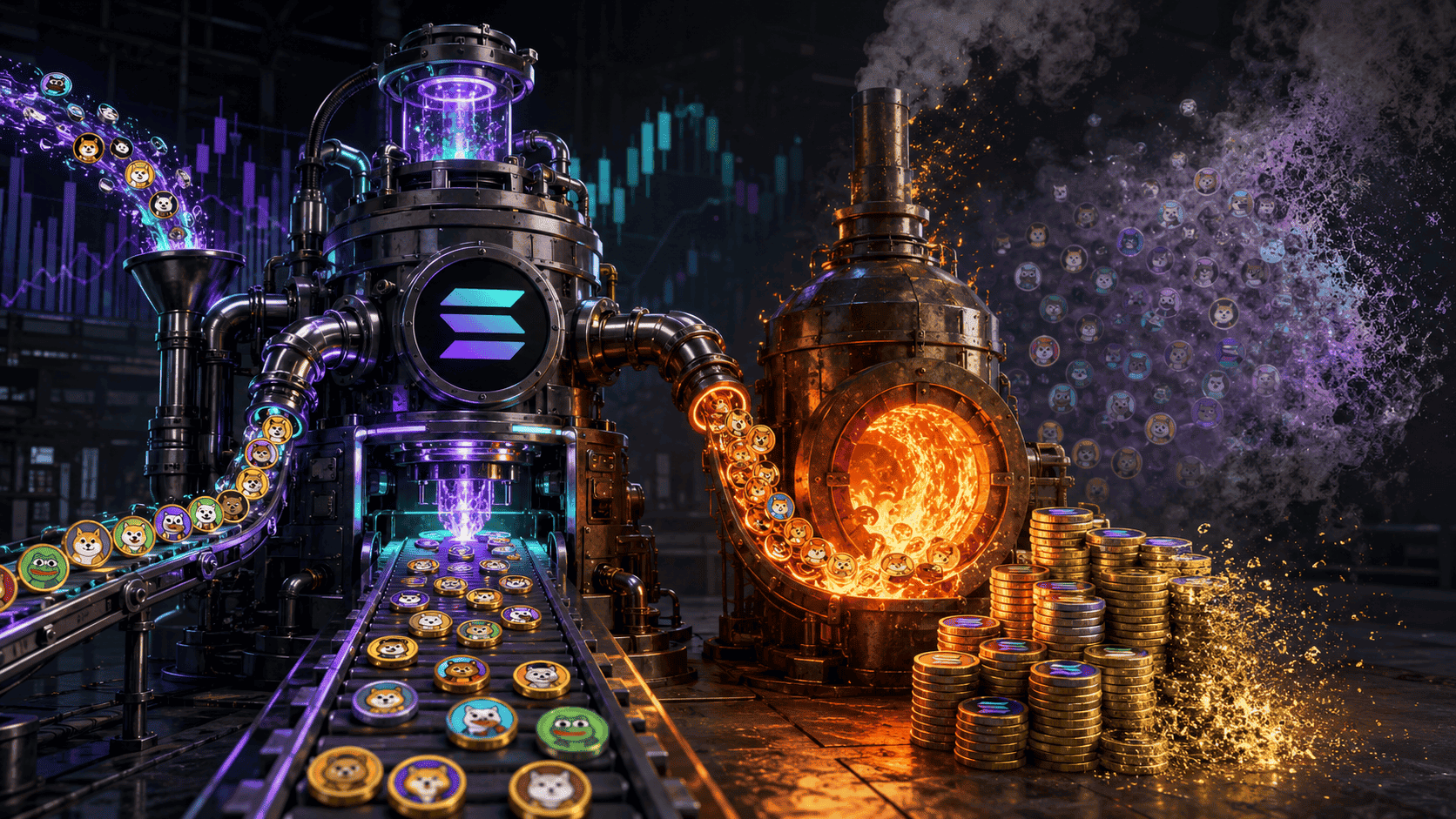
Half of that went straight back into the token. The platform bought and burned $6.13 million of PUMP over the same period, pushing cumulative burns past 16% of total supply.


PUMP has risen roughly 75% over seven days and 172% over 30, trading near $0.0049 with a circulating market capitalisation around $1.9 billion, ranking it 60th by that measure, according to DefiLlama. The token remains about 45% below its September 2025 all-time high of $0.0088.
The revenue figures arrive during the strongest week for crypto in three years, with bitcoin above $80,000 and speculative activity spilling into the smallest corners of the market.
The mechanism is contractual, not discretionary
What separates Pump.fun’s buyback from most token repurchase programmes is that it does not depend on anyone deciding to do it.
Half of every dollar of protocol revenue is routed into buying PUMP on the open market and burning it, enforced by smart contract. The platform is not choosing to support its token when conditions look favourable. The code executes regardless.
That structure emerged from a credibility problem. Traders could see buybacks happening earlier in the platform’s history but had no assurance about what would happen to the repurchased tokens. Co-founder Alon Cohen acknowledged concern over “the certainty of buybacks” and “what would happen to the bought-back tokens.” In April, Pump.fun burned roughly $370 million of previously repurchased PUMP, removing about 36% of circulating supply at the time, and committed to the automated split going forward.
The result is a token whose supply contracts in direct proportion to how much trading happens on the platform. More memecoin churn means more fees, which means more burning.
The revenue is larger than most people assume
Pump.fun is frequently dismissed as a casino that produces nothing. The financial data complicates that framing considerably.
Over the past 30 days the protocol generated $120.45 million in fees, of which $48.85 million was protocol revenue, according to DefiLlama. On a trailing-year basis that annualises to roughly $1.085 billion in fees and $462.15 million in revenue. The platform processed $20.96 billion in decentralised exchange volume across the same period.
Those numbers put Pump.fun ahead of Hyperliquid on a 30-day revenue basis, a comparison it first cleared in early August. Hyperliquid is generally regarded as among the highest-revenue protocols in the industry.
Revenue comes from three products rather than one: the bonding curve where tokens launch, PumpSwap where they trade afterwards, and the Terminal trading interface. The platform added social trading features on 7 August including zero-fee trading, token callouts to followers, and cross-chain trading via USDC.
Memecoins are running hard again
The fee spike reflects genuine activity rather than an accounting quirk, and the token performance around it has been extreme.
On Robinhood Chain, Cashcat gained 40% to reach a $200 million market capitalisation, with PONS up 32%, AI up 25% and Juggernaut up 50%. DTF debuted at $8 million. On Solana, Cate rose 70%, Jimothy 80%, and both Tiny and CMNS posted twelve-fold gains. Ansem held steady at $255 million.
This is the market breadth that typically appears late in a strong run, when capital has already flowed through majors and starts hunting further out the risk curve. Bitcoin’s 25% weekly gain, driven initially by a Treasury bond buyback announcement and a $1.74 billion short liquidation cascade, has now reached the point where twelve-fold moves in unnamed animal tokens are routine.
What the fee number does not tell you
There is a persistent conflation in coverage of Pump.fun that is worth separating out, because it affects how the numbers should be read.
Protocol revenue is a measure of activity on the platform. It confirms that people are trading. It says nothing about what PUMP should be worth, and nothing at all about the tokens being launched.
The evidence on those tokens is unflattering. Data has shown nearly 70% of Pump.fun memecoins cease trading on their launch day. Individual outcomes depend on factors entirely outside the platform: JIMOTHY, a token built around a viral Seattle raccoon, rose roughly 331% to a $16 million valuation after Elon Musk posted a raccoon video, a price mechanism that is a derivative on attention rather than anything resembling an asset.
Supply dynamics also continue independent of the burns. Monthly distributions to the team and early investors run for years yet. A 6.875 billion PUMP unlock on 12 August, split between roughly 4.17 billion to the team and 2.71 billion to investors, was absorbed without much market reaction, but one well-handled unlock is not evidence the next ones will follow.
There is a live legal matter as well. Aguilar v. Baton Corporation Ltd., filed in the Southern District of New York, alleges securities violations and other misconduct involving tokens sold through the platform. Those remain allegations rather than findings of liability.
The reflexivity problem
The buyback structure creates a loop that works in both directions, and the current data captures only one half of it.
Rising trading volume generates fees, which fund burns, which reduce supply, which supports the price, which draws more traders and more volume. Every input in that chain is currently pointing the same way.
The chain runs in reverse just as efficiently. Memecoin activity is the most cyclical demand in crypto, and it collapses faster than almost anything else when sentiment turns. Fees fall, burns shrink, and the deflationary support disappears at precisely the moment holders want it most.
PUMP’s fundamentals are unusually legible for a token in this category. Roughly $462 million in annualised revenue and a contractual commitment to burn half of it is a real economic structure, not a narrative. Whether that structure holds when bitcoin stops rising 25% a week is the part the current numbers cannot answer.
FAQ
How much did Pump.fun earn and burn?
$12.48 million in protocol fees for 17-23 August, up 16% week on week, with $6.13 million spent buying and burning PUMP.
How much supply has been destroyed?
Cumulative burns have passed 16% of total supply under the current mechanism, following a separate burn in April that removed roughly 36% of circulating supply at the time.
Is the buyback guaranteed?
Half of all protocol revenue is routed to buybacks and burns by smart contract, so it executes automatically rather than at the team’s discretion.
Disclaimer: This article is for informational purposes only and does not constitute financial advice. Cryptocurrency investments carry significant risk. Always conduct your own research before making any investment decisions.