Steak ’n Shake’s Bitcoin experiment is turning into one of the more unusual comeback stories in American fast food.
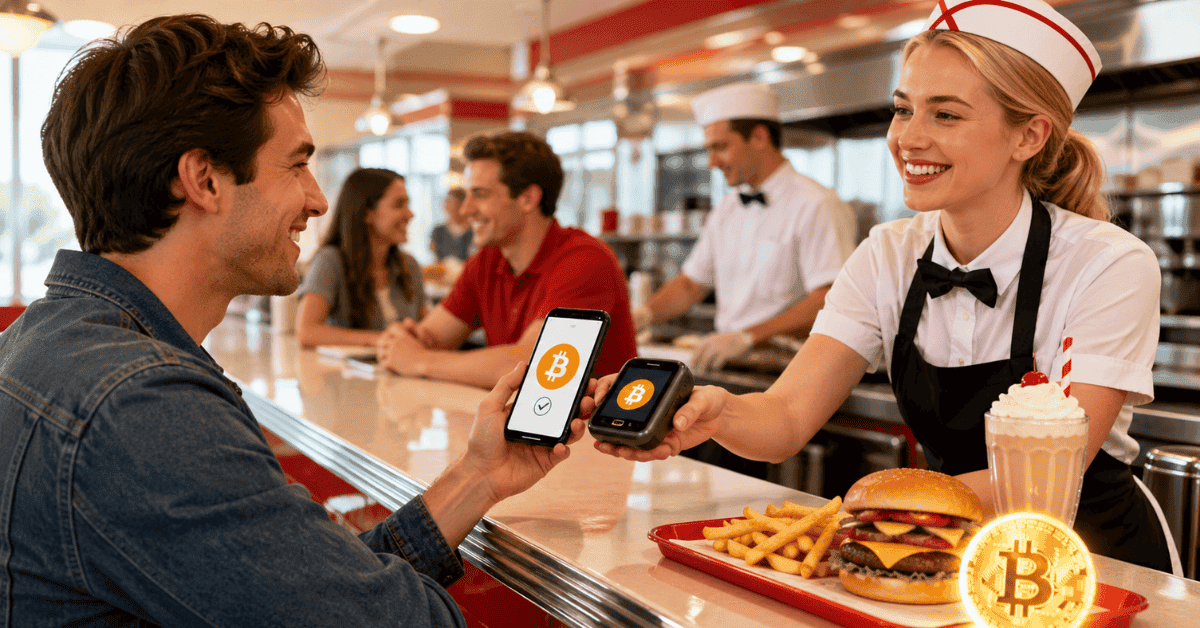
The burger chain began accepting Bitcoin payments across its U.S. restaurants on May 16, 2025, using crypto payment infrastructure from Speed. According to Speed’s case study, the rollout covered 393 U.S. locations and allowed customers to pay with Bitcoin across kiosks, drive-throughs and mobile ordering.


For many companies, accepting crypto is mostly a headline grab. Steak ’n Shake is trying to make it part of the business model. The company has tied Bitcoin payments to lower transaction costs, community-driven marketing, employee rewards and a broader brand refresh aimed at younger, digitally native customers.
The Payment Case Is Simple: Lower Fees
The clearest business argument is cost.
Credit card fees are a persistent expense for restaurants, especially in a business where margins can already be thin. Steak ’n Shake executives say Bitcoin payments have reduced processing costs by around 50% compared with credit cards. Speed’s case study cites COO Dan Edwards saying the company saw a 50% reduction in processing fees after adopting Bitcoin.
That does not mean Bitcoin is ready to replace cards across the restaurant industry overnight. Customers still need wallets, price volatility remains a concern and tax treatment can make spending Bitcoin awkward for U.S. users. But for merchants, the appeal is obvious. If a payment method can move money quickly while cutting fees, it deserves attention.
For Steak ’n Shake, the point is not just that some customers can buy burgers with Bitcoin. It is that Bitcoin gives the company a payments story that connects directly to costs, loyalty and brand identity.
Bitcoin Has Also Become Part of the Brand
Steak ’n Shake has leaned into Bitcoin in a way most mainstream restaurant chains have not.
The company has promoted Bitcoin-themed menu items, appeared at Bitcoin events and framed its adoption as part of a wider transformation. PYMNTS reported that Steak ’n Shake said its same-store sales had “risen dramatically” since it began accepting Bitcoin, while noting that the company places Bitcoin payments into a reserve fund used for Bitcoin bonus pay for workers.
Business Insider also reported that Steak ’n Shake has been using Bitcoin as part of a broader cultural and marketing pivot, alongside changes such as beef tallow fries, self-service operations and a more targeted appeal to specific customer communities. The report said same-store sales rose 10.2% in 2025, according to a Biglari Holdings filing, while Steak ’n Shake said sales were up 15% year to date at the start of March 2026.
That distinction matters. Bitcoin may not be the only reason Steak ’n Shake is seeing improvement. The chain has also changed operations, menu positioning and marketing. But Bitcoin gives the comeback a sharper identity, one that attracts attention far beyond the usual fast-food audience.
A Bitcoin Reserve and Worker Bonuses Add Another Layer
Steak ’n Shake’s Bitcoin push has moved beyond checkout payments.
PYMNTS reported that Bitcoin payments for burgers are being placed into a reserve fund that supports Bitcoin bonus pay for workers. The same report said the chain had added $10 million worth of Bitcoin to its corporate treasury earlier in 2026, according to CoinDesk’s reporting.
The employee angle has drawn both praise and criticism. The company has said hourly employees can earn a 21-cent-per-hour Bitcoin bonus, a figure that clearly references Bitcoin’s 21 million coin supply cap. Supporters see it as a creative way to share Bitcoin upside with workers. Critics argue the dollar amount is small and may function more as marketing than meaningful compensation.
Still, the strategy is notable because it creates a closed-loop narrative. Customers pay in Bitcoin, the company holds Bitcoin, and some of that Bitcoin-linked value is used to reward employees. That is the kind of flywheel Bitcoin advocates have long imagined, even if the real-world scale remains modest.
Why This Matters for Everyday Bitcoin Adoption
Bitcoin is often discussed as digital gold, an inflation hedge or an institutional treasury asset. Steak ’n Shake is testing a simpler idea: can Bitcoin work at the point of sale for a mainstream consumer brand?
The answer is still developing. The Lightning Network can make payments faster and cheaper, but adoption depends on whether customers actually want to spend Bitcoin instead of holding it. There is also the practical issue that in the United States, spending Bitcoin can create tax reporting obligations.
Even so, Steak ’n Shake’s experiment is important because it puts Bitcoin inside a familiar retail setting. A customer does not need to understand mining difficulty, custody models or exchange-traded funds to see the concept. They can buy a burger, scan a QR code and watch the payment settle.
That makes the story bigger than one restaurant chain. If Steak ’n Shake can keep lowering costs, attracting loyal Bitcoin users and turning crypto payments into measurable business momentum, other brands may study the model closely. The real test will be whether Bitcoin remains useful when the novelty fades.
For now, Steak ’n Shake has done something rare. It has turned Bitcoin from a payment option into a brand strategy, and it appears to be using that strategy to help fuel a wider comeback.
Disclaimer: This article is for informational purposes only and does not constitute financial, investment, or legal advice. Always conduct your own research before making any investment decisions.