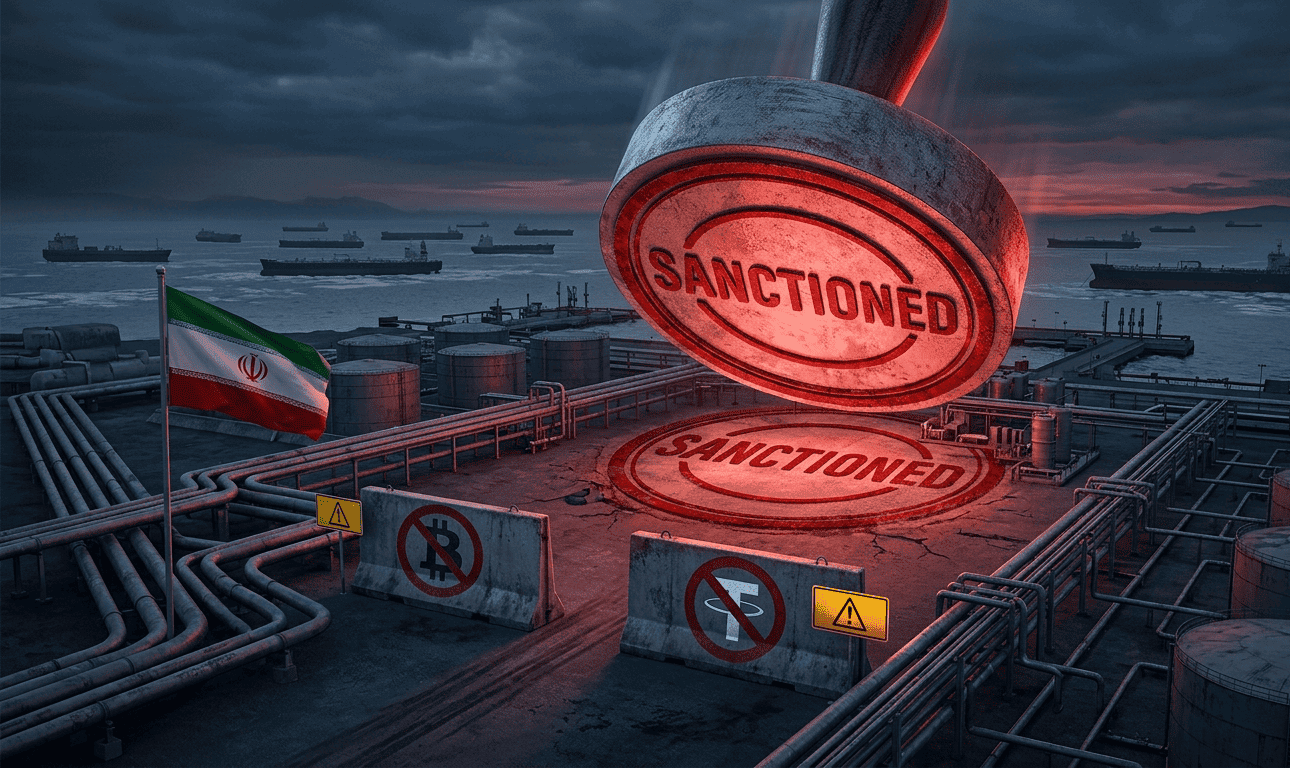
The US just crossed a line it has been hinting at for months. For the first time, Washington sanctioned a Chinese company for helping Iran sell oil. And it warned every shipping company on the planet that paying Iran’s crypto tolls at the Strait of Hormuz is now a sanctionable offence.
On May 1, the Treasury Department blacklisted Qingdao Haiye Oil Terminal Co., a Chinese terminal that imported “tens of millions of barrels” of Iranian crude oil and helped Iran generate billions of dollars in revenue. The same day, Treasury sanctioned three Iranian currency exchanges that converted those oil payments from Chinese yuan into usable currencies.


This is not routine sanctions enforcement. Hitting a Chinese oil terminal two weeks before Trump is scheduled to visit Beijing is a deliberate escalation. It sends a message to China that Washington will punish anyone helping Iran fund the war, even if it complicates the most important diplomatic relationship on the planet.
What Did the US Actually Do?
Three separate actions in one day.
First, the State Department sanctioned Qingdao Haiye Oil Terminal in China’s Shandong province. The company handles Iranian crude oil imports. China is the biggest buyer of Iranian oil, and Qingdao is one of the ports where that oil arrives. Under the new sanctions, any transaction involving the terminal that touches the US financial system is now illegal. Any company, bank, or shipping firm that deals with Qingdao Haiye risks secondary sanctions.
Second, the Treasury sanctioned three Iranian foreign currency exchange houses. These are the middlemen that convert Iran’s oil revenue into spendable money. Iran sells oil to China in yuan. The exchange houses convert that yuan into other currencies so Iran can buy imports, pay salaries, and fund its military. Cutting off the exchange houses disrupts the final step in Iran’s oil money pipeline.
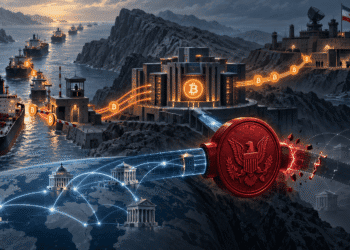
Third, OFAC issued a formal alert warning companies and individuals about the sanctions risks of paying Iran for passage through the Strait of Hormuz. This directly targets the crypto toll system we have been covering all month. Iran charges ships up to $2 million in Bitcoin or USDT for safe transit. OFAC is now telling every shipping company that making those payments, even under duress, could trigger US sanctions.
Why Is Hitting China a Big Deal?
Because until now, the US has been careful to sanction Iranian entities while leaving Chinese companies mostly alone. That was a political choice. The US needs China on a dozen different issues: trade, Taiwan, climate, North Korea. Sanctioning Chinese firms complicates all of those conversations.
Qingdao Haiye is the test case. It is a single terminal, not a major state-owned enterprise. The US is not sanctioning Sinopec or CNOOC, China’s oil giants. It is sanctioning a smaller private company to send a signal without triggering a full confrontation.
But the signal is loud. The State Department said it was targeting the terminal because it helped Iran generate “billions of dollars” in revenue. That language suggests Washington has evidence of massive volumes flowing through this single facility. If Qingdao Haiye is handling tens of millions of barrels, there are other Chinese terminals doing the same. This sanction could be the first of many.
The timing matters. Trump visits China in roughly two weeks. Sanctioning a Chinese company before the trip gives the US leverage at the negotiating table. It says: we know what you are doing, we can sanction more, and we will unless you reduce your Iranian oil purchases.
What Does This Mean for Crypto?
The OFAC alert about Hormuz toll payments is the most direct connection to crypto. We have been covering Iran’s Bitcoin toll system all month. Ships pay up to $2 million in BTC or USDT for safe passage. Scammers impersonate Iranian officials and demand fake payments. The whole thing is a mess of real tolls, fake tolls, and sanctions risks that nobody can tell apart.
OFAC’s alert makes the legal situation crystal clear. Paying Iran for Hormuz transit, whether in dollars, yuan, Bitcoin, or USDT, is a sanctionable offence. It does not matter if the payment was made under threats. It does not matter if the ship had no other option. The act of sending money to an Iranian-controlled wallet triggers potential sanctions liability.
That puts shipping companies in an impossible position. They cannot pass through without paying. They cannot pay without risking sanctions. And they cannot tell whether the wallet they are paying belongs to the Iranian government or a scammer. The only safe option is to stay out of the Strait entirely, which is exactly what the US blockade is designed to enforce.
For stablecoin issuers, the OFAC alert reinforces what we saw with the $344 million Tether freeze two weeks ago. Washington expects stablecoin companies to freeze Iranian-linked wallets on demand. Any issuer that does not cooperate risks being cut off from the US financial system.
How Is Iran Responding?
By digging in. Iran has not reopened the Strait. The ceasefire holds but peace talks are stalled. Iran sent a peace proposal to Washington but demanded the naval blockade be lifted before any other discussions. The US has not responded publicly.
Meanwhile, Iran’s economy is cracking. Treasury Secretary Bessent told Fox Business that Iran is in an “economic crisis.” The rial has lost 60% to 70% of its value since the war began. At least one major Iranian bank has collapsed. And crypto seizures from Iranian wallets now total nearly $500 million under Operation Economic Fury.
The sanctions are working in the sense that they are causing pain. Whether that pain translates into a peace deal depends on how much more Iran can absorb before the cost of continuing the war exceeds the cost of concessions.
What Comes Next?
Watch Trump’s China visit. If the US follows the Qingdao Haiye sanction with more Chinese targets, it signals a full decoupling of Chinese-Iranian oil trade. If the visit produces a quiet agreement where China reduces purchases without public sanctions, the pressure shifts back to Iran’s domestic economy.
For crypto, the OFAC alert means the regulatory environment around Hormuz-related payments just got sharply more hostile. Any exchange, wallet provider, or stablecoin issuer that processes a payment linked to Iranian transit fees is now on notice. The era of ambiguity is over.