The U.S. Department of Justice has charged two men in connection with an alleged $13 million cryptocurrency fraud scheme built around fake customer support, stolen wallet access, and money laundering.
Federal prosecutors in the Southern District of Florida charged Trenton Richard David Johnston, 19, of Canada, and Brandon Michael Tardibone, 28, of Miami. Johnston is accused of operating a sophisticated fraud scheme while living in the Miami area, while Tardibone is accused of money laundering and harboring Johnston while he was unlawfully present in the United States.


The case is a reminder that many large crypto thefts do not begin with hacked smart contracts. They begin with social engineering, fake support messages, stolen account access, and users being tricked into trusting the wrong person at the wrong time.
Fake Support Became the Entry Point
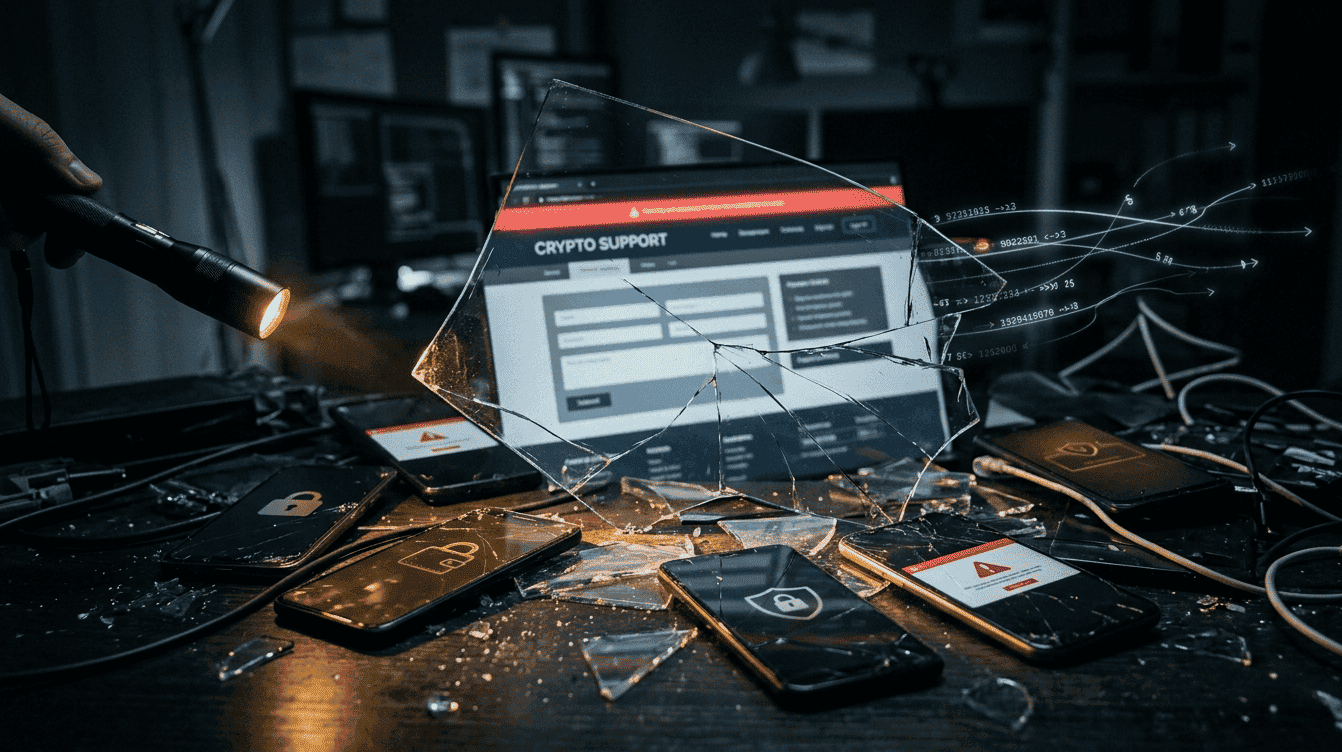
Prosecutors say Johnston and other co-conspirators pretended to be support representatives from a popular search engine and crypto-related companies. The goal was to gain unauthorized access to victims’ digital accounts and crypto wallets. Once access was obtained, the conspirators allegedly transferred victims’ cryptocurrency holdings for their own benefit.
That is what makes support-impersonation scams so dangerous. The attacker does not always need to break a blockchain. They only need to convince the victim that they are speaking with a trusted support agent, recovery specialist, exchange representative, wallet provider, or security team.
This type of scam can happen through search ads, fake websites, social media messages, Telegram accounts, phone calls, emails, or compromised communication channels. The attacker’s aim is usually the same: get the victim to share credentials, approve access, reveal recovery information, install remote software, or move funds into a wallet controlled by the scammer.
More Than $13 Million in Losses Were Alleged
Investigators estimate that victims suffered losses of more than $13 million, with additional victims still being identified.
That number matters because it shows how costly social engineering can become when attackers reach the right targets. A single compromised wallet, exchange account, or seed phrase can be enough to drain years of savings. In crypto, transfers can move quickly, cross borders easily, and become difficult to reverse once assets leave the victim’s control.
The indictment also alleges that Johnston and Tardibone laundered proceeds through financial transactions designed to hide the nature and source of the funds. Prosecutors said the pair used more than $1 million in illicit proceeds to lease luxury vehicles, buy high-end jewelry, and fund nightlife and entertainment spending.
Those details matter because they show how stolen crypto often moves beyond wallets into real-world spending. Scammers may convert funds through exchanges, mixers, OTC desks, luxury goods, vehicles, real estate rentals, or other purchases designed to make the money harder to trace.
The Charges Carry Serious Penalties
Johnston is charged with conspiracy to commit wire fraud and conspiracy to commit money laundering.
Each of those counts can carry up to 20 years in prison if convicted. Tardibone is charged with conspiracy to commit money laundering and harboring an alien in the United States, with the money laundering conspiracy carrying up to 20 years and the harboring charge carrying up to 10 years.
The DOJ also stressed that the indictment is only an allegation and that both defendants are presumed innocent unless proven guilty beyond a reasonable doubt. That detail is important because the case is still at the charging stage, not a conviction.
Still, the charges show how seriously prosecutors are treating support-impersonation crypto theft. These cases are no longer viewed as small online scams. When losses reach eight figures and proceeds are laundered through luxury spending, they become major federal fraud and money laundering cases.
Why Crypto Users Keep Falling for Support Scams
A user may notice a wallet problem, a failed transaction, an account lock, a suspicious login, or a missing transfer. In that moment, they search for help quickly. Scammers take advantage of that urgency by creating fake support pages, impersonating company staff, or pushing victims into private chats where there is no real oversight.
Crypto also adds extra risk because many users self-custody their funds. If a scammer gets a seed phrase, private key, password, two-factor backup code, or remote access to a device, the victim may have no bank-style chargeback option. The blockchain records the transfer, but it does not automatically undo it.
That is why crypto support scams often look less technical than smart contract exploits but can be just as damaging. The weak point is not the chain. The weak point is the moment a user trusts a fake helper.
How Users Can Reduce the Risk
The safest habit is to treat every support contact as suspicious until verified through official channels.
Users should never share seed phrases, private keys, recovery words, wallet files, two-factor codes, or remote-device access with anyone claiming to be support. Real wallet and exchange teams should not need a seed phrase to help with an account issue. Anyone asking for it is almost certainly trying to steal funds.
Users should also avoid clicking search ads when looking for wallet help. Scammers often buy ads that appear above real support pages. It is safer to type the official website directly, use bookmarks, or access support from inside the official app.
Another useful rule is to slow down. Scammers create urgency because rushed users make mistakes. If someone says funds will be lost unless action is taken immediately, that is often the moment to stop, verify, and move carefully.
For larger balances, users should consider hardware wallets, separate devices, withdrawal allowlists, multi-signature setups, and small test transactions before moving large amounts. Security is not only about avoiding scams. It is about making one mistake less costly.
What Happens Next?
The case will now move through the federal court process in the Southern District of Florida.
Court filings identify the matter under case number 26-cr-20181, and prosecutors said Homeland Security Investigations Miami is leading the investigation with help from several agencies, including the IRS Criminal Investigation unit and the FDIC Office of Inspector General.
The next stages may include arraignment, discovery, motions, plea discussions, or trial proceedings. Investigators also said more victims are still being identified, which means the loss figure or case details could develop further as the investigation continues.
For the wider crypto market, the case reinforces a basic lesson. Stronger blockchains do not stop fake support scams. Wallet security, user education, verified support channels, and careful custody habits remain just as important as smart contract audits.
Key Takeaway
The DOJ’s $13 million crypto support-impersonation case shows that social engineering remains one of the most dangerous threats in digital assets.
The alleged scheme did not require breaking Bitcoin, Ethereum, or a DeFi protocol. It relied on impersonation, stolen access, and victims trusting fake support. For crypto users, the lesson is clear: never share seed phrases, verify every support channel, avoid rushed decisions, and treat anyone asking for wallet access as a serious threat.
Disclaimer: This article is for informational purposes only and does not constitute financial, investment, or legal advice. Always conduct your own research before making any investment decisions.