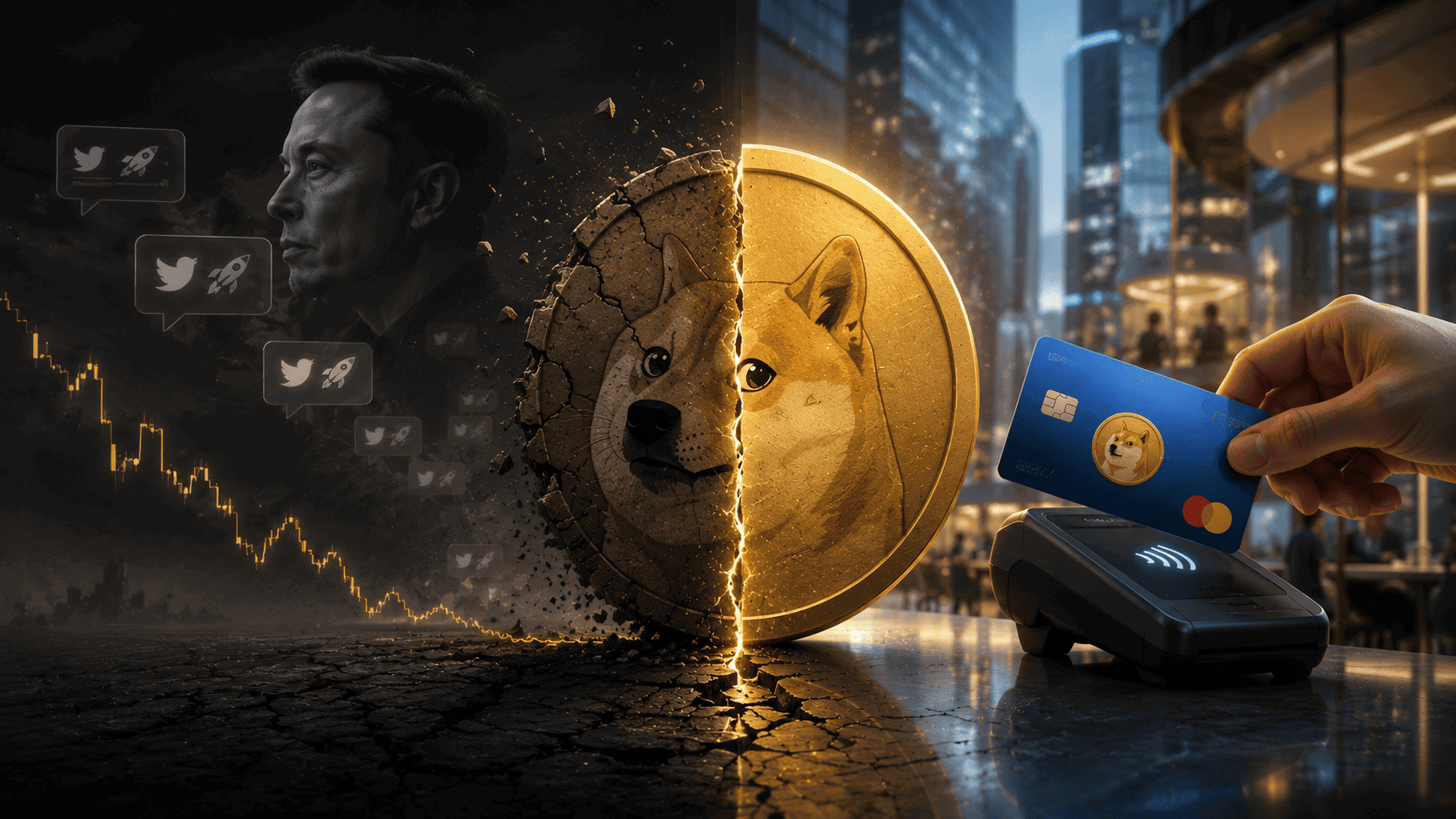
For years, the formula was simple. Elon Musk tweets about Dogecoin. Dogecoin goes up. Musk changes his profile picture to a Shiba Inu. Dogecoin goes up. Musk mentions DOGE on a podcast. Dogecoin goes up.
That formula is broken.


Dogecoin is trading at approximately $0.084 on June 10, down about 13% over the past week and 88% below its all-time high. The Elon Musk correlation that powered the coin through multiple cycles has, in the words of one analysis, completely broken down. Musk remains the most influential figure in Dogecoin’s history. The market has simply stopped trading on his every move.
The timing of that breakdown is brutal. DOGE is sliding alongside a broader crypto crash, with Bitcoin testing $60,000 and the entire market waiting on today’s CPI report. A meme coin that depends on attention and sentiment is exactly the kind of asset that suffers most when fear dominates and the catalyst that used to drive it no longer works.
And yet, on the same day the price hit cycle lows, a major European fintech launched a product that represents one of the most significant real-world adoption milestones in Dogecoin’s history. The disconnect between DOGE’s price and DOGE’s utility has never been wider.
Why the Musk Effect Died
The Elon Musk correlation was always a double-edged sword. It drove spectacular rallies, but it also meant Dogecoin’s price depended on the attention of a single, unpredictable individual rather than on any fundamental value.
Several factors have weakened that correlation over time. Musk’s attention has fragmented across an enormous range of commitments: running multiple companies, the SpaceX IPO launching this week, political involvement, and AI ventures. The frequency and intensity of his Dogecoin advocacy has declined as his focus has scattered.
The market has also matured in its understanding of meme coins. The novelty of a billionaire promoting a joke cryptocurrency has worn off. Traders who made money following Musk’s tweets in 2021 learned that the moves became smaller and less reliable with each cycle. The reflexive buying that once followed every Musk mention has faded as the pattern stopped paying off.
There’s also been a proliferation of competing meme coins. When Dogecoin was the only major meme coin, Musk’s attention was concentrated on a single asset. Now the meme coin sector is crowded with Shiba Inu, Pepe, Bonk, and hundreds of others. Even when Musk does mention crypto, the attention disperses across a wider field.
The result is a Dogecoin that trades like what it fundamentally is: a high-beta risk asset that rises and falls with the broader crypto market, no longer supercharged by a reliable celebrity catalyst. In a bear market, that means DOGE falls with everything else, without the Musk-driven rallies that used to provide a floor.
The Revolut Card Changes the Story
While the price was hitting lows, Revolut launched something that would have been unimaginable when Dogecoin started as a joke in 2013.
The company rolled out a Dogecoin-themed physical debit card across the UK and most of the EU. The card lets users spend DOGE anywhere Visa and Mastercard are accepted, with no added exchange fees. For a coin born as a parody of Bitcoin, having a dedicated spending card from a major European fintech is a genuine adoption milestone.
The significance goes beyond the novelty. Revolut has tens of millions of users across Europe. A Dogecoin card integrated into the Revolut app gives those users a frictionless way to spend DOGE in everyday transactions. Buy a coffee with Dogecoin. Pay for groceries with Dogecoin. The card converts DOGE to fiat at the point of sale, making the coin usable as actual money rather than just a speculative holding.
This matters because Dogecoin has always had a payments narrative buried beneath the meme. Its low transaction fees and fast confirmation times make it more practical for small payments than Bitcoin or Ethereum. The Revolut card operationalises that narrative, turning a theoretical use case into a working product available to millions.
The card lands at a moment when the broader crypto payments space is exploding. Cash App added USDC to 60 million users. SoFi launched a bank-issued stablecoin. Mastercard secured a BitLicense. The infrastructure for spending crypto in daily life is being built rapidly, and Dogecoin just secured a place in that infrastructure through one of Europe’s largest fintechs.
The Disconnect Between Price and Adoption
Dogecoin in June 2026 embodies a contradiction that runs through the entire crypto market right now.
The price says fear. Down 88% from the all-time high. Down 13% on the week. The Musk catalyst gone. Trading at levels that reflect a market in extreme fear with the Fear and Greed Index at 12.
The adoption pipeline says something else. A Revolut debit card across the UK and EU. Integration with Paxos earlier this month, which opened the door to PayPal, Venmo, and Interactive Brokers offering DOGE to their combined 500+ million users. Grayscale’s Dogecoin Trust for accredited investors. A 21Shares Dogecoin ETF approved earlier this year.
The infrastructure being built around Dogecoin has never been more substantial. Major fintechs, regulated ETF products, enterprise custody integration, and now a mainstream spending card. None of that existed when DOGE hit its all-time high. The fundamentals, to the extent a meme coin has fundamentals, have improved dramatically while the price has collapsed.
That disconnect is the central question for Dogecoin holders. If you believe price eventually follows adoption, the current levels represent a discount on a coin whose real-world utility is expanding rapidly. If you believe Dogecoin is fundamentally a sentiment-driven asset that needs the Musk catalyst to rally, the broken correlation means the rallies that defined its history may not return.
Where DOGE Goes From Here
Dogecoin’s technical picture is bleak in the short term and tied almost entirely to Bitcoin’s direction.
At $0.084, DOGE is deep in a downtrend with every moving average pointing lower. The coin needs the broader market to stabilise before any DOGE-specific recovery becomes possible. As long as Bitcoin is sliding toward $60,000 and the Fear index reads 12, meme coins like Dogecoin face the steepest selling pressure because they’re the highest-beta assets in most portfolios.
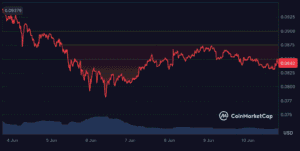
Today’s CPI report is the immediate catalyst. A soft inflation number that sparks a broad relief rally would lift DOGE alongside everything else. A hot number that pushes Bitcoin below $60,000 would drag DOGE lower still, potentially toward $0.07 or below.
The longer-term case rests on whether the adoption milestones translate into sustained demand. If the Revolut card drives meaningful spending volume, if PayPal or Interactive Brokers activate DOGE through Paxos, and if the broader market recovers, Dogecoin has more real-world utility supporting it than at any point in its history.
But meme coins are sentiment assets at their core. Adoption helps, but Dogecoin’s biggest rallies have always come from attention and enthusiasm rather than utility metrics. With the Musk catalyst diminished and the market in extreme fear, the path back to higher prices requires either a broad crypto recovery or a new source of attention to replace the one that’s faded.
For now, Dogecoin sits at a strange crossroads: more useful than it’s ever been, less hyped than it’s been in years, and entirely at the mercy of a macro environment that’s crushing everything. The coffee you can now buy with a Revolut DOGE card costs the same whether Dogecoin is at $0.08 or $0.80. Whether the price ever sees $0.80 again depends on forces that have nothing to do with how useful the coin has become.
FAQ
Why has Dogecoin fallen to $0.084?
Dogecoin dropped 13% over the past week and is 88% below its all-time high, dragged down by Bitcoin’s slide toward $60,000 and the broader market’s extreme fear ahead of today’s CPI report. Additionally, the Elon Musk correlation that drove DOGE’s price for years has broken down, removing the celebrity catalyst that previously powered its rallies.
What is the Revolut Dogecoin card?
Revolut launched a Dogecoin-themed physical debit card across the UK and most of the EU, letting users spend DOGE anywhere Visa and Mastercard are accepted with no added exchange fees. The card converts DOGE to fiat at the point of sale. For a coin that started as a 2013 joke, a dedicated spending card from a major European fintech is a significant real-world adoption milestone.
Is Dogecoin still tied to Elon Musk?
The correlation has weakened significantly. While Musk remains Dogecoin’s most influential historical figure, the market has stopped reliably trading on his every move. His fragmented attention, the maturing meme coin market, and competition from other meme coins have all diminished the “Musk effect.” DOGE now trades primarily as a high-beta risk asset that follows the broader crypto market.
Disclaimer: This article is for informational purposes only and does not constitute financial advice. Cryptocurrency investments carry significant risk. Always conduct your own research before making any investment decisions.