Sam Bankman-Fried’s defence team built the case that his 2024 trial was unfair from the moment Judge Lewis Kaplan handed down his 25-year sentence. The Manhattan judge, the argument went, had wrongly blocked evidence that would have shown FTX was solvent but illiquid. Cross-examination had been improperly limited. Judicial bias had tainted the proceedings.
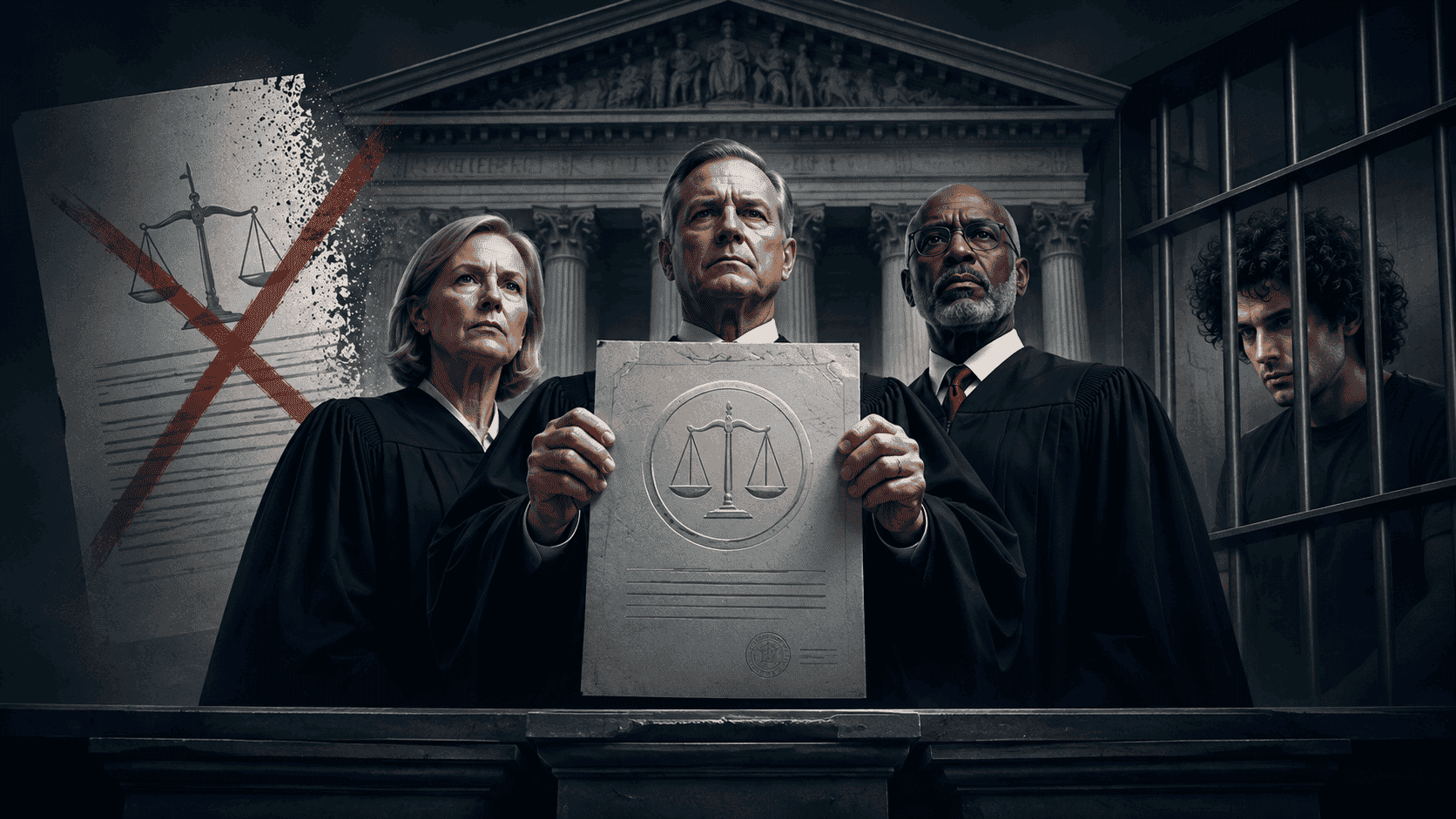
The Second Circuit Court of Appeals heard those arguments. On Friday, June 12, a three-judge panel rejected every one of them.


The unanimous ruling upheld Bankman-Fried’s conviction on seven counts of fraud and conspiracy tied to the collapse of FTX. Circuit Judge Barrington Parker, writing for the panel, called the government’s evidence “robust.” The court ruled that Judge Kaplan didn’t make errors in handling objections, didn’t improperly exclude evidence, and didn’t display the kind of bias that would warrant overturning the verdict.
The ruling lands the same week that Bankman-Fried formally applied for a presidential pardon from Donald Trump. Two efforts to escape his sentence. Both running parallel. The first just failed conclusively.
The Supreme Court is now Bankman-Fried’s only remaining legal option, and the odds of the highest court taking up the case are extremely low. The 25-year sentence handed down in March 2024, which would see him eligible for release in 2044, is essentially confirmed.
What the Appeals Court Actually Ruled
The appeal hinged on three core arguments that the defence team had developed since 2024.
First, the defence argued that Judge Kaplan wrongly blocked evidence showing that FTX customers would eventually recover their lost assets through bankruptcy proceedings. The argument suggested that if customers ultimately got their money back, the original fraud was less severe than presented at trial. The appeals court rejected this argument flatly. “Subsequent asset recovery does not erase the initial act of fraud,” the panel ruled. Stealing customer funds remained a crime even if those funds were later recovered through Chapter 11 proceedings.
Second, the defence claimed judicial bias. The argument suggested that Kaplan’s strict courtroom management crossed the line from firm into prejudicial. The panel disagreed, finding that Kaplan’s management did not “cross the line into prejudice or partiality.” Strict procedural rulings, the court ruled, don’t constitute bias.
Third, the defence argued that the trial was unfair because Bankman-Fried was prevented from presenting his full legal arguments and was blocked from making the case that FTX’s investments would eventually prove successful. The panel responded by pointing to the overwhelming witness testimony, the extensive documentary evidence, and the conclusiveness of the government’s case. “Bankman-Fried makes these arguments in the face of a trial at which the government’s evidence against him was, conservatively stated, robust,” Judge Parker wrote.
The panel addressed each argument in turn, dismissed each one, and produced a unanimous ruling that closes virtually every door Bankman-Fried’s legal team had been trying to open.
The Two Parallel Tracks
The appeal ruling and the pardon application now operate as separate legal tracks, each with very different probabilities of success.
The Supreme Court route remains technically possible. Bankman-Fried’s team could petition the Supreme Court to take up the case. But the Supreme Court hears only a small fraction of cases that petition for review. The standard for granting cert (the formal mechanism by which the court takes up a case) typically requires a circuit split, a constitutional question of broad significance, or some other extraordinary circumstance. The Second Circuit’s careful, unanimous ruling against Bankman-Fried doesn’t create the kind of legal question that the Supreme Court typically intervenes on.
The pardon application is the more realistic but still highly unlikely path. The application is currently listed as “pending” on the DOJ’s Office of the Pardon Attorney website. President Trump has explicitly said in a January New York Times interview that he doesn’t intend to pardon Bankman-Fried. The crypto industry, which has spent years lobbying the Trump administration for favourable policy, overwhelmingly opposes clemency for the former FTX founder. Pardoning someone who stole $8 billion from over a million customers would create the kind of bipartisan political backlash that even Trump tends to avoid.
The pardon route also requires a fundamental shift in either the political calculation or the specific facts of the case. Neither shift appears likely in the near term. Trump’s stated position remains opposed. The crypto industry has not warmed to the idea. The victims of FTX have not been compensated to a degree that would make clemency more politically palatable.
For Bankman-Fried, the practical reality is that he will likely serve a substantial portion of his 25-year sentence. The bureau of prisons currently lists him as eligible for release in 2044. At 34 years old, that means he could spend nearly two decades behind bars before reaching the earliest possible release date.
Why This Matters for Crypto
The closure of Bankman-Fried’s main legal avenue carries significance beyond the individual case.
FTX represented the largest financial fraud in the history of cryptocurrency. The collapse in November 2022 wiped out approximately $8 billion in customer funds. The aftermath dragged crypto markets through one of the worst contagion events in the asset class’s history, contributing to the collapses of Celsius, Three Arrows Capital, and BlockFi. The damage to crypto’s reputation extended well beyond the immediate financial losses.
For the industry, the appeals ruling represents a form of closure. The legal accountability for FTX’s collapse is now essentially complete. Bankman-Fried will serve his sentence. The conviction stands. The legal narrative that crypto allowed its biggest fraud to escape justice has been definitively rebutted by the federal court system.
The ruling also reinforces a principle that the industry has been arguing for years: crypto fraud is being prosecuted under the same standards as traditional financial fraud. There is no special crypto exception. There is no “but it’s an exchange” defence. Stealing customer funds remains stealing customer funds regardless of whether those funds are denominated in dollars or Bitcoin.
For traditional finance observers who have watched the crypto industry’s regulatory and legal journey, the Bankman-Fried saga represents the most comprehensive legal test of how the existing financial fraud framework applies to digital asset companies. The framework worked. The prosecution succeeded. The appeals court confirmed. The crypto industry has demonstrated, however reluctantly, that it operates within the same legal accountability structures as the rest of the financial system.
The Symbolic Closure
There’s a symbolic element to the timing of this ruling that deserves attention.
Bankman-Fried was once one of the most powerful figures in crypto. He was the largest Democratic donor outside of the traditional party apparatus during the 2022 cycle, contributing approximately $40 million to candidates and PACs. He testified before Congress as a credible industry voice. He appeared on magazine covers alongside descriptions like “the next Warren Buffett.” He represented the case that crypto could be respectable, professional, and integrated into mainstream finance.
His conviction in November 2023 ended that narrative. His sentencing in March 2024 began his incarceration. His subsequent attempts at legal relief, the motion for a new trial denied in April 2026, the appeal rejected on June 12, the pardon application still pending, have all chronicled the slow closing of his legal options.
Today’s ruling represents the closure of the main legal route. The crypto industry that he once symbolised has moved on. The exchanges that emerged from FTX’s ashes, primarily Coinbase, Binance, Kraken, and Bybit, now operate the industry. The political landscape that he once influenced is dominated by different players. The regulatory frameworks he once lobbied to shape are being written by other voices.
For the crypto industry, today is the day the FTX chapter effectively closes. Bankman-Fried will likely serve his sentence. The legal accountability is essentially complete. The industry has had three and a half years to rebuild and has done so, with the largest IPO in history happening just yesterday alongside record stablecoin growth and institutional adoption.
The man who once represented crypto’s brightest future is, today, a 34-year-old in a low-security federal prison near Santa Barbara facing eligibility for release in 2044. The wheel turns. The industry continues without him.
Disclaimer: This article is for informational purposes only and does not constitute legal or financial advice. Cryptocurrency investments carry significant risk. Always conduct your own research before making any investment decisions.