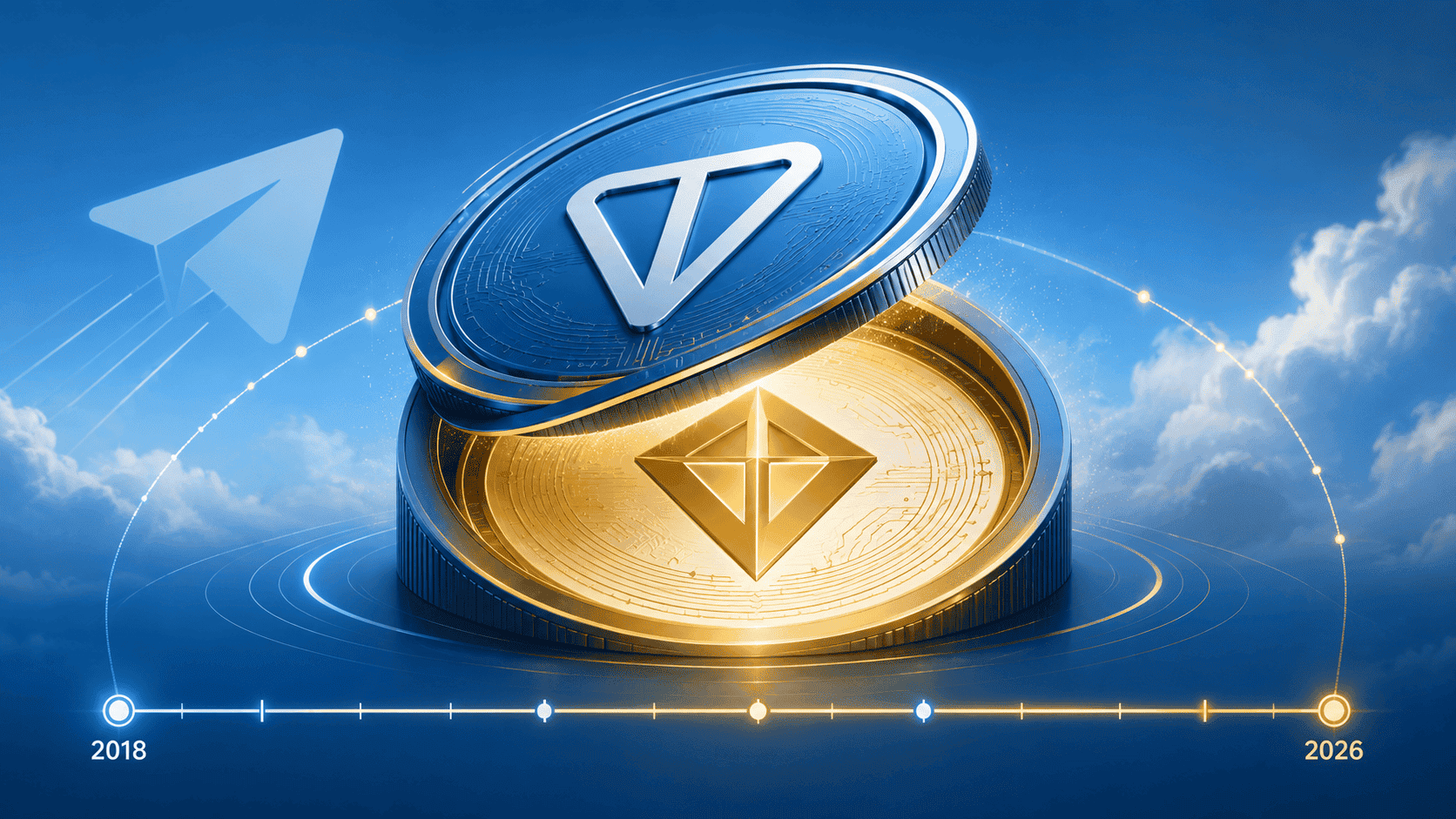
In 2018, Telegram raised approximately $1.7 billion in one of the largest token sales in crypto history. The token was called Gram. The blockchain was called Telegram Open Network. The whitepaper laid out a vision for a Telegram-integrated crypto ecosystem that would have served the messaging platform’s hundreds of millions of users.
In 2020, the SEC obtained an injunction blocking the Gram launch. Telegram abandoned the project entirely, refunded investors approximately $1.2 billion, paid an $18.5 million penalty, and open-sourced the code. The Gram brand died as a casualty of US securities regulation.


Independent developers later revived the codebase under a new structure, deliberately distancing the project from Telegram’s legal history. They rebranded the blockchain as The Open Network and renamed the native asset Toncoin. For six years, the project operated under names specifically chosen to avoid association with the litigated Gram brand.
That distance ended at 8:00 PM UTC on Sunday, June 15. Following an 81.22% community vote and a multi-week rollout campaign, Toncoin officially became GRAM. The blockchain remains The Open Network. The token now carries the name the SEC blocked, the name the original 2018 whitepaper proposed, the name that Telegram’s founders chose before regulatory action forced them to abandon the project.
Today, June 16, is the first full trading day under the new GRAM ticker. The rebrand is symbolic but the symbolism is substantial. It signals that Telegram’s deep involvement in TON’s development is no longer hidden behind separation from the litigated brand. The project is returning to its origins, and Pavel Durov is leading the return personally.
What Actually Changed and What Didn’t
The rebrand is intentionally limited in scope. Only the token’s name, ticker, and logo changed. The underlying technical infrastructure remains identical to what existed before.
Token holders don’t need to do anything to maintain their holdings. There’s no migration, no token swap, no bridge to use, no contract redeployment. Existing wallet balances automatically display as GRAM rather than TON. Smart contracts continue functioning. NFT holdings, staking positions, and DeFi assets carry over without action required.
Exchanges and wallet providers are updating their interfaces during a transition period. KuCoin, MEXC, and other major venues have already begun the transition. A three-month grace period allows projects to display “GRAM (formerly TON)” or similar transitional labels to reduce user confusion. By September 2026, the rebrand should be complete across the ecosystem.
The blockchain itself retains The Open Network branding. The technical infrastructure, governance structure, validator network, and protocol-level operations all continue under the existing TON framework. The change is at the token symbol level only, with no underlying technical implications for how the network functions.
For users, the practical impact is minimal in the short term. Wallet balances will display differently. Trading pairs will eventually update from TON/USDT to GRAM/USDT. Block explorers will refer to the asset as GRAM. But the actual experience of using the network, sending tokens, and interacting with applications doesn’t change.
The deeper significance comes from what the rebrand signals about TON’s future direction rather than from the immediate functional changes.
Why Durov Is Driving This Now
The rebrand is part of Pavel Durov’s “Make TON Great Again” initiative, which has been unfolding across multiple steps since May. Understanding the broader initiative helps explain why the rebrand is happening now and what it signals about TON’s trajectory.
In May 2026, Durov announced that Telegram itself would become TON’s largest validator, staking millions of GRAM tokens through Telegram’s own infrastructure. The validator takeover represented a fundamental shift in TON’s governance structure. The project had operated for six years as a community-driven blockchain with Telegram maintaining distance. Telegram becoming the largest validator collapses that distance entirely.
The network rolled out Catchain 2.0 for sub-second block finality, dramatically improving transaction confirmation speeds. Transaction fees were cut by approximately six times, making the network more competitive with other blockchain platforms for everyday use cases. These technical improvements support Telegram’s vision of integrating crypto deeply into the messaging app’s user experience.
The rebrand to GRAM is “step four” in Durov’s seven-step initiative. Three more steps remain unannounced. Whatever those steps include, they’re likely to further integrate Telegram and TON in ways that distinguish the project from typical “decentralised” blockchain narratives.
For Telegram specifically, the rebrand creates opportunities that the Toncoin name didn’t enable. Telegram has hundreds of millions of users globally. Integrating crypto features into the messaging app under the original Gram branding (now legally available without SEC blockage since the litigation concluded years ago) provides a more cohesive product narrative. Users sending GRAM tokens through Telegram experience a unified branding that “Toncoin” never delivered.
The regulatory environment has also shifted dramatically since 2020. The Trump administration has been broadly favourable to crypto. The CLARITY Act is progressing through the Senate. The SEC under new leadership has reduced its enforcement intensity against crypto projects. The legal risks that made the Gram name toxic in 2020 are significantly reduced in 2026. Durov is taking advantage of the changed regulatory landscape to restore the original identity.
What This Means for GRAM as an Asset
The price reaction to the rebrand has been positive but measured. GRAM is trading around its pre-rebrand levels with modest gains, reflecting that the rebrand was widely anticipated and substantially priced in over the past two weeks.
The token gained approximately 18-19% on initial announcements in early June, with daily trading volume surging 129% to $763.7 million following Durov’s initial June 1 announcement. The rally reflected market enthusiasm for the broader “Make TON Great Again” initiative including the technical improvements and Telegram’s deeper involvement.
For long-term holders, the rebrand doesn’t change anything fundamental about the asset. The same network, the same supply dynamics, the same use cases. What changes is the brand association, which has marketing and adoption implications but doesn’t directly affect token value.
For new investors evaluating GRAM, several factors merit consideration. Telegram’s hundreds of millions of users represent the largest addressable audience of any blockchain project. If Telegram successfully integrates GRAM into core messaging features over the coming year, the structural demand for the token could grow substantially. The integration possibilities include in-app payments, tipping, content monetisation, premium features, and various other use cases.
The risk factors include regulatory uncertainty (despite the favourable current environment), execution risk (Telegram’s track record of monetising its user base has been mixed), competition from other blockchain projects offering similar features, and the inherent challenges of integrating crypto into mainstream consumer applications without alienating users who don’t want crypto exposure.
The longer-term price trajectory depends heavily on whether Telegram successfully drives meaningful adoption of GRAM among its user base. If even 1% of Telegram’s users actively use GRAM for daily transactions, the network activity and structural demand would dwarf most current blockchain ecosystems. If adoption remains limited to existing crypto users, GRAM remains another mid-tier altcoin competing with hundreds of similar projects.
The Broader Significance for Crypto
TON’s rebrand to GRAM carries implications beyond the immediate project.
The successful revival of a brand killed by SEC action signals how dramatically the regulatory environment has shifted since 2020. Six years ago, the Gram brand was so toxic that the project’s developers deliberately distanced themselves to maintain operations. Today, the brand is being deliberately restored with backing from one of the largest internet companies in the world. The shift reflects both the changed regulatory landscape and the maturation of the crypto industry’s ability to navigate complex regulatory situations.
For other projects with complicated regulatory histories, GRAM’s revival provides a template. Telegram navigated the original SEC action through settlement and project abandonment. Independent developers revived the technology under different branding. Now the original team can reclaim the original identity. The pattern of regulatory action, restructuring, and eventual brand restoration could apply to other projects affected by previous regulatory pressure.
For institutional crypto integration, the Telegram-TON relationship represents a model that combines messaging platform reach with blockchain infrastructure. Other major internet companies have been exploring similar integrations. X (formerly Twitter) has been adding crypto features. Reddit has experimented with on-chain rewards. The TON-Telegram model could influence how other platforms approach blockchain integration.
For the user experience question of how to bring crypto to mainstream users, Telegram’s hundreds of millions of users represent the largest test bed in the industry. If GRAM achieves meaningful adoption through Telegram, it demonstrates that crypto can reach mainstream users through messaging platform integration. If adoption remains limited despite Telegram’s reach, it raises questions about whether mainstream crypto adoption is feasible through any platform.
The next several months will be telling. Telegram is reportedly integrating GRAM features more deeply into the messaging app. The remaining steps in Durov’s “Make TON Great Again” initiative are likely to include user-facing features that drive adoption. The success or failure of these initiatives will provide significant data about crypto’s ability to reach mainstream users.
For now, the rebrand is complete. The name killed by regulators in 2020 is back. The technical infrastructure improvements that accompanied the rebrand are live. Telegram’s deep involvement is no longer hidden. The next chapter of TON, now operating under its original GRAM identity, is just beginning.
Disclaimer: This article is for informational purposes only and does not constitute financial advice. Cryptocurrency investments carry significant risk. Always conduct your own research before making any investment decisions.