A veteran Bitcoin developer wants to copy the entire Bitcoin blockchain, launch a new version with features the community has rejected for years, and fund it by giving away half of Satoshi Nakamoto’s coins. The reaction has been about as calm as you would expect.
Paul Sztorc announced on April 24 that he would launch a Bitcoin hard fork called eCash in August 2026. Every BTC holder would receive an equal amount of eCash tokens at a 1:1 ratio. If you hold 4.19 BTC, you get 4.19 eCash on the new chain. You can sell them, keep them, or ignore them entirely.


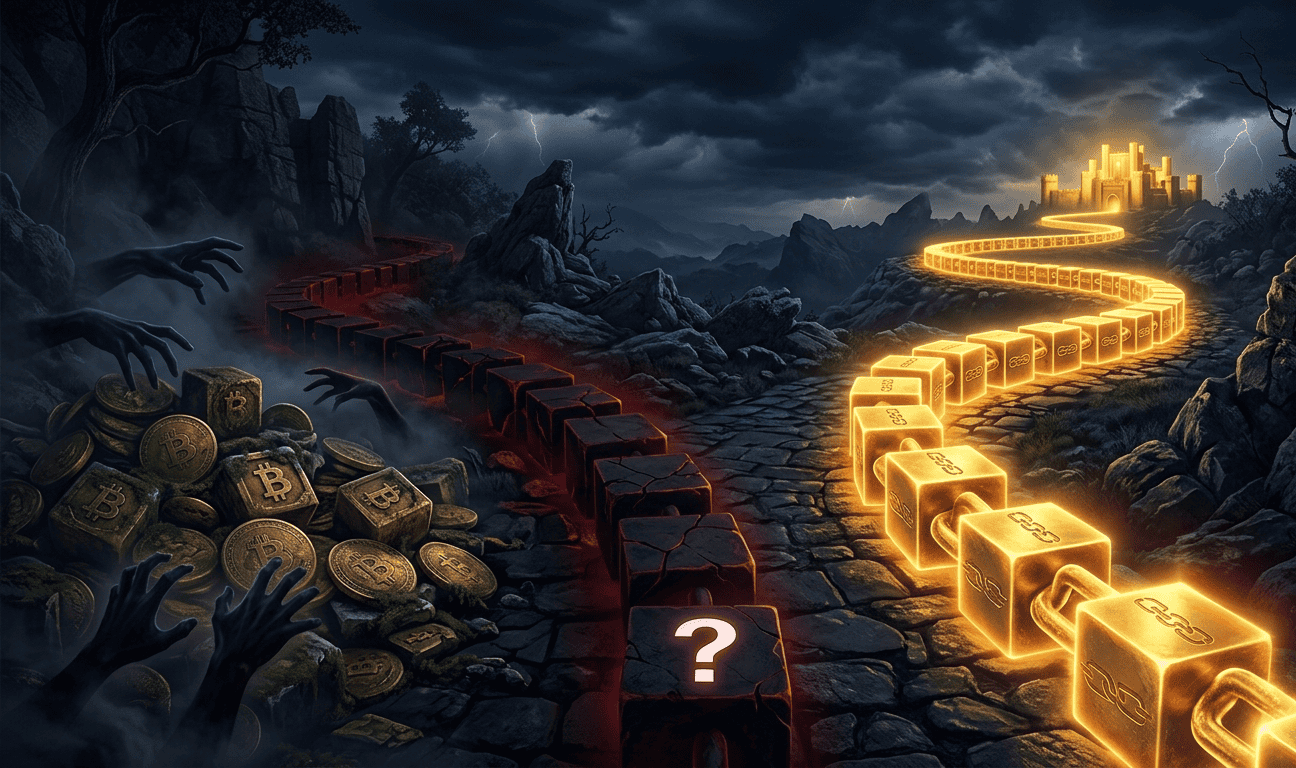
The controversial part is not the fork itself. It is what Sztorc plans to do with Satoshi’s coins. He wants to manually reassign fewer than half of the 1.1 million BTC linked to the “Patoshi” mining pattern to early investors. At current prices, that is up to $40 billion worth of tokens being redirected from Bitcoin’s anonymous creator to people who back the project before it launches.
What Is the eCash Fork and How Does It Work?
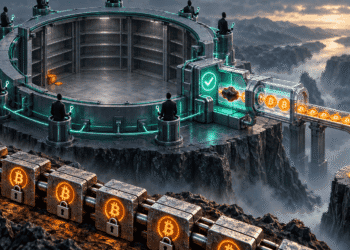
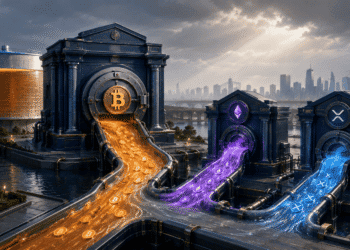
The fork is scheduled for Bitcoin block height 964,000 in August 2026. At that point, the blockchain splits. Everything up to that block gets copied to the new chain. Every wallet balance, every transaction, the full history. Two separate networks then exist: the original Bitcoin chain and the new eCash chain.
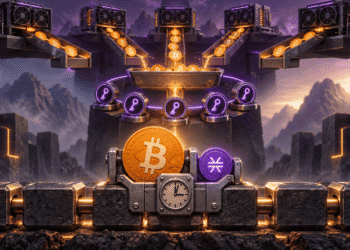
The eCash Layer 1 is essentially a copy of Bitcoin Core using the same SHA-256 mining algorithm. The big difference is what sits on top of it: Drivechains. These are sidechains tethered to the main chain that let developers build new features without changing Bitcoin’s base layer. Think of them as separate lanes on the same motorway, each one running different applications.
Sztorc has been pushing Drivechains since 2015. He formally submitted the proposals as BIP-300 and BIP-301 in 2017 and 2019. Bitcoin’s core developers never adopted them, arguing they introduce security risks by giving miners too much authority over sidechain funds. After a decade of rejection, Sztorc decided to fork Bitcoin and build it himself.
Seven Drivechains are already in development. They include Truthcoin for prediction markets, CoinShift as a decentralised exchange, Bitassets for NFTs, Bitnames for digital identity, and Photon, a quantum-resistant chain. There is also a privacy-focused chain modelled on Zcash.
Why Is Sztorc Reassigning Satoshi’s Coins?
This is the part that has everyone upset. Sztorc says the project needs funding, and the only way to get it without becoming a “zombie project” or falling under centralised control is to use coins that would otherwise sit untouched forever.
“This will no doubt be a controversial decision,” Sztorc wrote on X. “But I think it is necessary, and in fact, ideal.”
His reasoning: Satoshi’s coins have not moved since 2010. If the fork copies the full ledger, those 1.1 million coins exist on the eCash chain too. Sztorc argues that leaving them dormant wastes an opportunity to fund development. By reassigning fewer than half to investors before launch, he creates an incentive for people to contribute to the project early.
The mechanism is not entirely clear. Since eCash does not exist yet, the reassignment appears to be a promised credit that activates after the fork goes live. Early backers put in money now and receive their share of the Satoshi-equivalent eCash once the chain launches.
What Is the Community Saying?
Overwhelmingly negative. A sentiment scan of Sztorc’s announcement on X found that roughly 80% to 85% of responses were critical. About 10% to 15% expressed support, citing interest in the Drivechain concept or the free coin distribution.
Bitcoin advocate Peter McCormack was direct: “Taking Satoshi coins is theft and disrespectful.” Josh Ellithorpe, CTO of Pixelated Ink, raised a broader concern: “eCash, setting the precedent that they can and will steal coins. Now it’s Satoshi, but it could be anyone later.”
That precedent argument is the one that matters most. If a fork can reassign coins from one set of addresses to another, what stops a future fork from doing the same to any wallet? The entire security model of Bitcoin rests on the idea that your coins are your coins, period. Nobody can take them. A fork that breaks that principle, even on a new chain, challenges that narrative.
Not everyone was hostile. Bitcoin author Steve Patterson offered cautious support: “There are only a couple serious options for scaling Bitcoin: big blocks, as Satoshi intended, or real sidechains.”
Will This Affect Your Bitcoin?
No. This is important to understand. A hard fork creates a new, separate chain. It does not change anything on the original Bitcoin network. Your BTC stays in your wallet, untouched, on the same Bitcoin blockchain you have always used.
If you hold BTC at the time of the fork, you will automatically have an equivalent eCash balance on the new chain. You do not have to do anything. You can claim the eCash using a coin-splitting tool the team plans to release, or you can ignore it completely. Your Bitcoin is not at risk.
The last time something like this happened was Bitcoin Cash in 2017. BCH forked from Bitcoin, gave holders a 1:1 distribution, and traded briefly above $4,000 before declining steadily over the following years. It still exists but never came close to replacing Bitcoin.
Does eCash Have a Chance?
History says probably not. Every Bitcoin hard fork has failed to gain meaningful traction against the original. Bitcoin Cash, Bitcoin SV, Bitcoin Gold, and Bitcoin Diamond all launched with some noise and faded. None of them displaced Bitcoin or attracted significant long-term adoption.
Sztorc’s argument is that eCash is different because it does not try to be Bitcoin. It drops “Bitcoin” from the name entirely. It offers features that Bitcoin does not have and may never adopt, including smart contracts, privacy transactions, prediction markets, and quantum resistance, all through Drivechains that the original Bitcoin community refused to implement.
Whether that is enough to attract miners, developers, and users to a new chain remains to be seen. The fork launches in roughly 118 days. The community has already made its feelings clear. Whether Sztorc can prove them wrong depends entirely on whether Drivechains deliver on the promises that Bitcoin’s core developers spent a decade rejecting.
Frequently Asked Questions
What is the Bitcoin eCash hard fork?
eCash is a proposed hard fork of Bitcoin planned for August 2026 by developer Paul Sztorc. It copies the full Bitcoin blockchain and adds Drivechains, which are sidechains enabling smart contracts, privacy, and scalability. BTC holders receive eCash at a 1:1 ratio automatically.
Will the eCash fork affect my Bitcoin holdings?
No. The fork creates a separate chain. Your BTC remains on the original Bitcoin network, untouched. You will automatically have an equivalent eCash balance on the new chain, which you can claim, sell, or ignore.
Why is the eCash fork controversial?
Sztorc plans to manually reassign up to half of the 1.1 million BTC linked to Satoshi Nakamoto on the new chain, redirecting them to early investors. Critics call this theft and warn it sets a dangerous precedent for reassigning coins from dormant addresses on future forks.