• About Us
  • Advertise
AltcoinReporter
  • Home
  • News
    • Bitcoin
    • Ethereum
    • Blockchain
    • Altcoins
    • DeFi
    • NFT
  • Press Releases
  • Reviews
    • Exchanges
    • NFT Marketplaces
    • Wallets
  • Market Analysis
  • Contact Us
No Result
View All Result
  • Home
  • News
    • Bitcoin
    • Ethereum
    • Blockchain
    • Altcoins
    • DeFi
    • NFT
  • Press Releases
  • Reviews
    • Exchanges
    • NFT Marketplaces
    • Wallets
  • Market Analysis
  • Contact Us
No Result
View All Result
AltcoinReporter
No Result
View All Result
Home DeFi

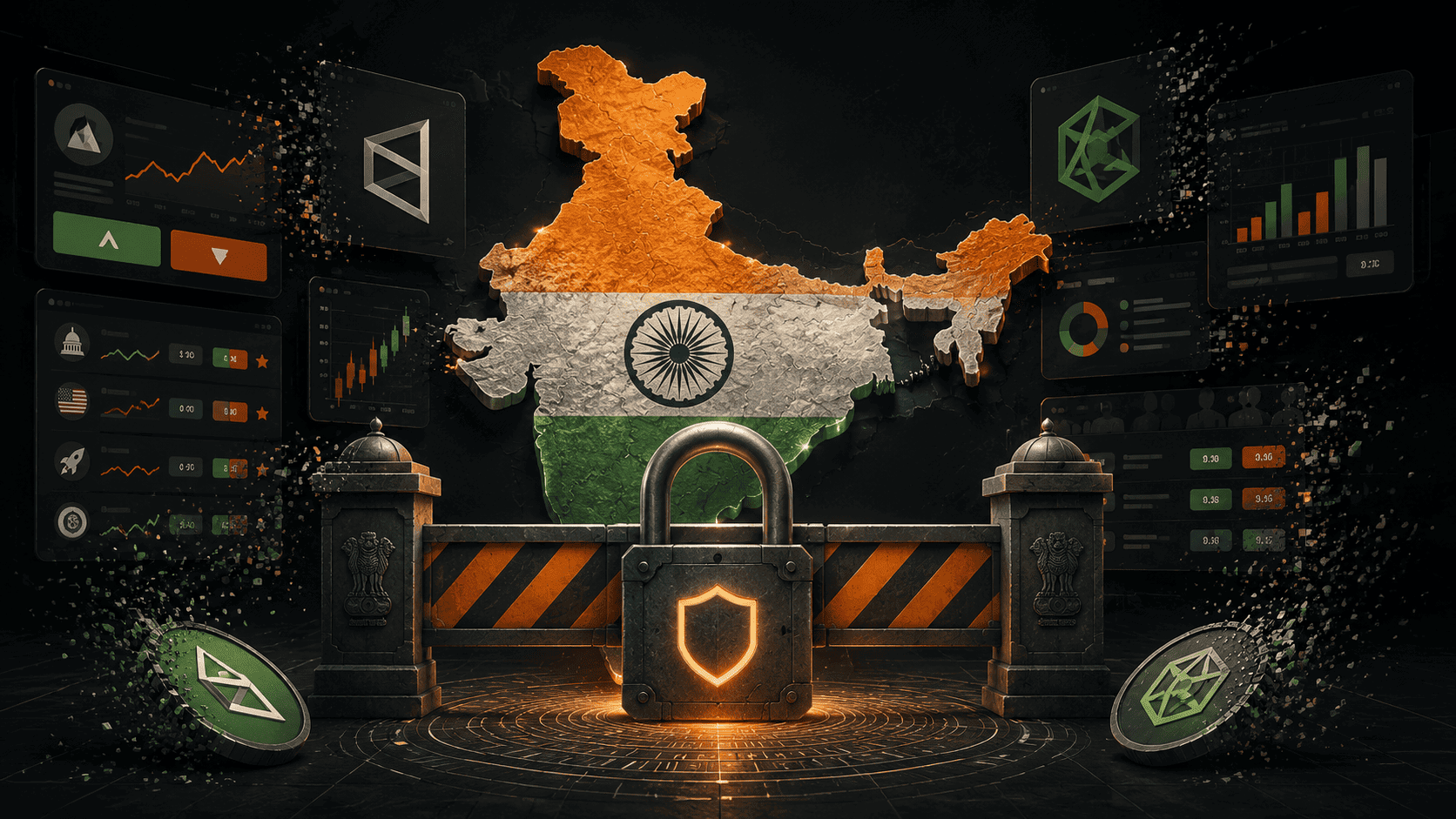
India Blocks Polymarket and Prepares to Ban Kalshi in Prediction Market Crackdown

India has blocked Polymarket at the ISP level and a Kalshi ban could follow today. The country is also warning VPN providers against helping users bypass the block.

Salar Salek by Salar Salek
May 23, 2026
in DeFi
India Blocks Polymarket and Prepares to Ban Kalshi in Prediction Market Crackdown
Polymarket is now inaccessible in India. As of May 21, users in the world’s second-most-populous country cannot access the platform. The website displays the message: “This site can’t be reached.”

The Ministry of Electronics and Information Technology (MeitY) issued a formal blocking order, instructing internet service providers to cut access to Polymarket at the network level. This is a comprehensive block, not a warning or partial restriction, making the platform inaccessible without advanced technical workarounds.

Polymarket is not the only platform affected. A blocking order for Kalshi, the CFTC-regulated US prediction market recently valued at $22 billion after raising $1 billion, is expected as early as May 23.


Related articles

Term Finance shuts Meta Vaults permanently after $8.5 million governance exploit

Term Finance shuts Meta Vaults permanently after $8.5 million governance exploit

August 26, 2026
Term Finance Loses $8.5 Million After Attacker Buys Control for 2 ETH

Term Finance Loses $8.5 Million After Attacker Buys Control for 2 ETH

August 24, 2026
India is taking a strict approach, treating prediction markets similarly to illegal gambling operations. For an industry experiencing rapid growth and broader acceptance, this serves as a reminder that not all countries share this perspective.

How India Got Here

This enforcement action has been developing for several months.

In August 2025, India’s parliament passed the Promotion and Regulation of Online Gaming Act, known as PROGA. The law created a clear legal framework that separates legitimate e-sports from prohibited “online money gaming,” the category India puts prediction markets in.

PROGA officially came into force on May 1, 2026. But even before that, MeitY was laying the groundwork. On April 25, the ministry sent a letter directly to VPN providers warning that users were accessing “illegal and blocked prediction market and online betting platforms” despite domestic prohibitions. The advisory named Polymarket specifically.

This represents a significant escalation. By targeting VPN providers in addition to the platforms, India demonstrates its commitment to enforcing the block. While users in other countries often bypass bans using VPNs, India is proactively addressing this potential workaround.
Despite these warnings, both Polymarket and Kalshi continued to accept Indian users. Their decision to maintain onboarding in defiance of government directives appears to have accelerated enforcement. MeitY escalated from advisories to comprehensive ISP-level blocks within weeks.

India Was a Major Market for Polymarket

The ban is significant, as India was one of Polymarket’s key growth markets.

According to Similarweb data for April 2026, India accounted for approximately 6.49% of all traffic to Polymarket, ranking among its top user markets behind only the United States and Canada. Traffic from India grew 37% during that period, making it one of the fastest-growing sources of users on the platform.
Prediction markets gained global popularity during the 2024 US presidential election. Polymarket became a leading platform for those interested in wagering on political outcomes. This interest extended to India, where a young, tech-savvy population with widespread smartphone access formed a receptive audience.
Now, that audience has lost access. With local Indian prediction platforms also shutting down in anticipation of enforcement, the domestic market for event-based trading in India is effectively closing.

Why India Is Targeting Kalshi Too

Kalshi’s situation is different from Polymarket’s in important ways. Polymarket is a decentralized, crypto-native platform that operates largely outside traditional regulatory frameworks. Kalshi is a CFTC-regulated designated contract market that operates under US federal law.

These distinctions are not relevant under Indian law. Under PROGA, any platform that allows users to wager real money on future events is classified as prohibited online money gaming. The platform’s regulatory status, technology, or financial structure does not affect this classification. If Indian users can access and place bets, the platform is considered illegal in India.

A blocking order for Kalshi is reportedly being prepared and could be issued as early as Friday. If implemented, India will have blocked both of the world’s largest prediction market platforms within the same week.

The timing is challenging for the sector. In the US, a House Oversight Committee is investigating whether Polymarket and Kalshi have adequate safeguards against insider trading. Arizona filed 20 criminal counts against Kalshi last month. Now, India, one of the world’s largest digital markets, is restricting access entirely.

The Broader Regulatory Pattern

India is not the first country to ban prediction markets, and it is unlikely to be the last.Argentina ordered internet providers to block Polymarket in March after a Buenos Aires court concluded the platform was operating outside local regulations. Portugal’s gambling regulator took similar action after more than €5 million surged into presidential election contracts. In the US, Nevada, New Jersey, and several other states have issued cease-and-desist orders or launched legal challenges.

This pattern is consistent. Prediction markets expanded rapidly during a period of minimal regulation. Now, governments worldwide are increasing oversight, with many concluding that these platforms resemble gambling more than financial innovation.

India’s approach is among the most stringent. The country imposes a 30% flat tax on crypto gains and a 1% tax deducted at source on all crypto transactions. Several Indian crypto startups have relocated to Dubai and Singapore, citing regulatory challenges. The prediction market ban aligns with India’s broader policy of strict regulation for digital financial products that do not fit established categories.

What This Means for Prediction Markets

The ban in India removes access to 1.4 billion people, representing the world’s largest young digital population. For an industry with $178 billion in annualized trading volume and a $22 billion company valuation, losing India is a significant setback to growth projections.

It also raises a new question for the prediction market industry: what occurs when platforms that regulators cannot directly control are blocked at the infrastructure level?

Polymarket’s crypto-native architecture makes it more difficult to shut down than a traditional website. Users can still access it via VPNs, mirror sites, or direct interaction with smart contracts. However, India’s decision to target VPN providers indicates the government is prepared for sustained enforcement beyond what most crypto platforms typically encounter.

For users in countries where prediction markets remain legal, these developments do not affect their immediate experience. Polymarket and Kalshi continue to operate normally in the US and most other markets. However, the decreasing number of jurisdictions where these platforms can operate freely is a trend to monitor.


Disclaimer: This article is for informational purposes only and does not constitute financial advice. Cryptocurrency investments carry significant risk. Always conduct your own research before making any investment decisions.
Salar Salek

Salar Salek Verified AltcoinReporter Author

Salar covers cryptocurrency markets, blockchain technology, DeFi, and emerging digital asset trends for AltcoinReporter. With a background in technology and finance, he has been actively following and investing in the...

Read More
Tags: Crypto RegulationIndiaKalshiPolymarketPrediction Markets

Related Posts

Term Finance shuts Meta Vaults permanently after $8.5 million governance exploit

Term Finance shuts Meta Vaults permanently after $8.5 million governance exploit

by Salar Salek
August 26, 2026
0

Term Labs has permanently closed its Meta Vaults and revoked their DAO governance roles, three days after an attacker used...

Term Finance Loses $8.5 Million After Attacker Buys Control for 2 ETH

Term Finance Loses $8.5 Million After Attacker Buys Control for 2 ETH

by Salar Salek
August 24, 2026
0

Ethereum lending protocol Term Finance lost approximately $8.5 million on August 23 after an attacker acquired enough governance voting power...

Seamless DAO Votes to Shut Down and Revoke All Administrative Control

Seamless DAO Votes to Shut Down and Revoke All Administrative Control

by Salar Salek
August 10, 2026
0

Seamless DAO is voting on a proposal to permanently wind down operations and revoke all administrative control, transitioning the protocol...

Aave Reserves

Aave Moves to Deprecate 50 Reserves and Exit Six Chains in $98M Cleanup

by Dans Kramer
July 30, 2026
0

Aave is moving to deprecate 50 low-adoption reserves and wind down deployments on six blockchains in one of the DeFi...

A $35 Million Wave of Bridge Hacks Shows Crypto’s Oldest Weakness Is Still Wide Open

A $35 Million Wave of Bridge Hacks Shows Crypto’s Oldest Weakness Is Still Wide Open

by Salar Salek
July 23, 2026
0

Crypto's cryptography is, by and large, unbreakable. The mathematical foundations securing Bitcoin and Ethereum have never been cracked. So when...

Load More
  • Trending
  • Comments
  • Latest
Solana Alpenglow Upgrade 2026: Launch Date, Features, and What It Means for SOL

Solana Alpenglow Upgrade 2026: Launch Date, Features, and What It Means for SOL

April 18, 2026
Pi Network Completes Protocol 23 and Sets June 2 Deadline for Node Operators

Pi Network Completes Protocol 23 and Sets June 2 Deadline for Node Operators

May 27, 2026
Dogecoin and Meme Coins

Dogecoin and Meme Coins Face a Reality Check as Speculative Demand Fades

June 14, 2026
Best Crypto News Apps 2026: CoinGecko vs TradingView vs CoinMarketCap

Best Crypto News Apps 2026: CoinGecko vs TradingView vs CoinMarketCap

May 6, 2026
North Korea’s Six-Month Con: How Hackers Stole $286M from Solana’s Drift Protocol

North Korea’s Six-Month Con: How Hackers Stole $286M from Solana’s Drift Protocol

0
Ethereum’s Glamsterdam Upgrade: What It Is and Why It Matters in 2026

Ethereum’s Glamsterdam Upgrade: What It Is and Why It Matters in 2026

0
Bitcoin’s Worst Q1 Since 2018: Can April Turn the Tide?

Bitcoin’s Worst Q1 Since 2018: Can April Turn the Tide?

0
Former UK Chancellor Kwarteng Leads Bitcoin Firm as Farage Backs BTC

Former UK Chancellor Kwarteng Leads Bitcoin Firm as Farage Backs BTC

0
Tokenized stocks compared: what Coinbase, Robinhood and Korea’s models each give you

Tokenized stocks compared: what Coinbase, Robinhood and Korea’s models each give you

September 4, 2026
ETH price analysis: $2,438 Fibonacci level decides whether the August breakout holds

ETH price analysis: $2,438 Fibonacci level decides whether the August breakout holds

September 4, 2026
Chainlink deal gives 600 banks a route to blockchain settlement without leaving Swift

Chainlink deal gives 600 banks a route to blockchain settlement without leaving Swift

September 4, 2026
South Korea sets February 2027 start for tokenizing stocks, bonds and funds

South Korea sets February 2027 start for tokenizing stocks, bonds and funds

September 4, 2026

About

AltcoinReporter

AltcoinReporter is an independent crypto news platform built to keep you ahead of the market. We cover everything from Bitcoin and altcoins to DeFi, NFTs, regulation, and emerging blockchain technology.


Our editorial team delivers accurate news, detailed market analysis, and expert insights, with every article written and reviewed by named contributors. We are committed to transparent, independent reporting our readers can trust.

News

  • Altcoins
  • Bitcoin
  • Blockchain
  • DeFi
  • Ethereum
  • NFT

Reviews

  • Exchanges
  • NFT Marketplaces
  • Wallets

Company

  • About Us
  • Advertise
  • Write for Us
  • Contact Us

Disclaimer: AltcoinReporter.com provides cryptocurrency news for informational purposes only, not financial, investment, or legal advice. Crypto markets carry significant risk. Always do your own research and consult a financial advisor before investing. We may earn compensation through affiliate links, ads, and sponsored content, which are clearly labelled. AltcoinReporter is not responsible for any financial losses resulting from information on this site.

  • Cookie Policy
  • Ethics
  • Corrections
  • Editorial Standards
  • Privacy Policy
  • Terms & Conditions

© 2026 AltcoinReporter. All rights reserved.

No Result
View All Result
  • Home
  • News
    • Altcoins
    • Bitcoin
    • Blockchain
    • DeFi
    • Ethereum
    • NFT
  • Press Releases
  • Reviews
    • Exchanges
    • NFT Marketplaces
    • Wallets
  • Market Analysis
  • Contact Us

© 2026 AltcoinReporter. All rights reserved.