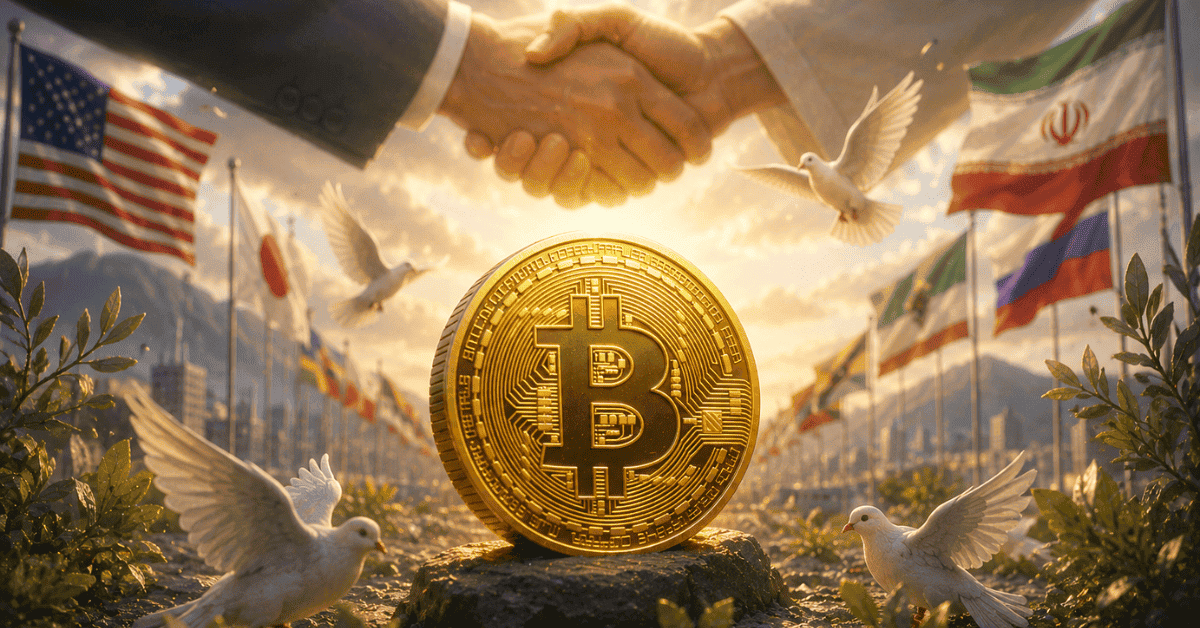
Bitcoin peace rally momentum is building after the United States and Iran reached a preliminary agreement to halt hostilities and reopen the Strait of Hormuz, easing one of the biggest macro shocks hanging over global markets.
The deal, expected to be signed in Switzerland, triggered a sharp reaction across risk assets. Oil prices dropped as traders priced in the return of shipping through one of the world’s most important energy routes, while Bitcoin climbed toward the $65,800 to $66,000 area.


That move was not only driven by fresh buying. It also forced bearish traders to close leveraged positions, with market data showing roughly $150 million in crypto shorts liquidated as BTC reclaimed the $65,000 level.
The result is a cleaner setup for Bitcoin than traders had last week, but not a risk-free one.
Why Hormuz Matters for Bitcoin
At first glance, the Strait of Hormuz may seem like an oil market story rather than a Bitcoin story.
That is too narrow.
Hormuz is one of the most important shipping routes in the world, with a large share of global oil flows passing through the waterway. When conflict threatened the route, oil prices rose, inflation fears returned and investors became more cautious toward risk assets.
Bitcoin was caught in that pressure.
Even though BTC is often described as a hedge against geopolitical instability, it still trades inside a global liquidity system. When oil spikes and markets fear another inflation shock, traders often reduce exposure to volatile assets first. Crypto can suffer because it is liquid, open around the clock and heavily used by leveraged traders.
That is why the reopening of Hormuz matters. It reduces one of the clearest macro stress points weighing on Bitcoin.
Short Sellers Get Caught Offside
The rally also shows how quickly crypto positioning can flip.
When Bitcoin was trading under pressure, many traders were betting on further downside. That made sense while war headlines, oil shocks and weak risk appetite dominated the market.
But once the peace framework became credible, the same short positions became vulnerable.
Short liquidations happen when traders betting on lower prices are forced to buy back the asset as it rises. That forced buying can accelerate the move higher, creating a squeeze. In Bitcoin’s case, the move back above $65,000 was enough to pressure bearish positions and add fuel to the rebound.
This does not prove that a new bull trend has started. It shows that the market had become one-sided enough for a geopolitical relief headline to hurt shorts quickly.
Oil Falling Is the Real Macro Signal
The most important market reaction may not be Bitcoin itself. It may be oil.
Brent crude fell sharply after the agreement, with traders expecting the eventual return of freer shipping through Hormuz. Lower oil prices can ease inflation pressure, reduce stress on consumers and give central banks more room to avoid overly aggressive policy.
That is positive for Bitcoin because BTC tends to perform better when liquidity expectations improve.
If energy prices keep falling and risk appetite returns, Bitcoin may benefit from a broader rotation back into speculative assets. If oil rebounds because the deal stalls, shipping remains restricted or implementation becomes messy, the relief rally could fade quickly.
That makes oil one of the most important charts for crypto traders right now.
Why Bitcoin’s Reaction Was Strong, But Not Explosive
Bitcoin rose, but the market did not behave like every risk had disappeared.
That caution makes sense.
The agreement is still preliminary, and several difficult issues remain unresolved, including Iran’s nuclear program and the timeline for fully restoring shipping flows. Markets are also aware that previous ceasefire hopes during the conflict were fragile.
That explains why Bitcoin’s move looked more like a relief rally than a euphoric breakout.
Traders welcomed the de-escalation, but they are not treating it as a complete reset. BTC is still below previous wartime highs, ETF demand remains important, and the broader crypto market is still recovering from weeks of weak sentiment.
What Bitcoin Needs Next
For the rally to continue, Bitcoin needs follow-through.
The first test is whether BTC can hold above the $65,000 area after the initial short squeeze fades. If buyers continue defending that zone, traders may start treating the move as a base for a larger recovery.
The second test is spot demand. A short squeeze can move prices quickly, but it does not always create a durable trend. Bitcoin needs real buyers, including ETF demand, long-term holders and institutional allocators, to sustain the rebound.
The third test is macro confirmation. If oil stays lower, equities remain firm and the dollar softens, Bitcoin’s recovery case becomes stronger. If those signals reverse, BTC may struggle to hold its gains.
The Risk Is Still Implementation
The biggest danger is that markets are pricing in peace before the hard work is finished.
Reopening the Strait of Hormuz may take time, especially if shipping lanes require inspection, insurance markets remain cautious or military risks persist. Even with a deal, oil flows may not normalize immediately.
That matters because Bitcoin’s rally is partly built on the idea that one major inflation threat is being removed.
If the deal faces delays, traders could quickly question the rebound. Crypto markets are especially sensitive to changing headlines because leverage resets quickly and liquidity can disappear during volatile periods.
In other words, the peace rally is real, but it is also headline-dependent.
A Relief Rally With a Clear Message
Bitcoin’s rebound shows that geopolitical fear was a major weight on the market.
When the U.S. Iran agreement reduced the immediate risk around Hormuz, oil fell, risk assets improved and Bitcoin shorts were squeezed. That is a powerful combination.
But the better angle is not that Bitcoin is suddenly free from macro risk. It is that Bitcoin is still deeply connected to global markets, even when the story begins in the Middle East.
For now, BTC has gained breathing room. The market has moved from panic over escalation to cautious optimism over de-escalation.
The next question is whether that optimism can survive implementation.
If the Hormuz reopening holds and oil continues to cool, Bitcoin could build on the move. If the agreement begins to crack, the same volatility that lifted BTC could return in the opposite direction.
Disclaimer: This article is for informational purposes only and does not constitute financial, investment, or legal advice. Always conduct your own research before making any investment decisions.