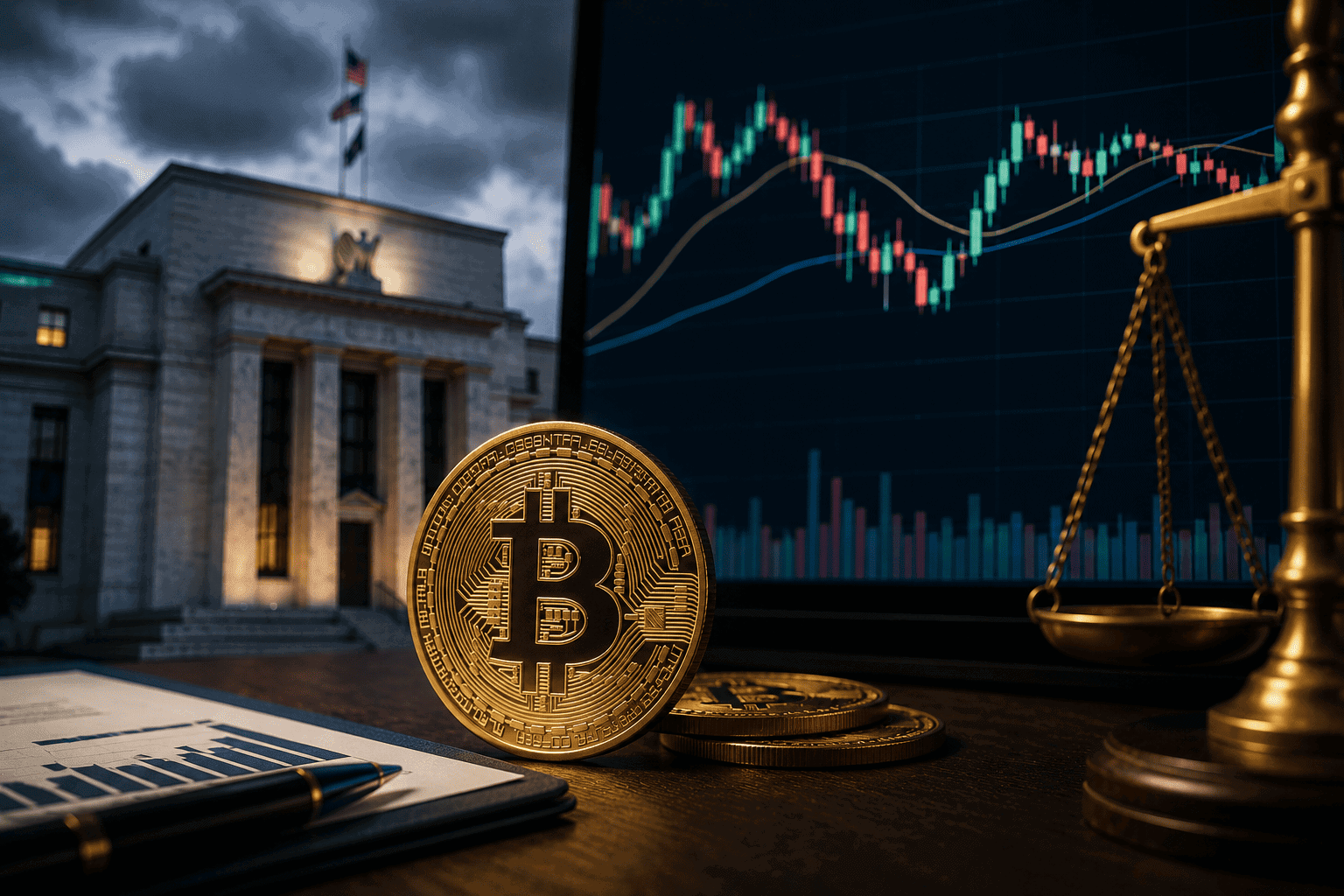
Bitcoin traded between $62,000 and $65,000 as investors digested another Federal Reserve rate pause and looked ahead to a September meeting that markets now see as the real test for risk assets.
The Fed’s decision to leave rates unchanged keeps the benchmark range at 3.50% to 3.75%, giving policymakers more time to assess inflation, oil prices, labor data and geopolitical risk. But the pause did not remove pressure from markets. Traders are still pricing a meaningful chance that the central bank hikes in September if inflation refuses to cool.


For Bitcoin, that keeps the macro story uncomfortable. The asset has held above the worst levels of its recent pullback, but higher-for-longer rates and renewed hike risk continue to cap enthusiasm.
Bitcoin Stays Inside a Nervous Range
Bitcoin has spent much of the week moving inside a tight but tense band around the low-to-mid $60,000s.
That range matters because Bitcoin is no longer trading only on crypto-native headlines. ETF flows, liquidity conditions, U.S. dollar strength, Treasury yields and central bank expectations are all feeding into short-term positioning.
When rates stay elevated, cash and government bonds look more attractive relative to speculative assets. That can make it harder for Bitcoin to attract fresh risk capital, especially when traders believe another rate hike could still arrive later in the year.
The current setup is not a classic crypto panic. It is more like a waiting room. Bulls want confirmation that inflation is easing enough to stop the Fed from tightening again. Bears want proof that the $60,000 area will finally give way.
September Is Now the Market’s Focus
The most important detail from the Fed story is not the July pause itself. It is what traders think may happen next.
Markets had largely expected the Fed to stand pat in July, but September is being treated as a more serious decision point. Persistent inflation, renewed Middle East tensions, higher energy prices and tariff-related cost pressures have kept the possibility of another hike alive.
That creates a difficult backdrop for Bitcoin. A rate hike in September would likely strengthen the idea that U.S. monetary policy remains restrictive, which can pressure liquidity-sensitive assets. Even if the Fed does not hike, hawkish language from policymakers could still weigh on sentiment.
Crypto markets often react before the actual policy move. If traders believe the Fed is moving closer to another hike, Bitcoin can feel the pressure well before rates actually change.
Why Fed Policy Still Matters for BTC
Bitcoin supporters often describe the asset as an alternative to central banks. In market practice, however, Bitcoin still trades like a high-beta macro asset during moments of policy stress.
That means it can rise when liquidity improves and fall when investors expect tighter financial conditions. The relationship is not perfect, but it has become important enough that crypto traders now watch Fed meetings almost as closely as inflation prints or ETF flow data.
Higher rates can affect Bitcoin in several ways. They can strengthen the dollar, reduce appetite for leverage, make short-term cash yields more attractive and push investors away from volatile assets. They can also increase pressure on miners and crypto companies that rely on capital markets.
The result is simple: even when Bitcoin’s long-term story is about scarcity, its short-term price action still depends heavily on liquidity.
Inflation Is the Real Problem
The Fed’s hesitation comes back to inflation.
Officials want confidence that inflation is moving back toward the central bank’s 2% target. Recent data has shown some cooling, but not enough to fully remove concern. Energy prices and geopolitical shocks make that harder, because oil can quickly feed into transportation, production and consumer costs.
That is why the September meeting matters. By then, the Fed will have more inflation data, more labor-market evidence and a clearer view of whether recent price pressures are temporary or persistent.
For Bitcoin traders, that makes every major economic release between now and September more important. CPI, PCE, payrolls and wage data could all affect whether BTC breaks higher or slips back toward support.
A Pause Is Not Automatically Bullish
Some crypto investors tend to treat a Fed pause as good news. That can be true when a pause signals the end of a tightening cycle.
This time, the message is more complicated.
A pause that keeps a future hike on the table is not the same as a dovish pivot. It tells markets that policymakers are cautious, but not relaxed. That distinction matters because Bitcoin usually needs improving liquidity expectations to build a durable rally.
If the Fed sounds worried about inflation, the market may focus less on the July hold and more on the risk that September brings another tightening move.
That helps explain why Bitcoin has not broken cleanly higher despite holding its ground.
What Traders Are Watching Next
The key levels are psychological as much as technical.
A sustained move above $65,000 could suggest that buyers are willing to look past the Fed and rebuild exposure. A drop back toward $62,000, or a break below $60,000, would raise the risk that macro pressure is turning into a deeper crypto selloff.
Beyond price levels, traders will watch the dollar, Treasury yields, ETF flows and derivatives funding rates. If yields rise and the dollar strengthens, Bitcoin may struggle. If inflation data softens and September hike odds fall, BTC could find room to recover.
The market does not need certainty. It needs enough confidence that the next Fed move will not make liquidity even tighter.
Bitcoin’s Macro Test Is Not Over
The Fed’s July pause buys time, but it does not settle the question hanging over crypto markets.
Bitcoin is still trading in a zone where investors are debating whether the recent weakness is a healthy reset or the start of a broader macro-driven slide. The answer may depend less on crypto-specific news and more on whether the Fed can avoid another rate hike.
For now, BTC remains stuck between two forces. Long-term believers continue to see Bitcoin as a scarce asset with growing institutional relevance. Short-term traders see a market still vulnerable to hawkish Fed signals, stronger yields and risk-off positioning.
That tension is likely to define Bitcoin trading until September.
Disclaimer: This article is for informational purposes only and does not constitute financial, investment, or legal advice. Always conduct your own research before making any investment decisions.