• About Us
  • Advertise
AltcoinReporter
  • Home
  • News
    • Bitcoin
    • Ethereum
    • Blockchain
    • Altcoins
    • DeFi
    • NFT
  • Press Releases
  • Reviews
    • Exchanges
    • NFT Marketplaces
    • Wallets
  • Market Analysis
  • Contact Us
No Result
View All Result
  • Home
  • News
    • Bitcoin
    • Ethereum
    • Blockchain
    • Altcoins
    • DeFi
    • NFT
  • Press Releases
  • Reviews
    • Exchanges
    • NFT Marketplaces
    • Wallets
  • Market Analysis
  • Contact Us
No Result
View All Result
AltcoinReporter
No Result
View All Result
Home Altcoins

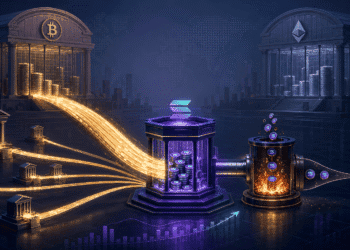
Quantum Computing Could Break Bitcoin and Ethereum: Coinbase Just Released a 50-Page Report on How Crypto Should Prepare

A Coinbase advisory board including Stanford and Ethereum Foundation researchers published a 50-page report warning that quantum computers could eventually crack crypto encryption. Algorand and Aptos are ahead. Bitcoin and Ethereum are not. Here is what you need to know.

Salar Salek by Salar Salek
April 22, 2026
in Altcoins
Quantum Computing Could Break Bitcoin and Ethereum: Coinbase Just Released a 50-Page Report on How Crypto Should Prepare

Crypto has a lot of problems to worry about right now. Wars, hacks, regulation, oil prices, ceasefire deadlines. But somewhere in the background, a much bigger threat is quietly getting closer. Coinbase just released a 50-page report that lays it out in plain terms: quantum computers will eventually be powerful enough to crack the encryption that secures every major blockchain. And the industry is not ready.

The paper, authored by an independent advisory board that includes prominent cryptographers and academics like Dan Boneh of Stanford University, Justin Drake of the Ethereum Foundation, and Sreeram Kannan of Eigen Labs, concludes that while today’s blockchains remain secure, a future “fault-tolerant quantum computer” capable of breaking widely used encryption is increasingly plausible, and preparation must begin now.


Related articles

GRAM Hit a Three-Month Low After Telegram Briefly Vanished From the App Store

GRAM Hit a Three-Month Low After Telegram Briefly Vanished From the App Store

August 4, 2026
Coinbase Opens Native SUI Staking to Everyday Users as Institutional Demand Climbs

Coinbase Opens Native SUI Staking to Everyday Users as Institutional Demand Climbs

July 22, 2026

The report is not alarmist. Nobody is saying quantum computers will break Bitcoin next week. What it is saying is that the transition to quantum-resistant security will take years, and anyone who waits until the threat is urgent has already waited too long.

What Quantum Computers Could Actually Break

Every cryptocurrency transaction relies on cryptographic signatures to prove that the person sending funds is the rightful owner. Those signatures are currently protected by mathematical problems that would take today’s computers billions of years to solve. A sufficiently powerful quantum computer could solve them in hours.

“Waiting for it to be urgent is not a good idea,” the Coinbase paper says, emphasising that transitions across blockchains, wallets, and exchanges could take years to execute safely.

The most immediate risk is something called “harvest now, decrypt later.” Attackers can collect encrypted blockchain data today, store it, and wait for quantum hardware to catch up. For long-held assets like Bitcoin in cold storage, this is not a hypothetical future problem. The data is already out there. The only question is when the hardware arrives to crack it.

Some assets may be more vulnerable than others. Bitcoin wallets that have already revealed their public keys could be targeted, while those still protected behind hash functions may be safer in the short term.

The Transition Will Not Be Easy

Quantum-resistant cryptography exists. It has been standardised by NIST and multiple implementations are available. The problem is that swapping out the encryption that underpins an entire blockchain is like replacing the engine of a car while driving it at 100 miles per hour.

Post-quantum digital signatures can be tens to hundreds of times larger than current ones, which could dramatically increase blockchain data costs and reduce throughput. One estimate in the report suggests that replacing today’s signatures with quantum-proof alternatives could expand block sizes by up to 38 times.

That is a staggering increase. A 38x expansion in block size would mean dramatically more storage, bandwidth, and processing power required to run a full node. Transaction fees could rise. Network speed could drop. The cure, if implemented carelessly, could be as disruptive as the disease.

Who Is Ahead and Who Is Behind

This is where it gets interesting for investors. Not every blockchain is in the same position. Some projects have been working on quantum resistance for years. Others have barely started.

Coinbase’s quantum computing advisory group identified Algorand and Aptos as front-runners in preparing for quantum computing threats. The report warns that proof-of-stake blockchains, including Ethereum and Solana, may face significant vulnerabilities if they fail to adopt quantum-resistant measures soon.

Algorand has already integrated quantum-resistant cryptographic tools into its mainnet, making it one of the first major blockchains to do so. Aptos has been building post-quantum features into its architecture from the beginning. Both are significantly ahead of the larger chains.

Bitcoin’s core protocol is actually more resilient than most people think, because its mining process and data structure are harder to attack with quantum computing. But wallet-level vulnerabilities remain a real concern, particularly for wallets that have already exposed their public keys through previous transactions.

Ethereum and Solana face a different challenge. As proof-of-stake chains, their validator systems depend on the same cryptographic signatures that quantum computers would target. The Ethereum Foundation has published a post-quantum roadmap, but the implementation timeline stretches years into the future.

Ripple announced a four-phase plan to make the XRP Ledger quantum-resistant by 2028, showing that even mid-cap projects are taking the threat seriously.

What This Means Right Now

Nobody needs to panic today. Quantum computers capable of breaking Bitcoin’s encryption do not exist yet, and most experts believe they are at least a decade away. But a decade is not a long time when the migration itself could take five to seven years.

The Coinbase report is the most authoritative industry assessment of the quantum threat to date. It was written by people who build the systems that need protecting, not by outsiders speculating about worst-case scenarios. When Stanford’s top cryptographer and the Ethereum Foundation’s lead researcher co-author a paper saying “start preparing now,” the industry should listen.

For investors, quantum readiness could become a factor in how blockchains are valued over the next few years. Projects that have already started the transition, like Algorand and Aptos, may carry less long-term risk than chains that are still in the planning phase. It is too early for this to be a primary investment thesis, but it is no longer too early to be a consideration.

Disclaimer: This article is for informational purposes only and does not constitute financial, investment, or legal advice. Always conduct your own research before making any investment decisions.


 

Salar Salek

Salar Salek Verified AltcoinReporter Author

Salar covers cryptocurrency markets, blockchain technology, DeFi, and emerging digital asset trends for AltcoinReporter. With a background in technology and finance, he has been actively following and investing in the...

Read More
Tags: AltcoinsBitcoinBlockchainEthereumSecurity

Related Posts

GRAM Hit a Three-Month Low After Telegram Briefly Vanished From the App Store

GRAM Hit a Three-Month Low After Telegram Briefly Vanished From the App Store

by Salar Salek
August 4, 2026
0

Users began reporting the problem shortly after 01:00 GMT on Tuesday. Searching for Telegram in Apple's App Store returned nothing....

Coinbase Opens Native SUI Staking to Everyday Users as Institutional Demand Climbs

Coinbase Opens Native SUI Staking to Everyday Users as Institutional Demand Climbs

by Salar Salek
July 22, 2026
0

For most everyday crypto users, staking has always been a little intimidating. In theory, it's simple: lock up your tokens...

XRP Just Challenged USDC for Fifth-Largest Crypto After a 10% Weekly Surge

XRP Just Challenged USDC for Fifth-Largest Crypto After a 10% Weekly Surge

by Salar Salek
July 5, 2026
0

XRP had a strong holiday weekend. The token jumped more than 5% on July 4 and nearly 10% over the...

Trump’s Crypto Buyers Are Down $3.8 Billion as TRUMP Token Craters 96%

Trump’s Crypto Buyers Are Down $3.8 Billion as TRUMP Token Craters 96%

by Salar Salek
July 4, 2026
0

When Donald Trump launched his official memecoin three days before his January 2025 inauguration, he framed it as a celebration....

Solana Network Activity

Solana Network Activity Rises Even as SOL Price Falls, But the Signal Is Messy

by Dans Kramer
June 26, 2026
0

Solana network activity is climbing even as SOL remains under pressure, creating one of the more confusing setups in the...

Load More
  • Trending
  • Comments
  • Latest
Solana Alpenglow Upgrade 2026: Launch Date, Features, and What It Means for SOL

Solana Alpenglow Upgrade 2026: Launch Date, Features, and What It Means for SOL

April 18, 2026
Pi Network Completes Protocol 23 and Sets June 2 Deadline for Node Operators

Pi Network Completes Protocol 23 and Sets June 2 Deadline for Node Operators

May 27, 2026
Dogecoin and Meme Coins

Dogecoin and Meme Coins Face a Reality Check as Speculative Demand Fades

June 14, 2026
Solana’s Alpenglow Upgrade: The Biggest Change to SOL Since Launch

Solana’s Alpenglow Upgrade: The Biggest Change to SOL Since Launch

April 7, 2026
North Korea’s Six-Month Con: How Hackers Stole $286M from Solana’s Drift Protocol

North Korea’s Six-Month Con: How Hackers Stole $286M from Solana’s Drift Protocol

0
Ethereum’s Glamsterdam Upgrade: What It Is and Why It Matters in 2026

Ethereum’s Glamsterdam Upgrade: What It Is and Why It Matters in 2026

0
Bitcoin’s Worst Q1 Since 2018: Can April Turn the Tide?

Bitcoin’s Worst Q1 Since 2018: Can April Turn the Tide?

0
Former UK Chancellor Kwarteng Leads Bitcoin Firm as Farage Backs BTC

Former UK Chancellor Kwarteng Leads Bitcoin Firm as Farage Backs BTC

0
JPMorgan Crypto Collateral Loans Carry 30-50% Haircuts, Analysis Finds

JPMorgan Crypto Collateral Loans Carry 30-50% Haircuts, Analysis Finds

August 18, 2026
Saylor Tells Shareholders Not to Buy Bitcoin Unless Holding Four Years

Saylor Tells Shareholders Not to Buy Bitcoin Unless Holding Four Years

August 18, 2026
Ethereum Staking Hits Record 34.4% of Supply as Validator Yields Sink to Three-Year Low

Ethereum Staking Hits Record 34.4% of Supply as Validator Yields Sink to Three-Year Low

August 18, 2026
MiCA Migration Scams Surge as 1,700 Crypto Platforms Exit the EU

MiCA Migration Scams Surge as 1,700 Crypto Platforms Exit the EU

August 18, 2026

About

AltcoinReporter

AltcoinReporter is an independent crypto news platform built to keep you ahead of the market. We cover everything from Bitcoin and altcoins to DeFi, NFTs, regulation, and emerging blockchain technology.


Our editorial team delivers accurate news, detailed market analysis, and expert insights, with every article written and reviewed by named contributors. We are committed to transparent, independent reporting our readers can trust.

News

  • Altcoins
  • Bitcoin
  • Blockchain
  • DeFi
  • Ethereum
  • NFT

Reviews

  • Exchanges
  • NFT Marketplaces
  • Wallets

Company

  • About Us
  • Advertise
  • Write for Us
  • Contact Us

Disclaimer: AltcoinReporter.com provides cryptocurrency news for informational purposes only, not financial, investment, or legal advice. Crypto markets carry significant risk. Always do your own research and consult a financial advisor before investing. We may earn compensation through affiliate links, ads, and sponsored content, which are clearly labelled. AltcoinReporter is not responsible for any financial losses resulting from information on this site.

  • Cookie Policy
  • Ethics
  • Corrections
  • Editorial Standards
  • Privacy Policy
  • Terms & Conditions

© 2026 AltcoinReporter. All rights reserved.

No Result
View All Result
  • Home
  • News
    • Altcoins
    • Bitcoin
    • Blockchain
    • DeFi
    • Ethereum
    • NFT
  • Press Releases
  • Reviews
    • Exchanges
    • NFT Marketplaces
    • Wallets
  • Market Analysis
  • Contact Us

© 2026 AltcoinReporter. All rights reserved.