

Something has gone wrong with Solana, and nobody seems to agree on what comes next.
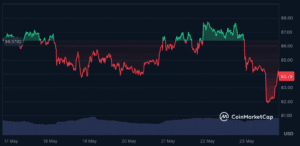
SOL is trading around $85, stuck in a range between $82 and $90 that it hasn’t broken out of since late April. The token is down 33% year-to-date. It hasn’t traded above $100 since February 3. The 200-day moving average has been falling since late April, signaling long-term weakness that short-term bounces haven’t been able to reverse.


This was supposed to be a breakout year for Solana. The memecoin frenzy of 2025 brought record activity to the network. The Alpenglow upgrade promised to make it the fastest blockchain in the world. Institutional ETFs launched to solid demand. Everything looked set for SOL to challenge its previous highs.
Instead, the memecoin wave faded. DEX volume collapsed. DeFi activity shrank. And two competitors, Sui and Hyperliquid, have been stealing the spotlight in ways that would have seemed impossible a year ago.
Solana isn’t dead. But it’s facing the most serious challenge to its growth narrative since the FTX collapse in late 2022.
The On-Chain Activity Cliff
DEX volume on Solana has dropped 56% since January. Monthly DEX volume fell from a peak of $145 billion in October 2025 to roughly $42 billion by the end of April, before recovering slightly into May. That decline directly tracks the cooling of the memecoin mania that powered much of Solana’s 2025 activity.
Ethereum overtook Solana in monthly DEX volume in April for the first time in months, posting $44 billion versus Solana’s $42 billion. As of mid-May, the two chains are running neck and neck, with Solana’s weekly DEX volume sitting at $12.20 billion versus Ethereum’s $12.05 billion. The lead Solana built during the memecoin boom has essentially evaporated.
DeFi total value locked tells a similar story. Approximately 18 million SOL tokens have been pulled out of Solana-based DeFi protocols, with TVL declining from 81 million to 63 million SOL. In dollar terms, Solana’s TVL sits at approximately $5.9 billion, well behind Ethereum’s $43.2 billion and closer to BNB Chain ($5.5 billion) and Base ($4.5 billion) than to the clear second place it occupied a year ago.
Monthly active users have fallen to a two-year low of around 34.1 million. Network fees are down 50% since January. The funding rate for SOL perpetual futures turned negative at -3%, down from +8% just days earlier, indicating that derivatives traders are positioning for further downside.
The Competitors Are Closing In
While Solana’s metrics decline, two competitors are surging in the very areas where Solana once dominated.
Hyperliquid’s HYPE token surged 45% in a single week and flipped Solana by fully diluted valuation at $56 billion. HYPE is up 70% year-to-date while SOL is down 33%. The decentralized exchange now captures over 50% of all perp volume and generates more weekly fees than Ethereum and Solana combined. Its expansion into pre-IPO trading (including SpaceX contracts) is creating entirely new markets for which Solana has no equivalent.
Sui rallied 37% in seven days after a Nasdaq-listed firm staked 108 million SUI tokens worth $143 million. The move removed 2.7% of circulating supply from the market and sparked a breakout from months of consolidation. Sui’s partnership with Nigerian fintech Paga for stablecoin payments and its announcement of zero-fee transfers are building a real-world adoption story that resonates with investors.
Neither Hyperliquid nor Sui is a direct replacement for Solana. They serve different niches. But they’re capturing capital, attention, and developer mindshare that would have flowed to Solana by default in previous cycles. The competitive landscape for Layer 1 blockchains has never been tighter.
Goldman Sachs’ exit of its entire Solana ETF position in Q1 adds institutional weight to the bearish case. When one of Wall Street’s most prominent firms dumps its SOL exposure while maintaining Bitcoin positions, it sends a clear signal about where institutional conviction lies.
The Memecoin Hangover
Much of Solana’s 2025 story was built on memecoins. Platforms like Pump.fun made it trivial to launch tokens, resulting in an explosion of activity that drove record transaction volumes, fees, and user counts.
The problem with memecoin-driven growth is that it’s inherently temporary. When the speculation cools, the activity disappears. And the users who came for memecoins rarely stick around for DeFi, NFTs, or other ecosystem applications.
That’s exactly what happened. The memecoin frenzy peaked in late 2025 and has been fading ever since. Analysis from PreStocks found that just 1,600 addresses generated 63% of total trading volume on one Solana-based platform, suggesting that much of the remaining activity is driven by MEV bots and high-frequency traders rather than genuine retail engagement.
Solana’s low fees, which were its greatest strength for attracting users, also make it cheap for bots to flood the network with artificial volume. That creates a distorted picture where headline transaction counts and volumes look healthy but don’t reflect real organic demand.
The challenge for Solana going forward is proving it can sustain activity without relying on speculative trading. The network needs applications that generate sticky, recurring usage, not just one-time token launches that flame out within hours.
The Bull Case: Alpenglow and Whale Accumulation
Despite the declining metrics, there are legitimate reasons to think Solana’s current weakness is temporary rather than permanent.
The biggest is the Alpenglow upgrade. Co-founder Anatoly Yakovenko said at Consensus Miami that the upgrade could arrive as early as Q3 2026. Alpenglow replaces Solana’s consensus mechanism entirely, targeting transaction finality of approximately 150 milliseconds, down from the current 12.8 seconds. If delivered, it would make Solana the fastest major blockchain in the world by a significant margin.
That kind of speed improvement isn’t just a technical bragging point. It enables use cases that don’t work on slower networks: high-frequency trading, real-time gaming economies, instant point-of-sale payments, and AI agent transactions that require near-instant settlement. If Alpenglow ships successfully, it gives Solana a genuine technical moat that competitors can’t easily replicate.
Whale activity also suggests smart money is positioning for a recovery. On-chain data from Nansen showed the top 100 SOL wallets increased their holdings by 59.95% in a single day this week. Two new wallets accumulated roughly $9.7 million in SOL from major exchanges. When the largest holders are buying while retail is selling, it often signals that a bottom is forming.
Coinbase just launched USDF, a new USDC-backed stablecoin specifically built on Solana. That kind of infrastructure investment from a major exchange suggests continued confidence in the network’s long-term relevance.
The Technical Setup
SOL is trapped in a well-defined range with clear levels on both sides.
Support sits at $82 to $84. This zone has held across multiple retests and represents the level at which institutional buyers have consistently stepped in. A breakdown below $82 on heavy volume would be a serious bearish signal, opening a path toward $78 and potentially the mid-$70s.
Resistance sits at $88.50 to $90. SOL has failed to break above this zone on every attempt since late April. The 20- and 50-day EMAs converge near $88, creating a moving-average ceiling that price needs to push through before any sustained rally can develop.
The 200-day EMA at $109.86 indicates how far SOL has to move to restore its long-term uptrend. That level is roughly 30% above current prices and represents the minimum recovery needed to shift the structural outlook from bearish to neutral.
RSI at 43.54 is neutral, leaving room for movement in either direction. The MACD histogram is contracting, suggesting bearish momentum is fading but hasn’t reversed. Analysts see a breakout above $90.70 as the trigger for a potential rally toward $95 and then $105. A breakdown below $82.60 would confirm bearish control and likely accelerate selling.
The range is tightening. Something will break. The question is whether Alpenglow arrives in time to provide the catalyst bulls need.
The Verdict
Solana is at a crossroads. The metrics that powered its 2025 rally, memecoin activity, DEX dominance, and explosive user growth have all deteriorated. Competitors are gaining ground. Goldman Sachs has exited. The price is stuck below every major moving average.
But underneath that weakness, whales are accumulating. Coinbase is building on the network. The Alpenglow upgrade promises the most significant performance improvement in Solana’s history. And the $82 to $84 support zone has held firm through multiple tests, suggesting the selling pressure may be nearing exhaustion.
The near-term outlook is neutral. SOL needs to break above $90 with conviction to change the narrative. Until that happens, the range-bound trading is likely to continue. Analyst forecasts for year-end cluster between $89 and $105, with the upper end requiring Alpenglow to ship on time and the broader crypto market to stabilize.
For long-term holders, the fundamental question is whether Solana’s speed advantage, developer ecosystem, and institutional interest are enough to overcome a year of declining activity and rising competition. The answer probably depends on Alpenglow. If the upgrade delivers what Yakovenko promised, SOL at $85 will look like a steal in hindsight. If it’s delayed or disappointing, the competitors circling overhead will keep getting closer.
FAQ
Why is Solana underperforming in 2026?
SOL is down 33% year-to-date, hurt by the fading of the memecoin frenzy that drove activity in 2025. DEX volume has fallen 56% since January. DeFi TVL dropped by 18 million SOL. Monthly active users hit a two-year low. And competitors like Hyperliquid and Sui are capturing capital and attention that previously flowed to Solana.
What price levels should SOL traders watch?
Support sits at $82 to $84, where institutional buying has consistently stepped in. Resistance is at $88.50 to $90, the ceiling that has rejected every rally attempt since late April. A breakout above $90.70 targets $95 and then $105. A breakdown below $82 risks a move toward $78 and the mid-$70s.
Could Solana recover in the second half of 2026?
The Alpenglow upgrade, expected as early as Q3, could be a major catalyst. It targets 150ms transaction finality, which would make Solana the fastest major blockchain by a wide margin. Whale accumulation and continued institutional infrastructure development (including Coinbase launching a stablecoin on Solana) suggest smart money sees long-term value. Analyst year-end targets range from $89 to $105.
Disclaimer: This article is for informational purposes only and does not constitute financial advice. Cryptocurrency investments carry significant risk. Always conduct your own research before making any investment decisions.