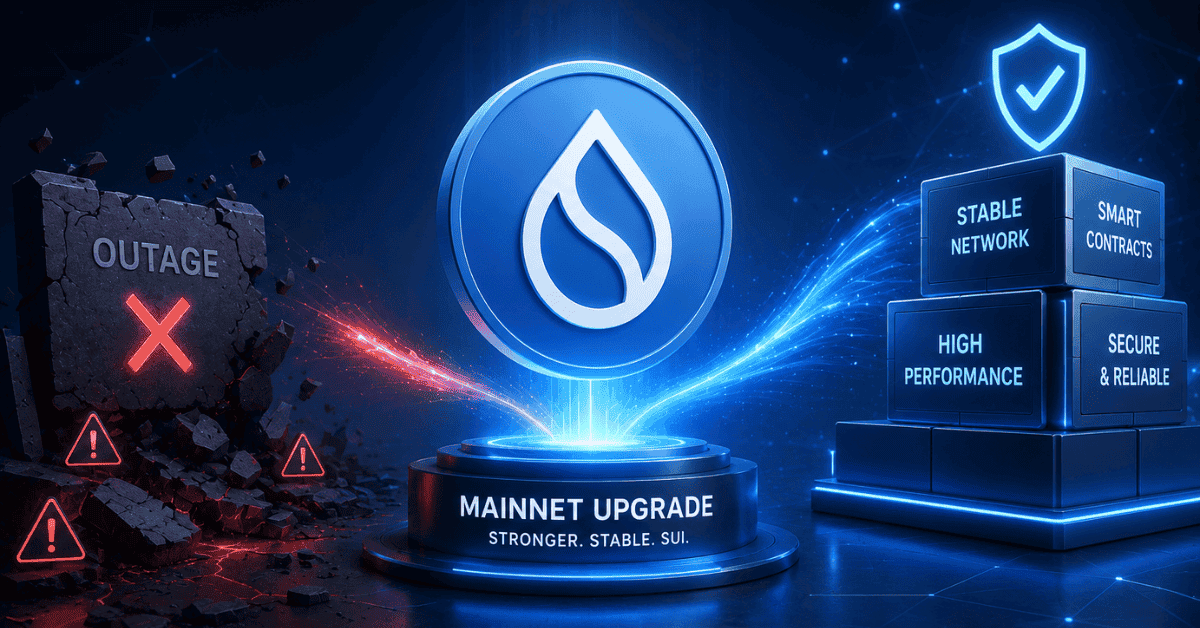
Sui mainnet upgrade activity is back in focus after validators deployed fixes for software bugs that caused repeated outages and disrupted transaction processing on the layer-1 blockchain.
Sui said the mainnet had resumed normal operations after validators implemented a fix addressing both the underlying bug and the affected epoch. The disruption was tied to the network’s 1.72 release, which introduced problems around gas billing logic and later exposed an issue with epoch progression and randomness recovery.

For users, the important update is simple: Sui is processing transactions again. For investors and developers, the bigger question is whether the incident will leave lasting concerns about network reliability.
What Went Wrong With Sui
The first issue came from a crash bug in the gas charging logic introduced by Sui’s 1.72 release. In plain English, the part of the software responsible for calculating transaction costs broke in a way that caused the network to stop processing normally.
Reports said the first halt lasted roughly 5 hours and 55 minutes before validators coordinated around a patched version and restored normal checkpoint production. A later disruption was linked to related upgrade issues, including an interaction between the Address Balances feature and gas billing logic.
Sui’s own technical update also pointed to a separate problem involving epoch closure and randomness recovery. The fix included persisting DKG status across restarts and adding a mechanism that allowed validators to close a stuck epoch at a coordinated point.
That matters because modern blockchains rely on more than simple transaction ordering. They need validators to stay synchronized, epochs to advance cleanly and randomness systems to continue operating as expected.
Why the Outage Drew So Much Attention
Sui has positioned itself as a high-performance blockchain built for fast transactions, consumer apps and scalable on-chain activity. That makes uptime especially important.
When a network markets itself around speed and reliability, even a temporary halt can become a major credibility test. Users may worry about stuck transactions. DeFi protocols may pause activity. Traders may sell the token first and wait for the technical explanation later.
That is what happened here. SUI came under pressure during the outage period, with market reports noting a sharp weekly decline as traders reacted to the repeated halts.
The selloff was not only about one bug. It reflected a broader concern that newer layer-1 networks still have to prove they can handle rapid upgrades without creating fresh operational risk.
Validators Played a Central Role in the Fix
The recovery depended on validator coordination.
Validators needed to deploy patched software, align around the fix and help move the network past the affected state. That is normal for many blockchain incidents, but it also highlights a tension in decentralized infrastructure.
On one hand, coordinated validator action can save a network during an emergency. On the other, repeated reliance on emergency coordination can raise questions about resilience, decentralization and upgrade safety.
In Sui’s case, the coordinated fix appears to have worked. Network activity resumed, transaction processing returned and the affected epoch was closed. The next challenge is convincing users that the same failure path has been properly addressed.
Why This Matters Beyond Sui
The incident is not only a Sui story. It is a reminder that blockchain upgrades carry real execution risk.
Every major chain has to improve over time. That means shipping new features, improving performance, fixing bugs and changing how core systems work. But when the network itself secures real assets, every update becomes sensitive.
A software bug in a normal app may cause users to refresh a page. A software bug in a blockchain can freeze transfers, disrupt DeFi activity and affect market confidence in the token.
That is why postmortems matter. Developers and validators need to explain what failed, how it was fixed and what safeguards will prevent similar incidents. Without that transparency, users are left guessing whether the problem was isolated or systemic.
Sui Still Has a Strong Ecosystem Case
The outage does not erase Sui’s broader progress.
The network continues to attract developers, applications and users interested in fast, low-cost blockchain activity. Its Move-based architecture remains a key part of its technical pitch, and its ecosystem has grown across DeFi, gaming and consumer-facing crypto products.
But uptime is part of the product. A layer-1 network can have strong technology and still lose trust if users feel the chain may halt during important market periods.
That makes the next few weeks important for Sui. Stable operation after the patch would help the incident fade. Any further disruption would make the reliability debate much harder to dismiss.
What Traders Should Watch Next
The most important thing to watch is Sui’s full incident review.
That report should clarify the exact sequence of failures, the role of the 1.72 release, how the gas billing and epoch issues interacted, and what testing or release-process changes will follow. Traders should also monitor validator participation, transaction activity and whether DeFi protocols fully resume normal operation.
For SUI holders, the question is whether the market treats the outage as a one-time engineering mistake or a warning sign about upgrade risk.
For developers, the question is more practical: can Sui keep shipping improvements without compromising uptime?
For now, the mainnet is back online and the fix has been deployed. The recovery is important, but the lesson is just as important. In blockchain infrastructure, speed matters, but reliability is what keeps users coming back.
Disclaimer: This article is for informational purposes only and does not constitute financial, investment, or legal advice. Always conduct your own research before making any investment decisions.