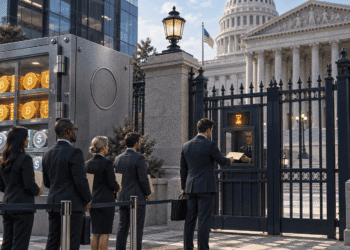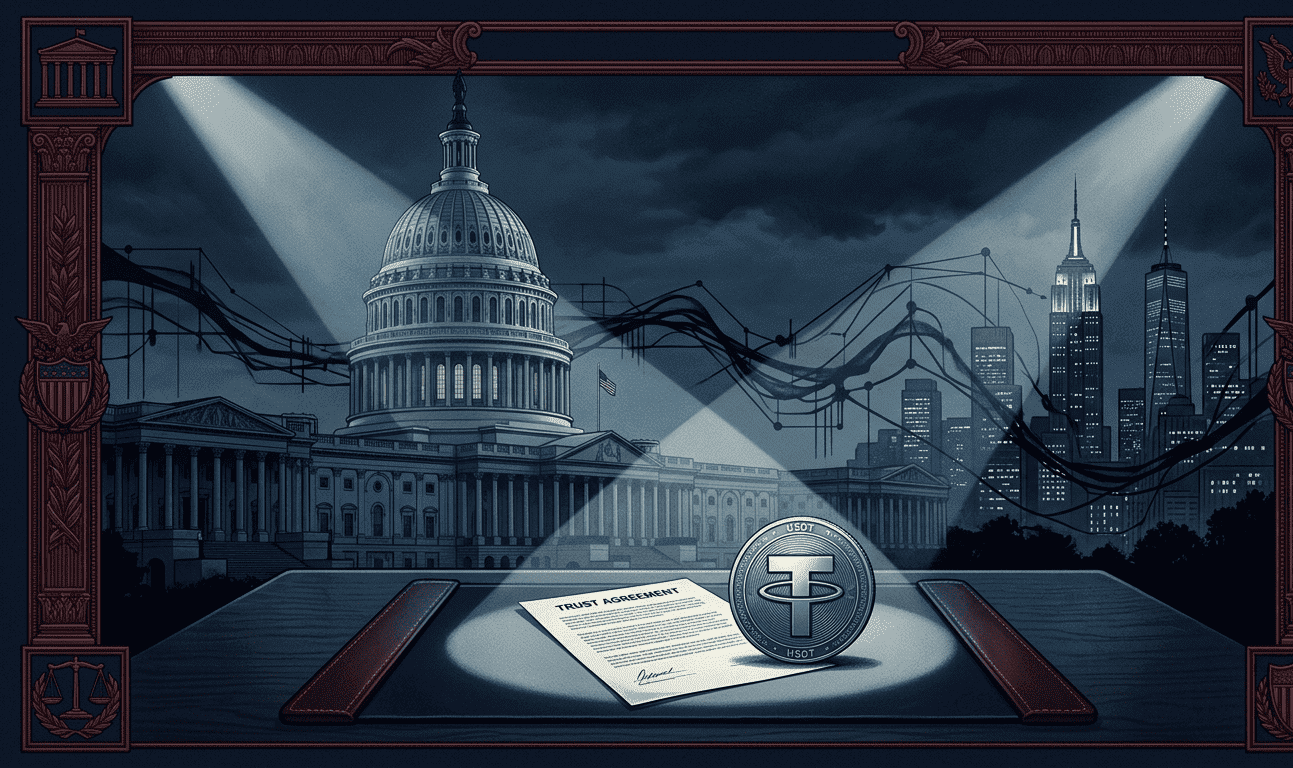
Senators Elizabeth Warren and Ron Wyden sent letters on Wednesday to Commerce Secretary Howard Lutnick and Tether CEO Paulo Ardoino demanding answers about a loan Tether reportedly made to a trust benefiting Lutnick’s four children. The senators said they want to make sure “Tether has not sought to bribe or otherwise exert control or influence over Secretary Lutnick.”
That is the ranking Democrat on the Senate Banking Committee and the top Democrat on the Finance Committee using the word “bribe” in an official letter to a sitting Cabinet member. This is not a casual inquiry.


What Happened With the Loan?
The story starts with federal ethics rules. When Lutnick became Commerce Secretary in February 2025, he was required to divest his stake in Cantor Fitzgerald to avoid conflicts of interest. He sold his shares to trusts controlled by his adult children. Standard process.
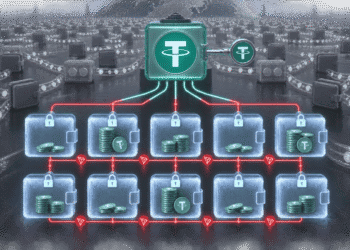
But Bloomberg reported in March that the day after Lutnick divested, a credit document was filed in New York showing that Tether lent an undisclosed amount to “Dynasty Trust A,” a trust for which Lutnick’s four children are beneficiaries. The loan is secured by all assets in the trust, including future acquisitions.
Warren and Wyden are asking an obvious question: did Tether provide the money that Lutnick’s children used to buy their father’s shares? “This document raises questions about whether Tether may have helped provide Secretary Lutnick’s children with the capital needed to purchase their father’s stake in Cantor Fitzgerald, and in return secured an interest in his children’s assets,” the senators wrote. “If true, that would be a startling revelation.”
Why Is the Lutnick-Tether Relationship a Problem?
Because it is not just a loan. It is layers of financial entanglement that have deepened since Lutnick took office.
Cantor Fitzgerald, now run by Lutnick’s sons Brandon (chairman and CEO) and Kyle (executive vice chairman), custodies approximately 99% of Tether’s Treasury holdings. That is roughly $192 billion in reserves sitting at the firm Lutnick’s children now own. Cantor earns “tens of millions of dollars a year” in fees from the arrangement.
On top of that, a convertible bond entitles Cantor to a 5% equity stake in Tether. Lutnick himself was described before his nomination as “Tether’s most prominent booster in the US.” Ardoino sat in the front row at the White House signing ceremony for the GENIUS Act, the stablecoin law that governs how Tether operates. Lutnick sits on Trump’s Digital Assets Working Group.
The CryptoTimes laid out the full web: custody fees, equity appreciation, lending programme partnership, treasury vehicle co-founding, and now a family trust credit relationship. Critics argue that this level of entanglement makes genuine divestiture “functionally impossible regardless of paper compliance.”
This Is the Fourth Probe
Warren and Wyden have been pulling at this thread for months. This is their fourth formal inquiry into the Lutnick-Tether relationship.
In February, they questioned Lutnick about his role in the GENIUS Act stablecoin law while Cantor custodies Tether’s reserves. In March, they pressed his son Brandon about Cantor’s “Tariff Refund Agreements,” financial products that let clients bet on Trump tariff policy outcomes, effectively running a market on decisions made by the senior Lutnick’s own department. In another March letter, they flagged the $1.6 billion USA Rare Earth deal, where the Commerce Department announced direct funding to a mining company on the same day Cantor was named lead placement agent for its $1.5 billion fundraising round.
Each probe has raised more specific financial questions. Each has pointed to the same structural concern: Cantor Fitzgerald keeps doing business directly connected to Commerce Department decisions while being owned by the Secretary’s children.
What Could This Mean for Tether?
Tether is already under scrutiny from multiple directions. The DOJ was reportedly investigating Tether as recently as 2024 for potential violations of sanctions and anti-money laundering rules. The company froze $344 million in USDT linked to Iran last week. It suspended a $20 billion funding plan in March while awaiting its first full financial audit.
Warren’s letter calls Tether a company “whose stablecoin has been used to finance illicit activity around the world.” That language, coming from the ranking member of the Banking Committee, signals that Tether’s regulatory path in the US could get rougher regardless of what the GENIUS Act says.
The senators have requested responses from both Lutnick and Ardoino by May 13. Neither Tether nor the Commerce Department has commented publicly.
What Does This Mean for Crypto Regulation?
The timing is brutal. The CLARITY Act is stuck in the Senate with only 9 working weeks before August recess. Senator Tillis is threatening to kill it over Trump family crypto ethics. Now Warren is raising bribery questions about the Commerce Secretary and the world’s largest stablecoin issuer.
The Trump administration pushed crypto regulation as a priority. But the political conflicts surrounding it keep multiplying. Trump’s own memecoin. World Liberty Financial’s frozen tokens. Eric Trump promoting Bitcoin at conferences. And now the Commerce Secretary’s family trust receiving loans from the company his old firm custodies $192 billion for.
Every one of these stories makes it harder for moderate senators to vote yes on crypto legislation without ethics guardrails. And every week that passes without a vote makes it more likely the CLARITY Act dies before August.
For Tether users, the practical impact depends on what the May 13 response reveals. If the loan turns out to be standard commercial lending with no unusual terms, the story fades. If it shows that Tether effectively financed the purchase of its own custodian in exchange for influence over a Cabinet member, the fallout would be enormous for both Tether and the broader stablecoin industry.