
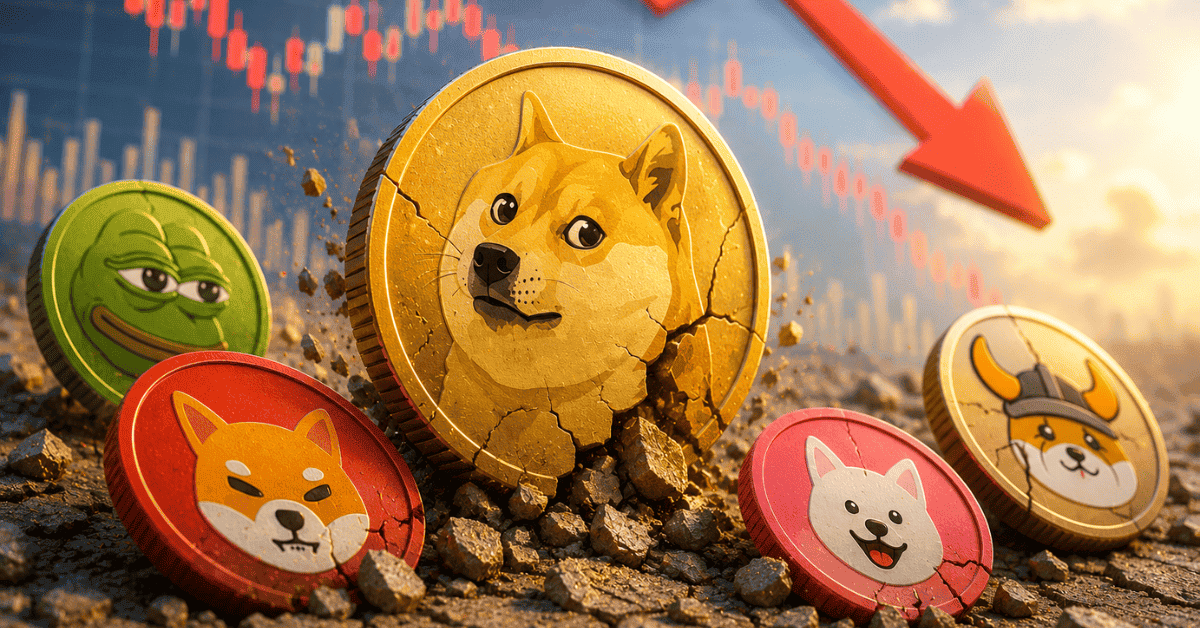
Dogecoin and meme coins are facing a reality check as speculative demand fades across crypto markets, leaving traders to question whether the sector can still deliver the same explosive rallies that defined previous cycles.
Dogecoin remains the largest meme coin by market value and still ranks among the biggest crypto assets overall. CoinMarketCap data shows DOGE trading near $0.087, with a market cap of about $14.85 billion and more than $500 million in 24-hour volume. That is far from a forgotten asset.


But the mood around meme coins has changed. The sector is no longer being treated as easy money. Traders are becoming more selective, liquidity has thinned across smaller tokens, and the broader crypto market has been stuck in a defensive phase.
DOGE Still Leads, But Momentum Has Weakened
Dogecoin’s position remains strong compared with the rest of the meme coin market.
It has major exchange listings, deep liquidity, a long-standing community and a brand that almost every crypto trader recognizes. That gives DOGE staying power that most meme coins simply do not have.
CoinGecko’s meme-token category still shows Dogecoin leading the sector, followed by names such as Shiba Inu and PEPE. SHIB remains a multi-billion-dollar asset, while PEPE continues to hold a market cap above $1 billion, showing that the top end of the meme coin market is still alive.
The problem is momentum.
Meme coins are built around attention, and attention has become harder to capture. When Bitcoin is weak, Ethereum is struggling and the broader market is cautious, traders usually cut exposure to the riskiest assets first. Meme coins sit near the top of that risk ladder.
The Easy Money Phase Has Cooled
The biggest change is that meme coin traders are no longer buying every new token just because it has a funny name and a fast chart.
That worked during the hottest part of the cycle, when liquidity was abundant and retail traders were willing to chase almost anything. It works much less well when fear rises and buyers become more careful.
CoinGecko’s research helps explain why. The number of tokens listed on GeckoTerminal ballooned from 428,383 in 2021 to nearly 20.2 million by 2025, driven partly by the ease of launching tokens through launchpads. CoinGecko also found that 11.6 million crypto projects failed in 2025 alone.
That is the real meme coin hangover.
The market did not just create a few failed jokes. It created millions of low-effort tokens, many of which disappeared almost as quickly as they arrived. That has made traders more skeptical and less willing to treat every new launch as the next big opportunity.
Why Smaller Meme Coins Are Under More Pressure
The top meme coins still have liquidity. The smaller ones often do not.
That difference matters during sell-offs. Dogecoin, Shiba Inu and PEPE can still attract buyers because they trade on major exchanges and have large communities. Smaller meme coins depend much more heavily on social media hype, thin liquidity and short bursts of attention.
When attention moves on, the market can disappear quickly.
This is why the meme coin sector is splitting into two very different groups. At the top are liquid names that may survive multiple cycles. Below them is a long tail of tokens that are far more fragile, with weaker communities, lower volume and limited reasons for traders to return.
That does not mean every smaller meme coin will fail. But it does mean the market is much less forgiving than it was during peak speculation.
PEPE Shows the Sector Is Not Finished
PEPE is one reason it would be too early to write off meme coins completely.
Despite the weaker market, PEPE remains one of the largest meme coins by market cap and continues to generate meaningful trading volume. That shows there is still demand for meme-based crypto assets when the brand, liquidity and community are strong enough.
Dogecoin also continues to benefit from being the original meme coin. Its history gives it a level of recognition that newer tokens cannot easily copy.
The issue is not whether meme coins can still rally. They can. The issue is whether broad meme coin speculation can return without stronger risk appetite across the rest of crypto.
For now, the answer looks uncertain.
What Would Bring Meme Coins Back?
A real meme coin recovery would likely need three things.
First, Bitcoin needs to stabilize. Meme coins rarely enjoy a durable sector-wide rally while BTC is breaking down or while investors are hiding in safer assets.
Second, retail demand needs to return. Meme coins are deeply tied to social media activity, viral narratives and traders looking for fast upside. Without that audience, even strong meme coins can trade sideways or fade.
Third, the sector needs a fresh cultural catalyst. Dogecoin had Elon Musk and its early internet community. PEPE had recognizable meme culture. BONK benefited from Solana’s comeback narrative. The strongest meme coin rallies usually need a story that spreads quickly beyond price charts.
Without a fresh catalyst, the sector may continue to rely on short-lived bounces rather than sustained rallies.
A Reality Check, Not a Funeral
Dogecoin and meme coins are not finished, but the market is clearly more difficult than it was.
DOGE remains a major crypto asset. SHIB and PEPE still command serious liquidity. A handful of meme coins may continue to survive because they have brand recognition, exchange access and communities that keep them visible.
But the wider meme coin market is facing a reality check.
The easy money trade has faded. Token fatigue is real. Millions of failed projects have made traders more cautious. In a market where risk appetite is weak, attention alone is no longer enough.
That may ultimately be healthy for the sector. If meme coins are going to remain part of crypto, the market may need to separate durable communities from disposable launches.
For now, meme coins are not dead. They are being forced to prove which ones still matter.
Disclaimer: This article is for informational purposes only and does not constitute financial, investment, or legal advice. Always conduct your own research before making any investment decisions.