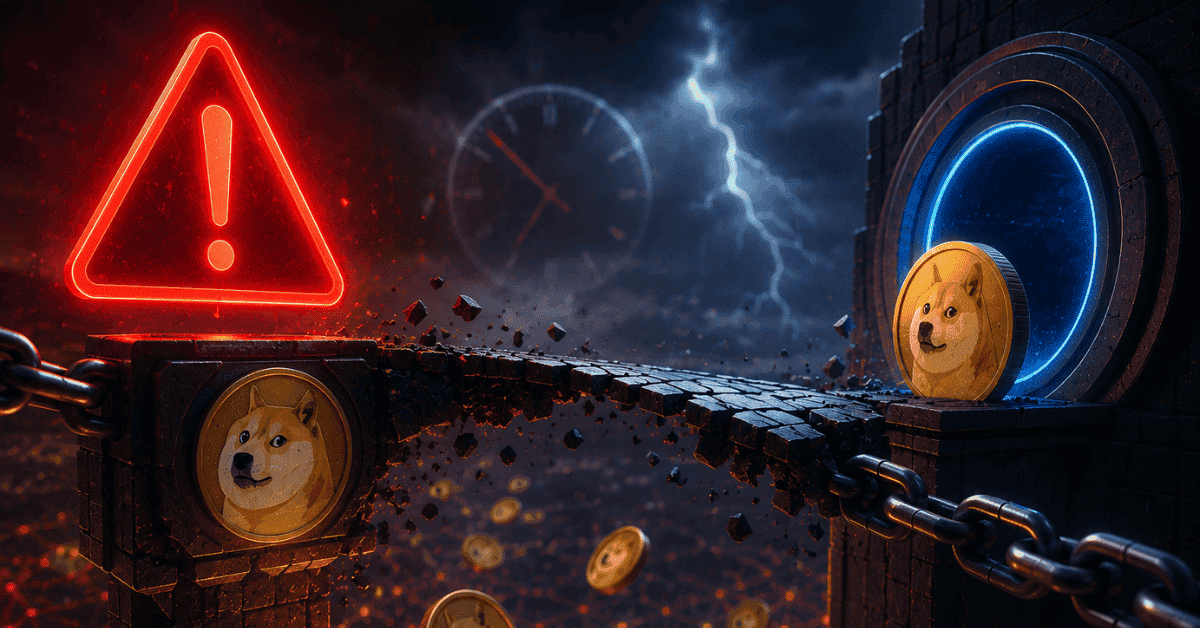
Dogechain shutdown concerns are spreading through the Dogecoin community after users were warned to bridge or withdraw funds before the network’s remaining infrastructure goes offline.
Dogechain, an EVM-compatible layer built to bring DeFi, NFTs and GameFi features to Dogecoin users, is being sunset after the team said market conditions made it difficult to keep operating and maintaining the network sustainably. The bridge is expected to remain available for roughly 60 days before being permanently shut down.


Dogechain will be shutting down in roughly 2 months, per their announcement below.
Users holding assets and QuickSwap LP positions on the Dogechain network are advised to withdraw and bridge out immediately within this timeframe, otherwise funds may be lost.
More detailed… https://t.co/teJm5tw0RQ
— QuickSwap 🐲 DragonFi 2.0 (@QuickswapDEX) June 8, 2026
That creates an urgent but simple message for users: if DOGE or other assets are still bridged to Dogechain, they may need to be moved before the window closes.
Why the Shutdown Matters
Dogechain was never the same thing as Dogecoin itself.
Dogecoin is its own blockchain, while Dogechain was a separate infrastructure layer designed to let DOGE holders interact with Ethereum-style applications. Users could bridge DOGE into the ecosystem, use DeFi tools, trade tokens, access NFTs or interact with apps built around Dogechain’s EVM environment.
That distinction matters because Dogecoin is not shutting down. The risk is with assets left inside Dogechain’s bridge and ecosystem infrastructure.
If bridge services are discontinued, users who still have assets on Dogechain may lose the easiest way to move them back. Reports around the shutdown have warned that assets left after the bridge closes could become inaccessible.
For ordinary holders, that is the part that matters most.
Mishaboar Warns Millions of DOGE Are Still Bridged
Dogecoin community member Mishaboar issued one of the clearest warnings, telling users that millions of DOGE are still bridged and urging them not to wait.
The warning is important because bridge shutdowns are different from normal exchange delistings. When an exchange delists a token, users often still have withdrawal options for a period of time. When bridge infrastructure disappears, moving assets between chains can become much more complicated or impossible through the original route.
That is why timing matters.
Users may have liquidity positions, bridged DOGE, DOG20 tokens or other assets connected to Dogechain. Some may have forgotten old positions because activity on the network has faded. Others may not realize that the bridge itself has a deadline.
The shutdown window is meant to give users time, but it also creates a hard responsibility for anyone still holding assets there.
What Users Should Check
The safest first step is to check whether any wallet still has assets on Dogechain.
Users should review bridged DOGE balances, liquidity positions, tokens issued on Dogechain and any open app positions that depend on the network. They should also make sure they are using official links and not clicking random shutdown-related links from social media, because urgent migration events often attract phishing attempts.
That security point is critical.
Whenever a crypto service announces a shutdown, scammers often create fake bridge pages, fake support accounts or fake claim portals. Users should verify URLs carefully, avoid sharing seed phrases and never enter private keys into unknown websites.
A legitimate bridge or wallet connection should not require a user to reveal a seed phrase.
A Reminder That Bridges Carry Lifecycle Risk
The Dogechain shutdown is also a reminder that bridges are not risk-free infrastructure.
Crypto users often focus on bridge hacks, but there is another risk: what happens when a bridge or ecosystem becomes economically unsustainable? If a network loses users, liquidity and developer activity, the cost of maintaining infrastructure may no longer make sense.
That can leave users with a limited exit window.
This is especially important for assets connected to smaller ecosystems. A token can still exist on-chain, but if the main bridge, explorer, RPC endpoints or app interfaces disappear, practical access can become much harder.
In other words, decentralization does not always mean infrastructure is permanent.
Dogecoin Itself Is Not the Problem
It is important not to confuse this with a problem on the Dogecoin network.
Dogecoin continues to operate as normal. The issue is Dogechain, a separate layer that tried to expand Dogecoin’s utility into DeFi and app activity. Its shutdown says more about the difficulty of sustaining smaller crypto ecosystems than about DOGE itself.
Dogecoin remains one of the largest crypto assets by market capitalization and one of the most recognizable brands in the industry. But the Dogechain situation shows that brand recognition alone does not guarantee durable infrastructure around a token.
Builders still need users, revenue, liquidity and long-term demand.
Without those, even ambitious ecosystem extensions can struggle.
Why Smaller Ecosystems Are Under Pressure
The shutdown fits a broader pattern in crypto.
During bull markets, new chains, bridges and app ecosystems launch quickly because liquidity is abundant and users are willing to experiment. During weaker markets, those same platforms face lower activity, lower fee revenue and less developer attention.
Dogechain’s stated reason, difficult market conditions, reflects that reality.
Maintaining blockchain infrastructure is not free. Teams need to support bridges, validators, user interfaces, documentation, security monitoring and ecosystem tooling. If activity falls too far, the network may no longer be sustainable.
That creates a harsh market filter. Projects that looked promising during speculative periods need real usage to survive after attention moves elsewhere.
What This Means for DOGE Holders
For DOGE holders, the lesson is practical.
Holding Dogecoin on the Dogecoin network is different from holding bridged DOGE or ecosystem assets on another chain. Bridged assets depend on the bridge and the infrastructure around it. If that infrastructure is shutting down, users need to act before access becomes limited.
This does not mean every bridge is unsafe. It means users should understand where their assets actually are.
A coin in a self-custody wallet on its native chain is not the same as a wrapped or bridged version inside a smaller ecosystem. The difference may not matter during normal times, but it can matter a lot during shutdowns.
A User-Safety Story More Than a Market Story
Dogechain’s shutdown may not move the broader Dogecoin price much on its own, but it matters for user safety.
The warning is not about panic selling DOGE. It is about making sure assets do not get stranded in infrastructure that is being phased out. For users who still have funds on Dogechain, the priority is not market timing. It is access.
The broader takeaway is clear.
Crypto users need to track not only token prices, but also the health of the networks, bridges and apps where their assets sit. A token can survive while a service around it disappears. When that happens, the people most at risk are often the ones who forgot they had funds there in the first place.
Dogechain’s shutdown is a reminder to check old wallets, old bridges and old positions before the exit window closes.
Disclaimer: This article is for informational purposes only and does not constitute financial, investment, or legal advice. Always conduct your own research before making any investment decisions.