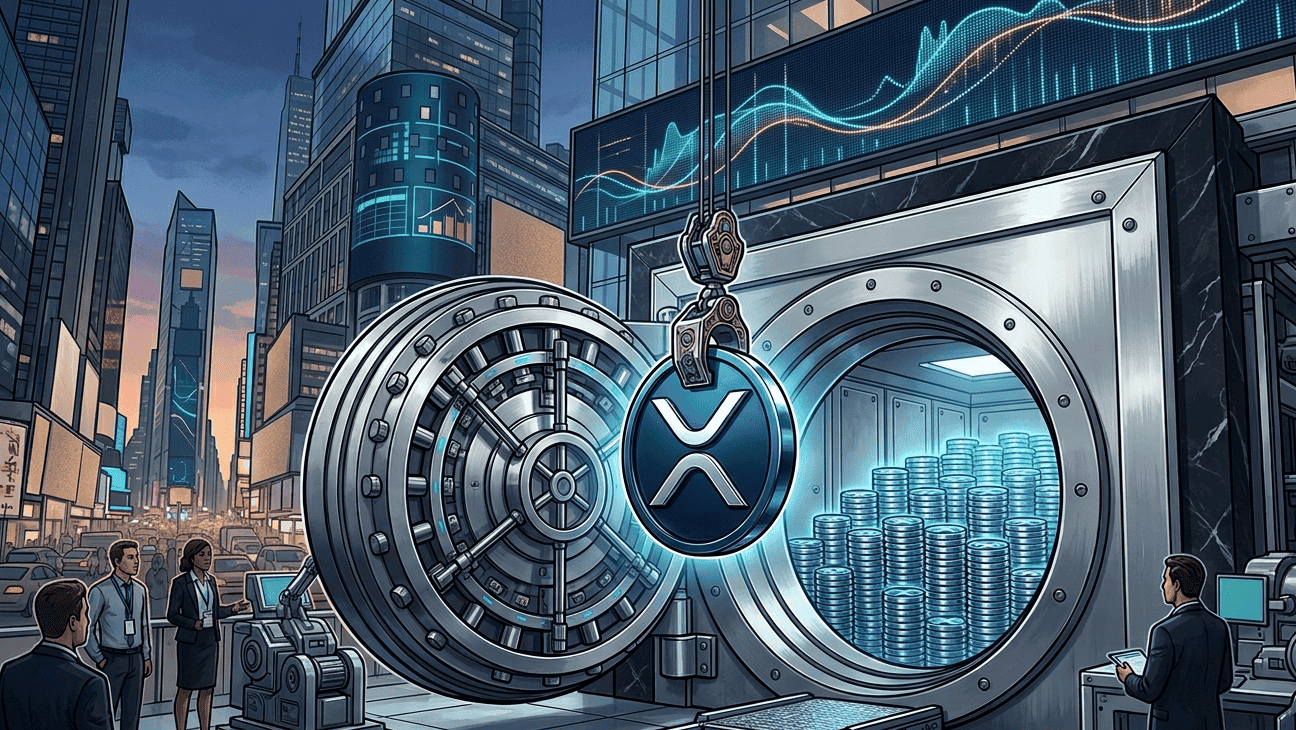
Strategy proved that a public company could build its entire identity around holding Bitcoin. The model attracted imitators, drove billions in capital into BTC, and turned Michael Saylor into the most visible corporate advocate for any single cryptocurrency.
Now someone is applying the same playbook to XRP. And they’ve raised over $1 billion to do it.


Evernorth Holdings filed an amended SEC registration this week as it moves toward completing its merger with Armada Acquisition Corp. II and listing on Nasdaq under the ticker XRPM. The company holds over 473 million XRP in its treasury and is backed by some of the most recognizable names in crypto: Ripple, SBI Holdings, Pantera Capital, Kraken, and Arrington Capital.
The founder is Asheesh Birla, who spent over a decade at Ripple leading the company’s payments and DeFi products before launching Evernorth. He’s not an outsider borrowing the XRP narrative. He helped build it.
“We believe global finance is entering a new era with digital assets playing a larger role in how capital is held, managed, and deployed,” Birla said. “Evernorth is being built to participate in that evolution.”
The SEC filing is down to its final comments. Once approved, XRPM will become the first publicly traded company on Nasdaq whose primary business is holding and actively managing a large-scale XRP treasury.
How Evernorth Differs From XRP ETFs
The obvious question is: why does XRP need a treasury company when spot XRP ETFs already exist and have attracted over $1.5 billion in cumulative inflows?
Birla addressed this directly in a recent presentation. “ETFs are a passive wrapper. They buy XRP, hold it, and that’s it. A digital asset treasury is designed to do more.”
The distinction is active versus passive. An XRP ETF buys tokens and holds them. Period. The fund doesn’t stake, lend, provide liquidity, or participate in the XRP Ledger’s growing DeFi ecosystem. It’s a financial product that gives investors price exposure and nothing else.
Evernorth’s model is fundamentally different. The company plans to actively deploy its XRP holdings through institutional lending on the XRP Ledger, liquidity provisioning across XRPL decentralized exchanges, DeFi yield strategies using the network’s native lending and escrow protocols, and participation in the growing tokenized real-world asset market on XRPL.
In other words, Evernorth doesn’t just sit on XRP. It puts the XRP to work. The yield generated from those activities flows back to shareholders as returns that a passive ETF can’t deliver.
Strategy pioneered this concept with Bitcoin, though Bitcoin’s more limited programmability means Strategy primarily holds rather than deploys its BTC. Evernorth is applying the model to a network with native DeFi capabilities, enabling the treasury to earn yield at the protocol level. That’s a structural advantage that Bitcoin treasury companies don’t have.
The Backers Behind the $1 Billion
The investor list reads like a who’s who of institutional crypto.
Ripple is a strategic investor, providing both capital and ecosystem access. Ripple’s own RLUSD stablecoin runs on the XRP Ledger, its $13 trillion annual payment flow is increasingly moving on-chain, and the company completed the first cross-border tokenized Treasury settlement on XRPL with JPMorgan and Mastercard earlier this month.
SBI Holdings, Japan’s largest financial conglomerate, has been one of XRP’s most consistent institutional champions. The company operates SBI VC Trade, one of Japan’s largest regulated crypto exchanges, and has integrated XRP into various financial products across its banking and brokerage divisions.
Pantera Capital is one of the oldest and most respected crypto-focused venture funds, with a portfolio that spans hundreds of blockchain projects across multiple cycles. Kraken, the exchange that just applied for a federal bank charter and launched CFTC-regulated margin trading, provides both investment capital and a natural distribution channel for XRPM shares.
Arrington Capital, founded by TechCrunch founder Michael Arrington, sponsors the SPAC (Armada Acquisition Corp. II) through which Evernorth will go public.
When Ripple, SBI, Pantera, and Kraken collectively back a $1 billion XRP treasury vehicle, it signals institutional conviction at a level that passive ETF flows alone can’t match. These investors aren’t buying exposure to XRP’s price. They’re investing in the infrastructure to make XRP a productive institutional asset.
The XRP Ledger Has Changed Since Most People Last Looked
Many crypto investors still think of XRP as a payments token and nothing else. The XRP Ledger in 2026 looks very different from what most people remember.
Tokenized real-world assets on XRPL surged from $24.7 million at the start of 2025 to more than $2 billion by March 2026. Daily transaction counts recently hit a new all-time high of 4 million. Multi-purpose tokens launched last year enable institutions to issue tokenized assets with built-in compliance controls. The TokenEscrow amendment extended escrow capabilities beyond XRP to stablecoins and IOUs. Native lending is being built at the protocol level.
This infrastructure is what makes Evernorth’s active treasury model possible. You can’t earn yield by lending or providing liquidity on a blockchain that doesn’t have lending or liquidity protocols. The XRP Ledger now does. And Evernorth is designed to be the largest institutional participant in those protocols.
A survey by Coinbase and EY recently revealed that institutional investors plan to increase their XRP allocations from 18% to 25% this year. That growing institutional appetite is arriving at the same time that the XRPL’s DeFi infrastructure is maturing enough to support institutional-scale capital deployment.
Evernorth sits at the intersection of those two trends: institutional demand for XRP and protocol-level infrastructure for putting that XRP to work. The $1 billion raised reflects a bet that the intersection produces returns that neither trend alone could deliver.
What XRPM Stock Would Look Like
Once the merger with Armada II closes and XRPM begins trading on Nasdaq, investors will be able to buy shares through any standard brokerage account. Robinhood, E*Trade, Fidelity, Interactive Brokers — anywhere you can buy stocks, you’ll be able to buy XRPM.
The stock’s price will be driven by two factors: the market value of Evernorth’s XRP holdings and the yield the company generates from deploying those holdings. If XRP’s price rises, the treasury value increases and the stock should follow. If Evernorth generates meaningful yield from lending, liquidity provisioning, and DeFi strategies, that additional return gets reflected in the stock’s premium to its net asset value.
Strategy provides a useful comparison point. MSTR stock has historically traded at a premium to its Bitcoin net asset value because the market valued the company’s acquisition strategy and leverage. That premium has eroded as Strategy’s position moved underwater. Whether XRPM can sustain a premium depends on whether its active treasury model actually generates the returns that passive ETFs can’t.
The risk is that the yield strategies don’t produce sufficient returns to justify the complexity and premium. If Evernorth simply holds XRP and earns minimal yield, it becomes a more expensive version of an XRP ETF. The entire value proposition depends on the active management producing meaningful outperformance.
What This Means for XRP
Evernorth’s listing adds another institutional demand source for XRP alongside spot ETFs, corporate treasuries like Ripple’s own holdings, and the growing number of banks and asset managers building on the XRP Ledger.
The 473 million XRP currently in Evernorth’s treasury represents roughly 0.47% of XRP’s total supply. That’s a meaningful but not market-moving amount. The more significant impact comes from the signal the company sends to other institutional investors.
When a $1 billion treasury company backed by Ripple, SBI, and Pantera goes public on Nasdaq with the sole purpose of accumulating and deploying XRP, it tells every institutional allocator that XRP has graduated from “speculative altcoin” to “institutional-grade asset with dedicated public market vehicles.”
Combined with $1.5 billion in ETF inflows, JPMorgan settling tokenised Treasuries on XRPL, and the CLARITY Act advancing through the Senate, the institutional infrastructure around XRP has reached a density that didn’t exist 12 months ago.
XRP is trading at $1.30 today, down from $1.45 after the CLARITY Act committee vote. Whether the price reflects the institutional reality being built around it is the multi-billion-dollar question that Evernorth is betting everything on.
FAQ
What is Evernorth Holdings?
Evernorth is a company building the world’s largest institutional XRP treasury. Founded by Asheesh Birla, a former Ripple executive, the company raised over $1 billion from investors including Ripple, SBI Holdings, Pantera Capital, and Kraken. It holds 473 million XRP and plans to list on Nasdaq under the ticker XRPM through a SPAC merger with Armada Acquisition Corp. II.
How is Evernorth different from XRP ETFs?
XRP ETFs passively hold tokens and provide only price exposure. Evernorth actively deploys its XRP through institutional lending, liquidity provisioning, DeFi yield strategies, and participation in the XRP Ledger’s tokenized asset ecosystem. The active management aims to generate returns above and beyond XRP’s price appreciation, which passive ETFs cannot deliver.
When will XRPM start trading on Nasdaq?
The SEC filing is in its final review stage, with the company reporting it is “down to the last few comments” from regulators. No specific listing date has been confirmed, but the merger with Armada II and subsequent Nasdaq listing are expected to be completed in the near term. Once listed, XRPM shares will be available through any standard brokerage platform.
Disclaimer: This article is for informational purposes only and does not constitute financial advice. Cryptocurrency investments carry significant risk. Always conduct your own research before making any investment decisions.