Zcash was the best-performing major cryptocurrency of the past nine months. From September 2025 to early June 2026, ZEC rallied over 700%, climbing from below $80 to above $630 as demand for financial privacy surged alongside expanding government surveillance, wealth tax proposals, and AI-driven monitoring.
Then a security researcher used an AI model for one day and the entire rally halved.
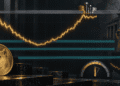

ZEC crashed from approximately $630 to as low as $306 in 36 hours, a decline of over 50% at its worst. The token has since recovered slightly to the $340 to $370 range, but it remains roughly 42% below where it was trading before the vulnerability was disclosed.
The bug is patched. The emergency hard fork was deployed between June 1 and June 3. The flaw in the Orchard shielded pool that could have allowed unlimited counterfeit ZEC has been fixed. No evidence of exploitation has been found, though the privacy properties of the shielded pool make it cryptographically impossible to prove that definitively.
The technical problem is solved. The trust problem is not. And the price is sitting in a zone where one side of the market sees a generational buying opportunity and the other sees damaged goods that may never recover.
What the Chart Looks Like After the Crash
The damage to ZEC’s technical structure is severe.
The ascending channel that supported the nine-month rally from $80 to $630 was broken decisively on the crash. Three months of bullish market structure was destroyed in a single session. The price fell through the 20, 50, 100, and 200-day moving averages without pausing at any of them. Each one that should have provided a bounce was sliced through like it wasn’t there.
Support has established at the $360 level, which is being tested right now. Below that, $342 represents the secondary downside target. The crash low near $306 marks the worst-case zone where panic selling exhausted itself on the initial decline. If $306 breaks on a retest, the next meaningful support doesn’t appear until $250, a level that represents the entry point for longer-term holders who accumulated during Q4 2025.
On the upside, the old neckline of a head-and-shoulders pattern that formed before the crash sits at $430. Any bounce attempt will face heavy selling there. Traders who were trapped during the crash will look to exit at or near their entry prices, creating a wall of supply between $400 and $440.
Reclaiming $449 would be the first signal that selling pressure is easing. Getting above $486 would weaken the bearish outlook meaningfully. And pushing through $502 to $511 would constitute a genuine recovery into the pre-crash zone. Each level is a checkpoint that needs to be cleared, and each one will take time.
The Coppock Curve on the monthly chart reads -30.28. Despite the crash, this long-term momentum indicator remains positive on the monthly timeframe, suggesting the broader uptrend hasn’t been structurally killed, only violently interrupted. The ALMA(9) sits at $537, meaning the current price is 38% below its short-term mean, a statistically rare dislocation that historically precedes reversions.
The Trust Damage Is the Real Problem
Price recovers from oversold conditions. Trust doesn’t recover from “we can’t prove unlimited counterfeit tokens weren’t minted for four years.”
The Orchard vulnerability’s most damaging characteristic isn’t the technical flaw itself. It’s the impossibility of verifying whether it was exploited. The privacy features that make Zcash’s shielded pool valuable, hiding amounts, addresses, and balances, also make it impossible to audit total supply. You cannot look at the Orchard pool and count how many ZEC are in there.
Shielded Labs said it’s “not overly concerned” and plans to propose a network upgrade that would enable transparent supply verification without compromising individual privacy. If that upgrade succeeds, it would retroactively answer whether counterfeiting occurred. Until it’s deployed, the question hangs over every ZEC holder’s position.
For institutional investors evaluating privacy coins, the uncertainty is disqualifying. Compliance teams at funds, family offices, and ETF issuers cannot approve an asset where the total supply may be compromised. The Grayscale Zcash Trust, which had been attracting interest during the privacy coin rally, faces a much harder pitch to investors now.
For retail holders who bought ZEC for the privacy narrative rather than the supply mathematics, the calculus is different. The privacy features work exactly as they did before the bug. Transactions are still shielded. Addresses are still hidden. The use case that drove the 700% rally hasn’t changed. What changed is the market’s confidence in the system’s security, and confidence is harder to rebuild than code.
The Bull Case for Buying at $340
Contrarian buyers are pointing to several factors that suggest the crash was overdone.
The bug is fixed. The Zcash development team disclosed responsibly, deployed an emergency patch within days, and published a complete post-mortem. The response was textbook crisis management. The vulnerability was found by a white-hat researcher, not exploited by an attacker. The system worked exactly as it should: bug found, bug reported, bug fixed.
Whale accumulation in the shielded pool had been hitting multi-year highs before the crash. On-chain data from Phemex shows that wallets holding more than 0.1% of supply were steadily accumulating throughout Q1 and Q2 2026, even as exchange-held ZEC declined. The shielded pool was growing, meaning holders were moving ZEC into private addresses and sitting on it.
Exchange inflows spiked on the crash day, which is consistent with weak-handed leverage getting liquidated into spot bids set by accumulators. The crash produced a transfer of ownership from over-leveraged traders who panicked to longer-term holders who bought the dip.
Open interest remains elevated despite the crash, with positive funding rates suggesting derivatives traders still expect recovery. If the market had genuinely lost faith in ZEC’s future, open interest would have collapsed to near zero. It didn’t.
And the privacy narrative that drove the original rally hasn’t disappeared. Government surveillance is expanding. AI monitoring capabilities are accelerating. Wealth tax discussions continue in multiple countries. The demand for financial privacy tools is structural, not speculative. Zcash remains the most technically capable privacy coin with the strongest brand recognition in the category.
The Bear Case for Further Decline
The bears have equally compelling arguments.
Arthur Hayes liquidated his entire ZEC position, writing that the privacy narrative “demands perfection” and that a bug which cannot be cryptographically proved to have caused no harm breaks that requirement. When your most prominent institutional bull exits publicly and explains exactly why, the signal is devastating.
Santiment data shows whales turned bearish at $536 and retail followed at $518. Both groups anticipated further downside before the crash even fully played out. The sentiment shift happened at the top, not at the bottom, meaning the smartest money was already heading for the door.
The ascending channel that supported the entire nine-month rally is broken. Broken channels don’t typically get recovered. They get replaced by new structures that take months to form. Even if ZEC stabilises at $340, rebuilding the technical foundation for another sustained uptrend requires time, volume, and catalysts that don’t currently exist.
And the supply verification upgrade that would resolve the trust crisis hasn’t been scheduled. If it takes months to develop, test, and deploy, the uncertainty lingers for months. Every day that passes without a definitive answer on whether counterfeiting occurred is a day that institutional capital stays away.
Where ZEC Goes From Here
The honest answer is that ZEC’s future depends on which force proves stronger: the structural demand for privacy tools or the trust damage from the vulnerability disclosure.
If $360 holds and ZEC consolidates between $340 and $400 over the coming weeks, it builds a base from which a recovery could launch. The supply verification upgrade, if announced with a concrete timeline, would serve as the catalyst that begins restoring confidence. A successful deployment that confirms no counterfeiting occurred would likely trigger a sharp rally back toward the $500 level as the trust premium returns.
If $360 breaks and ZEC retests $306 or lower, the selloff enters a more dangerous phase. A breakdown below $250 would invalidate the recovery thesis entirely and take ZEC to its lowest levels since mid-2025, erasing virtually all of the privacy coin rally.
For traders, the $360 level is the line. Hold above it and the setup is constructive. Break below it and the downside extends significantly.
For investors, the decision comes down to belief. If you believe financial privacy will remain in demand and that the Zcash team can deliver the supply verification upgrade, the 42% crash from a token that was up 700% represents a rare entry into a structural trend at a significant discount. If you believe the trust damage is permanent and that institutional capital won’t return until supply integrity is proven, the discount could get much deeper before it becomes a deal.
The bug is fixed. The trust isn’t. The price is waiting to find out which one matters more.
FAQ
How much did Zcash crash after the vulnerability disclosure?
ZEC fell from approximately $630 to as low as $306, a decline of over 50% at its worst. It has since recovered to the $340 to $370 range, still roughly 42% below pre-disclosure levels. The crash wiped out approximately three months of gains from a rally that had seen ZEC climb over 700% since September 2025.
What are the key support and resistance levels?
Critical support sits at $360, with secondary support at $342 and the crash low at $306. Below $250, the recovery thesis is invalidated. On the upside, $400 to $430 is the first resistance zone, $449 signals easing pressure, $486 weakens the bearish case, and $502 to $511 represents the genuine recovery zone.
Is it safe to buy Zcash after the bug?
The vulnerability has been patched through an emergency hard fork. No evidence of exploitation has been found, though it is cryptographically impossible to prove it wasn’t exploited due to the shielded pool’s privacy properties. A proposed supply verification upgrade would resolve this uncertainty if deployed. The privacy narrative remains intact, but trust recovery will take longer than the code fix.
Disclaimer: This article is for informational purposes only and does not constitute financial advice. Cryptocurrency investments carry significant risk. Always conduct your own research before making any investment decisions.