Microsoft published a security advisory earlier this week detailing CryptoBandits, a sophisticated piece of malware that’s been infecting Windows machines via USB drives since February. The malware monitors clipboard activity every 500 milliseconds, watching for crypto wallet addresses and seed phrases. When it finds them, it silently substitutes attacker-controlled addresses or exfiltrates the keys through the Tor network to attacker servers.
For users storing crypto on the same computer where they browse the internet, plug in random USB drives, and conduct daily work, CryptoBandits represents an existential threat. For users storing crypto on dedicated hardware that never connects to the internet, CryptoBandits is essentially harmless. The same malware that could drain one user’s life savings can’t extract a single satoshi from another user’s holdings, even if both run identical Windows operating systems and have identical browsing habits.


That difference comes down to one fundamental choice: cold wallet versus hot wallet.
The distinction is the most important security decision any cryptocurrency holder makes. It determines the entire threat model that applies to your holdings. It shapes which attacks you’re vulnerable to. It affects how easily you can use your crypto for everyday transactions. And it ultimately determines whether your holdings survive the kinds of sophisticated attacks that the Microsoft CryptoBandits disclosure makes clear are operationally active right now.
Most crypto holders use both cold and hot wallets in some combination. Understanding the trade-offs lets you allocate appropriately based on how much you hold, how often you transact, and how much security risk you’re willing to accept.
What Cold Wallets and Hot Wallets Actually Are
The categorical distinction sits at the level of how private keys are stored and how they interact with internet-connected systems.
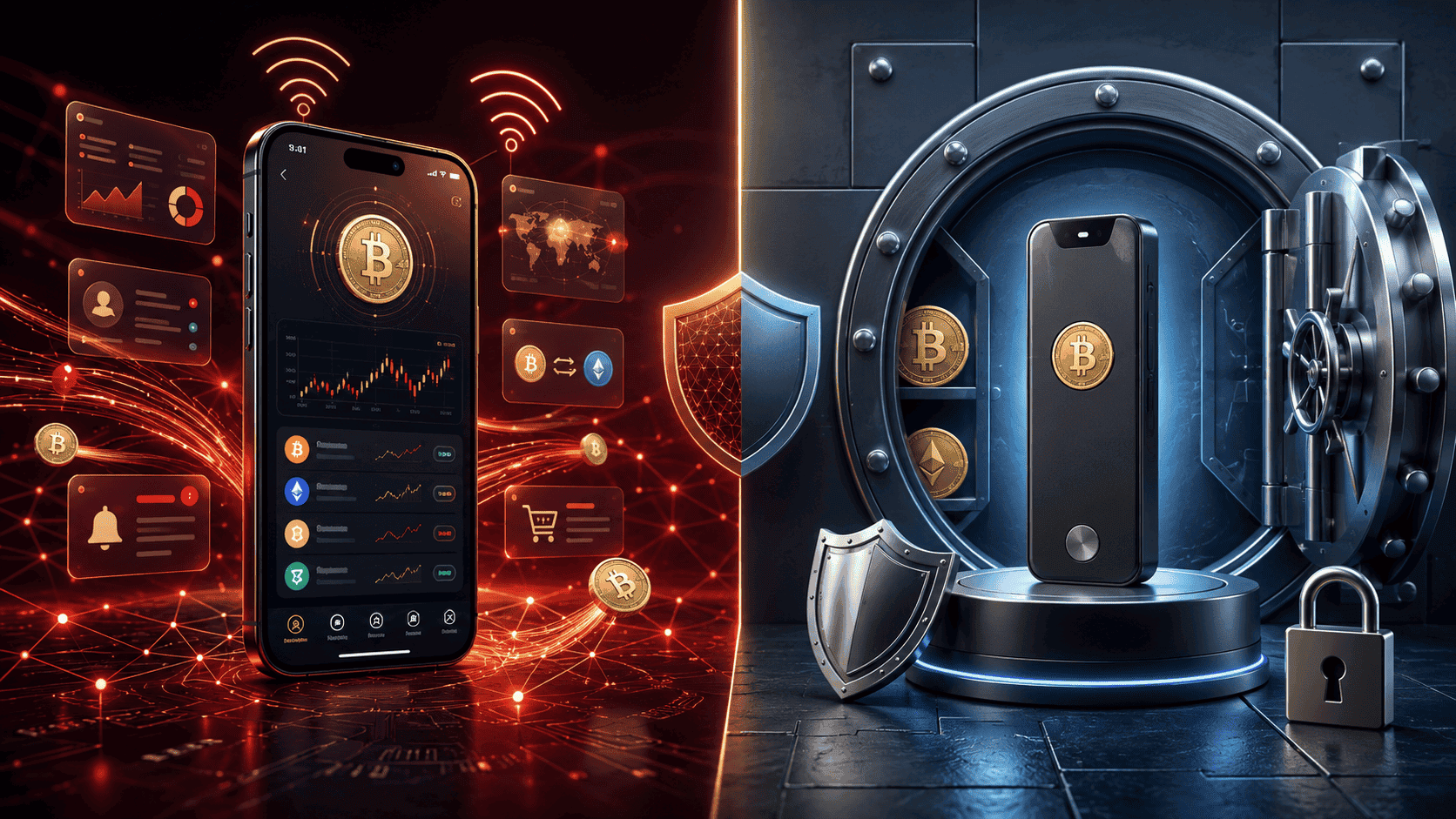
A hot wallet stores cryptocurrency private keys on a device that’s connected to the internet or that frequently connects to the internet. The category includes mobile wallet apps like MetaMask, Trust Wallet, and Phantom; desktop wallets like Exodus and Electrum; browser extension wallets; and the trading accounts at centralised exchanges like Coinbase, Binance, and Kraken. Anywhere your private keys exist on a system that the internet can reach is a hot wallet.
A cold wallet stores cryptocurrency private keys on a device that’s deliberately isolated from internet connectivity. The keys never touch internet-connected systems during normal operation. The category includes dedicated hardware wallets like Ledger, Trezor, and Coldcard; paper wallets where keys are physically printed and stored; and air-gapped computers that have never been connected to a network and are used exclusively for crypto operations.
The technical difference matters because internet-connected systems face a fundamentally larger attack surface than isolated systems. Hot wallets can be compromised through malware on the host device, phishing attacks that trick users into revealing keys, browser exploits, network-based attacks, and various other vectors that don’t exist for cold storage. Cold wallets eliminate most of these threats by virtue of physical isolation.
The CryptoBandits malware demonstrates this principle in action. The malware works by monitoring the Windows clipboard and substituting wallet addresses. For a user with a hot wallet on the infected Windows machine, copying any wallet address to send funds triggers the substitution attack. For a user with a hardware wallet, the same copy-paste action might transfer the address from a clipboard to a Ledger or Trezor screen for confirmation, but the actual private key signing happens on the isolated device. Even if the user pastes a substituted address, the hardware wallet’s confirmation screen shows the actual destination, giving the user a chance to detect the substitution before approving the transaction.
How Hot Wallets Work
Hot wallets prioritise convenience and accessibility over maximum security. Understanding the trade-offs requires examining how they actually function.
Mobile wallet apps store private keys directly on the smartphone, typically encrypted with a passphrase or biometric authentication. The encryption protects the keys at rest, but during active use, the keys exist in the device’s memory in unencrypted form. Anything that can read that memory, whether malware, exploits in other apps, or physical access to an unlocked phone, can potentially extract the keys.
Browser extension wallets like MetaMask operate in a similar pattern but with even broader attack surface. The keys are stored within the browser’s storage system, encrypted with a password. During normal use, the keys must be decrypted to sign transactions. Browser exploits, malicious extensions, phishing pages that trick users into entering passwords, and various other web-based attacks can all potentially compromise the keys.
Centralised exchange accounts are technically not wallets at all from the user’s perspective. The user doesn’t actually control private keys. The exchange controls the keys and provides the user with an account interface that displays balances and processes transactions. This arrangement has its own security characteristics, mostly dependent on the exchange’s security practices rather than the user’s. Mt. Gox, FTX, Celsius, and many other failed exchanges demonstrated that exchange-held funds can be lost through corporate malfeasance, hacks, or operational failures regardless of how secure the user’s personal devices are.
For everyday transactions, hot wallets provide significant convenience. Sending crypto from a mobile wallet takes seconds. Connecting to DeFi protocols, NFT marketplaces, or other on-chain applications is straightforward. The user experience matches what most people expect from modern financial apps.
The trade-off is accepting a higher attack surface. Sophisticated malware like CryptoBandits, targeted phishing campaigns, browser exploits, and various other threats can all potentially extract keys from hot wallets. Users running hot wallets need to maintain rigorous operational security practices including avoiding suspicious links, only installing software from verified sources, keeping operating systems and security software updated, and being suspicious of any communication that asks for sensitive information.
How Cold Wallets Work
Cold wallets approach the security problem differently by isolating private keys from the internet entirely.
Hardware wallets are the most common form of cold storage for active users. Devices like Ledger Nano X, Trezor Safe 5, and Coldcard look like USB drives but contain specialised secure hardware designed specifically for cryptocurrency key management. The private keys are generated on the device itself, never exposed to internet-connected computers, and stored within tamper-resistant secure elements that physical attackers cannot easily extract.
When users want to transact, the workflow involves connecting the hardware wallet to a computer or mobile device, initiating the transaction through software running on the connected device, and approving the transaction through physical button presses on the hardware wallet itself. The private key never leaves the hardware wallet during this process. The software on the connected computer prepares the transaction, sends it to the hardware wallet for signing, the hardware wallet signs internally and returns only the signed transaction, and the connected computer broadcasts the signed transaction to the blockchain network.
This workflow defeats most malware-based attacks. Even if the connected computer is fully compromised, the malware can only see and manipulate what the user sees and approves. The private keys remain isolated on the hardware wallet. An address substitution attack like CryptoBandits would still appear on the hardware wallet’s confirmation screen, where the user can detect the discrepancy before approving the transaction.
Paper wallets represent the simplest form of cold storage. The user generates a private key offline, typically on an air-gapped computer or through specialised paper wallet generation tools. The key is then printed on paper or written down by hand. The physical paper becomes the only record of the key. As long as the paper isn’t photographed, scanned, or otherwise digitised, the key has never existed on any internet-connected system.
Paper wallets work well for long-term holding but become impractical for active transactions. Spending crypto from a paper wallet typically requires importing the key into a hot wallet, at which point the security advantages of paper storage disappear. For users who want to truly never touch the funds for years or decades, paper wallets can be appropriate. For users who want any operational flexibility, hardware wallets provide better balance.
Air-gapped computers represent the most paranoid approach. A computer that has never connected to the internet and that’s used exclusively for cryptocurrency operations provides extremely high security but at the cost of significant operational complexity. The approach is used by extreme high-net-worth holders, some institutional custody operations, and security researchers, but is impractical for most individual users.
When to Use Hot Wallets
Hot wallets make sense for specific use cases despite their security limitations.
Small amounts intended for active transactions belong in hot wallets. If you’re regularly buying coffee with crypto, trading on decentralised exchanges, or participating in DeFi protocols, the convenience of hot wallet access matters more than maximum security for these small amounts. The general principle is keeping in hot wallets only what you can afford to lose if the wallet is compromised.
DeFi participation effectively requires hot wallets in most cases. While some hardware wallets support DeFi protocols through connected interfaces, the workflow is less convenient than browser-based hot wallet usage. For users actively yield farming, lending, or providing liquidity to DEXes, the operational requirements favor hot wallets despite the security trade-offs.
NFT trading and gaming applications similarly require hot wallet flexibility. The user experience for these applications assumes a hot wallet connection that can quickly approve transactions. Users who want to participate in NFT markets or blockchain games typically accept the security implications of hot wallet usage for the holdings they actively trade.
Centralised exchange accounts make sense for users who actively trade. Moving funds between exchange accounts and external wallets adds friction and fees that active traders typically want to avoid. The trade-off is accepting that exchange-held funds depend on the exchange’s security and solvency.
For all hot wallet use cases, the practical rules involve keeping amounts limited, using strong unique passwords, enabling all available two-factor authentication, never sharing seed phrases or private keys with anyone for any reason, being extremely skeptical of any communication asking for sensitive information, and maintaining rigorous operational security on devices that hold hot wallets.
When to Use Cold Wallets
Cold wallets become appropriate for any meaningful amount that isn’t actively needed for daily transactions.
Long-term holdings belong in cold storage. If you’ve decided to hold Bitcoin, Ethereum, or other major cryptocurrencies for years rather than actively trading them, the holdings should be in cold wallets. Hardware wallets like Ledger and Trezor provide the appropriate balance between security and accessibility for buy-and-hold strategies. The keys remain isolated from internet attacks, but you can still access the holdings when needed to sell or move them to different storage.
Significant amounts should always be in cold storage. The threshold of “significant” depends on individual circumstances, but a useful guideline is that any amount you couldn’t comfortably lose belongs in cold storage. For some users this might be $10,000. For others it’s $100,000. For institutional holders or high-net-worth individuals it might be millions. Whatever the specific number, the principle is that meaningful capital deserves meaningful security protections.
Retirement-focused holdings make particularly strong cases for cold storage. If you’re accumulating crypto as part of long-term financial planning, the holdings will likely sit untouched for decades. The convenience advantages of hot wallets are irrelevant for funds that won’t be transacted for years. The security advantages of cold storage are highly relevant for funds you’re depending on for long-term financial security.
Recovery scenarios favour cold wallets significantly. If a hot wallet is compromised, the funds are typically gone within minutes of the compromise. There’s no recovery mechanism. Cold wallets compromised through physical theft (which is much rarer than software compromise) still typically require the attacker to know the device PIN or seed phrase to actually extract funds. The recovery window is dramatically larger for cold wallets, providing time for users to detect issues and move funds before they’re stolen.
For any user holding more than minimal amounts of cryptocurrency, the practical recommendation is hybrid storage. A small portion of total holdings in hot wallets for active transactions, with the majority of holdings in cold storage. The exact allocation depends on transaction frequency, total holdings, and individual risk tolerance, but the principle of separation between operational funds and long-term holdings applies broadly.
The Specific Hardware Wallet Choice
For users moving to cold storage, several hardware wallet options have established themselves as the leading choices.
Ledger Nano X provides Bluetooth connectivity that lets it function with mobile devices, supports thousands of cryptocurrencies, and includes a secure element chip designed specifically for key protection. The product has been the market-leading hardware wallet for several years. The 2020 Ledger customer data breach (where customer addresses and contact information were leaked, though no funds were ever compromised) damaged the brand’s reputation but didn’t affect the security of the actual hardware.
Trezor Safe 5 offers strong security with a different design philosophy emphasising open-source software and transparency. Trezor devices don’t use secure element chips, instead relying on general-purpose microcontrollers with security implemented through software. The trade-off provides better transparency (users can verify the security implementation) at the cost of slightly different attack surface characteristics.
Coldcard focuses specifically on Bitcoin and emphasises maximum security including features like PSBT (Partially Signed Bitcoin Transactions) support, secure encrypted backups, and physical attack resistance. The product is more complex to use than Ledger or Trezor but provides Bitcoin-specific features that some users value highly.
For users new to hardware wallets, Ledger and Trezor provide the best balance between security, supported cryptocurrencies, and user experience. The choice between them depends on specific preferences: Ledger for broader crypto support and mobile integration, Trezor for open-source transparency and Bitcoin-focused use. Either choice provides dramatically better security than hot wallet alternatives.
The cost of hardware wallets ($50-200 for entry-level models, up to $300-500 for advanced models) is small relative to the security they provide. For any user holding cryptocurrency in amounts that would be meaningful to lose, the hardware wallet investment pays for itself by eliminating most of the attack vectors that target hot wallets.
What Actually Works for Most Users
For typical cryptocurrency holders, the practical approach combines elements of both storage categories based on use cases.
A small hot wallet (10-20% of total holdings or less, depending on activity level) handles daily transactions, DeFi participation, and active trading. This wallet exists on a mobile device or browser extension that you use regularly. Security focuses on operational practices: strong passwords, two-factor authentication, avoiding suspicious links, keeping software updated.
A hardware wallet holds the bulk of long-term holdings. This wallet only connects to internet-connected devices when you need to make transactions. The hardware wallet provides physical isolation that defeats most malware-based attacks. The trade-off is slightly less convenience for transactions, but the security benefit is substantial.
A separate seed phrase backup, stored physically in a secure location, allows recovery if the hardware wallet itself is lost or damaged. The backup should be in a different physical location than the hardware wallet to protect against scenarios like house fires or theft.
For very large holdings, additional layers of security might include multi-signature setups (where multiple devices must approve transactions), distributed key storage (where different parts of the seed phrase are stored in different locations), and time-locked transactions that require waiting periods before funds can move.
The specific configuration matters less than the principle: don’t store significant amounts in hot wallets, do maintain proper backups, and do treat hardware wallets as the appropriate solution for the majority of crypto holdings.
The Microsoft CryptoBandits malware will not be the last sophisticated crypto-targeting threat. New attacks will continue emerging as the cryptocurrency ecosystem grows. The fundamental security principle of separating actively-used funds from long-term holdings through appropriate wallet selection provides durable protection against most categories of attack. Users who implement this principle today are positioned to navigate future threats with their holdings intact. Users who don’t are accepting risks they may not fully understand until the moment those risks materialise.
Disclaimer: This article is for informational purposes only and does not constitute financial or security advice. Cryptocurrency investments carry significant risk. Always conduct your own research before making any investment decisions about security practices.