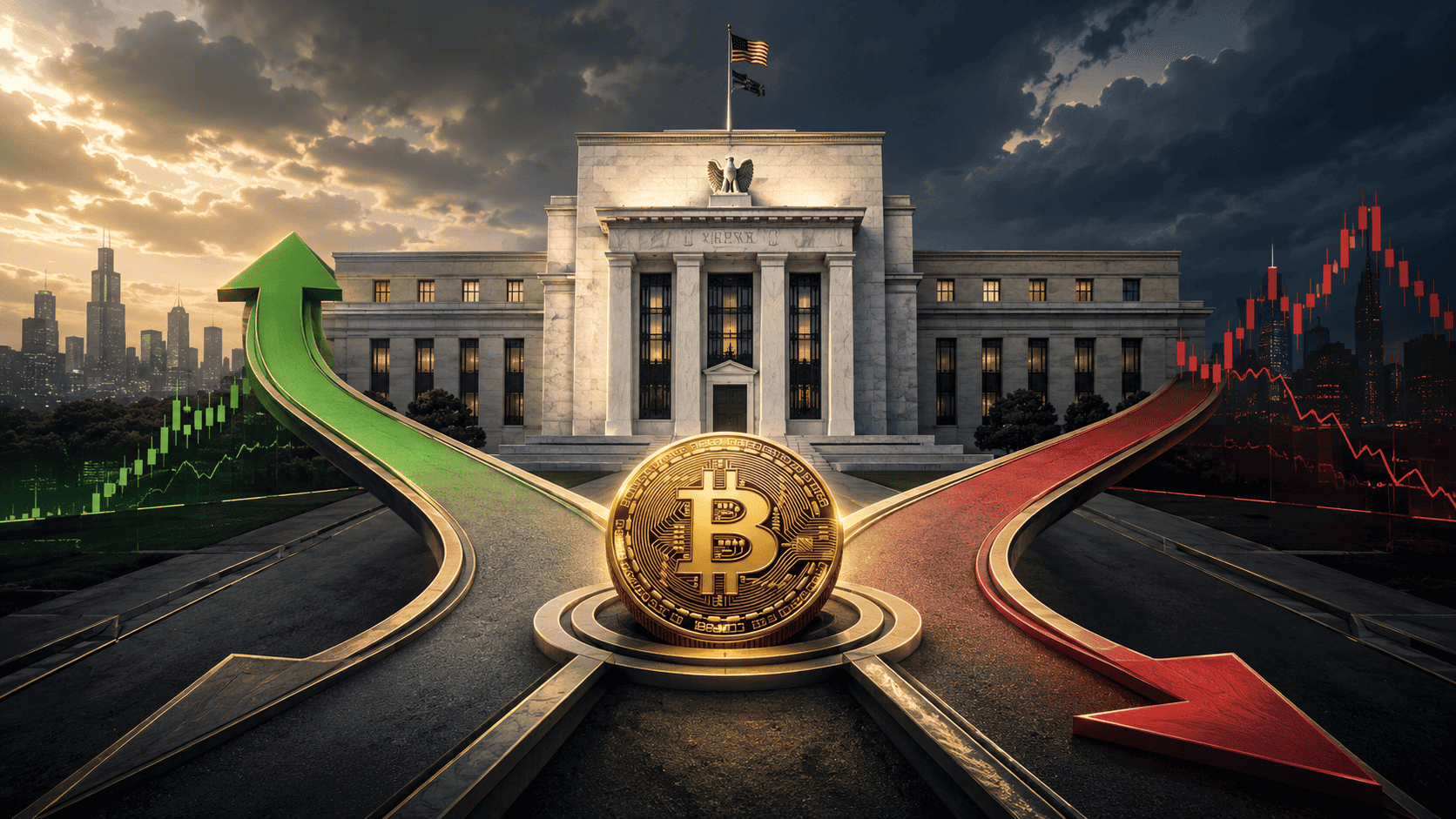
Kevin Warsh took the oath of office as Chairman of the Federal Reserve on Friday. He’s 45. He’s a former Morgan Stanley banker and Bush-era Fed governor. He holds over $100 million in personal investments across more than 20 blockchain companies. And the decisions he makes over the next 12 months will likely have more impact on Bitcoin’s price than any ETF filing, exchange listing, or protocol upgrade.
The crypto industry celebrated when Warsh was confirmed. A Fed Chair who personally holds crypto, calls Bitcoin a “legitimate macro asset,” and has argued that AI-driven productivity gains justify lower interest rates sounded like the best-case scenario for risk assets.

Then reality intervened. Inflation data came in hot. Oil remains above $100. The Iran conflict drove energy prices higher for three months before the recent ceasefire. The CPI report topped expectations at 3.8%. The PPI ran even hotter.
Now 68% of traders on the CME FedWatch tool are pricing in at least a 25 basis point rate hike by December. Bank of America says rate cuts won’t arrive until the second half of 2027. The market that was excited about a crypto-friendly Fed Chair is now worried he might be forced to raise rates instead.
And one analyst is saying everyone has it wrong.
The Contrarian Case for Rate Cuts
Lawrence Lepard, a market analyst and investor who has been accurate on several major macro calls, posted his prediction shortly after Warsh’s swearing-in ceremony. His thesis is straightforward: Warsh will cut rates, and he’ll use two specific justifications to do it.
The first justification is AI productivity. Before he was nominated to lead the Fed, Warsh argued publicly that advances in artificial intelligence would boost economic productivity enough to push inflation down naturally. Higher productivity means more goods and services produced per worker, which puts downward pressure on prices. If Warsh genuinely believes AI is a deflationary force, he has intellectual cover to cut rates even while inflation remains above the Fed’s 2% target.
The second justification is transitory war inflation. The Iran conflict sent oil prices above $100 and drove energy-related inflation higher throughout the first quarter of 2026. Lepard argues Warsh will frame this inflation as temporary, caused by a geopolitical event rather than by underlying economic overheating. If the US-Iran peace deal holds and oil prices decline, Warsh can point to falling energy costs as evidence that the inflation spike has passed.
Lepard noted that comments from Treasury Secretary Scott Bessent and White House Economic Council Director Kevin Hassett both support the rate-cut thesis. At the swearing-in ceremony, Trump himself said, “We want to stop inflation, but we don’t want to stop greatness,” framing the national debt challenge as one to be solved through growth rather than tighter monetary policy.
That language is a barely veiled signal for lower rates.
The Case for Rate Hikes
The consensus view on Wall Street is less optimistic about easy money.
Headline CPI came in at 3.8% year-over-year, above the 3.7% expected by economists. Core CPI, which strips out volatile food and energy, climbed 2.8%. Both readings are well above the Fed’s 2% target and moving in the wrong direction.
Oil remains above $100 despite progress in the ceasefire with Iran. Shelter inflation, one of the stickiest components of CPI, doubled in April. The labor market remains tight. Consumer spending has held firm. GDP growth is tracking around 2%.
In that environment, the textbook Fed response is to hold rates steady or raise them, not cut. The current Federal Funds rate is between 3.50% and 3.75% following the cuts implemented in late 2024 and 2025. Markets are now pricing in the possibility that those cuts were premature and may need to be partially reversed.
TheStreet’s analysis noted that while Warsh is viewed as market-friendly, immediate rate cuts seem unlikely given the inflation backdrop. The consensus among Fed watchers is that Warsh will prioritize credibility in his first few months, demonstrating independence from political pressure before potentially easing later if conditions improve.
The Iran peace process is the key variable. If the ceasefire holds and oil drops back below $90, the inflation outlook changes dramatically. If it collapses and oil spikes above $110, rate hikes become almost inevitable regardless of who sits in the Chair.
Why Crypto Cares So Much About Interest Rates
For anyone wondering why a Federal Reserve interest rate decision matters for their Bitcoin or Ethereum holdings, the connection is direct.
Lower interest rates make borrowing cheaper, push investors out of safe assets like Treasury bonds (which yield less when rates drop), and increase appetite for riskier investments, including stocks and crypto. Every major crypto rally in recent history has coincided with periods of loose monetary policy.
Higher interest rates do the opposite. They make risk-free savings more attractive, increase borrowing costs, and pull capital away from speculative assets. Bitcoin’s worst drawdowns in 2022 and 2025 both coincided with aggressive Fed tightening.
Bitcoin’s correlation with traditional risk assets has been running above 80% for most of 2026. That means BTC is trading more like a high-beta tech stock than a store of value. When the S&P 500 rallies on rate-cut expectations, Bitcoin rallies too. When bond yields spike on inflation fears, Bitcoin sells off.
In that framework, the difference between a Fed that cuts rates in the second half of 2026 and a Fed that hikes rates could be the difference between Bitcoin at $100,000 and Bitcoin at $65,000. That’s why crypto traders are watching Warsh’s every word.
Warsh’s Crypto Holdings Add a Unique Dimension
No previous Fed Chair has entered office with significant personal exposure to the asset class most directly affected by their interest rate decisions.
Warsh disclosed holdings in over 20 blockchain companies during his confirmation process. His personal crypto exposure exceeds $100 million. He has publicly described Bitcoin as a “legitimate macro asset” and has expressed support for private stablecoins over a central bank digital currency.
Those positions made the crypto industry cheer. But they also create a unique tension. A Fed Chair who personally benefits from loose monetary policy (which tends to boost crypto prices) deciding whether to cut rates creates an appearance of conflict that his critics will inevitably raise.
Warsh addressed this during his confirmation hearing by emphasizing Fed independence. “I want to build credibility by doing the right thing, not the politically popular thing,” he said. Trump echoed the sentiment at the ceremony, saying he wants Warsh to “be totally independent.”
Whether that independence holds when Trump’s desire for lower rates collides with inflation data arguing for higher ones will be one of the defining dramas of the second half of 2026. For crypto, it’s the single most consequential variable in the market right now.
What This Means for Your Crypto Portfolio
The honest answer is that nobody knows what Warsh will do. The market is pricing in hikes. An analyst is calling for cuts. The inflation data argue for patience. The White House wants lower rates. The situation in Iran could change everything in either direction.
What investors can do is understand the scenarios and position accordingly.
If Warsh cuts rates in the second half of 2026, risk assets, including Bitcoin and altcoins, would likely rally sharply. Lower rates reduce the opportunity cost of holding non-yielding assets, push capital into riskier investments, and improve the economic outlook for growth-dependent sectors.
If Warsh holds rates steady, current range-bound trading will continue. Bitcoin stays in the $74,000 to $82,000 corridor. Altcoins grind sideways. The market waits for the next catalyst.
If Warsh raises rates, expect a selloff across crypto and equities. Bitcoin could retest $70,000 or lower. Altcoins would get hit harder. The “crypto-friendly Fed Chair” narrative would collapse overnight.
The first FOMC meeting under Warsh’s leadership is June 17-18. No rate change is expected at that meeting, but his statement and press conference will be the most closely analyzed Fed communication in crypto history. Every word will be parsed for clues about whether cuts, holds, or hikes are coming.
FAQ
Who is Kevin Warsh and why does crypto care?
Kevin Warsh was sworn in as Federal Reserve Chairman on May 22, 2026. He holds over $100 million in personal crypto investments across 20+ blockchain companies, calls Bitcoin a “legitimate macro asset,” and supports private stablecoins. His interest rate decisions will directly impact crypto prices, making him the most consequential figure for the market right now.
Will the Fed cut or raise rates in 2026?
Markets are split. About 68% of traders price in at least a 25-basis-point rate hike by December 2026. Analyst Lawrence Lepard argues Warsh will cut instead, citing AI productivity gains and the potential for war-related inflation to be treated as transitory. The Iran peace process is the key variable: if oil drops below $90, cuts become more likely; if tensions reignite and oil spikes, hikes become almost certain.
When will we know what Warsh plans to do?
The first FOMC meeting under Warsh’s leadership is June 17-18. While no rate change is expected at that meeting, his statement and press conference will provide the clearest signal yet about whether the Fed is leaning toward cuts, holds, or hikes for the remainder of 2026.
Disclaimer: This article is for informational purposes only and does not constitute financial advice. Cryptocurrency investments carry significant risk. Always conduct your own research before making any investment decisions.