Four years ago, regulators killed Meta’s stablecoin. Libra was too ambitious. Diem was too late. Both died under the weight of congressional opposition and global regulatory pressure. Mark Zuckerberg walked away from crypto entirely.
Now Meta is back. Quietly. Through the back door.


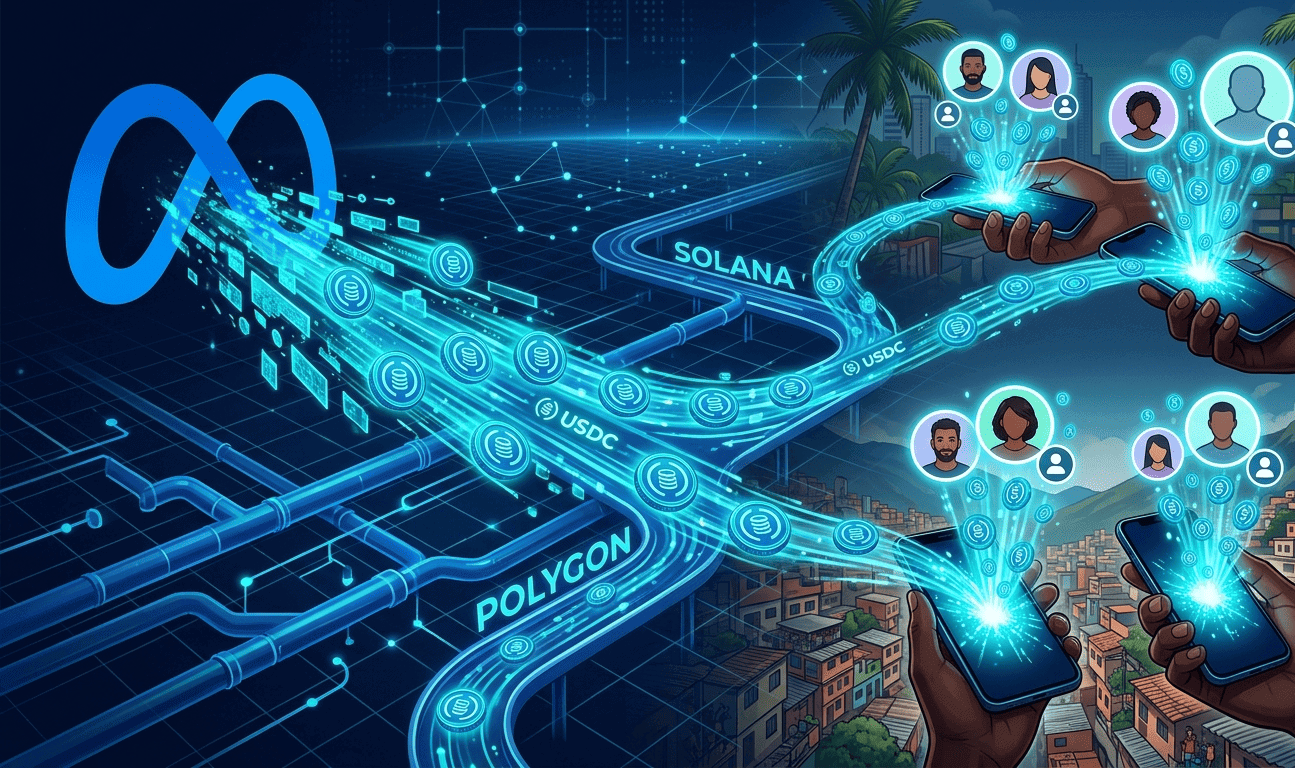
Meta launched stablecoin payouts for creators on Tuesday, allowing select users in Colombia and the Philippines to receive their earnings in USDC on either the Solana or Polygon blockchain. Stripe handles the infrastructure. Circle provides the stablecoin. Meta is not issuing its own token this time. It learned that lesson the hard way.
The pilot is small. The implications are not. Polygon CEO Marc Boiron told Fortune the programme is expected to expand to more than 160 countries by the end of the year. If that happens, Meta becomes one of the largest stablecoin distribution pipelines for individual earners on the planet.
How Does It Work?
Simple. Creators who receive a notification in their Facebook app can enter a supported crypto wallet address into their payout settings. When their earnings are ready, Meta sends USDC directly to that wallet on either Solana or Polygon. The creator can hold it, swap it, or convert it to local currency through a third-party exchange.
Supported wallets include MetaMask, Phantom, and Binance. Stripe handles the backend, converting Meta’s payment into USDC and routing it to the right blockchain. Tax reporting comes from both Meta (standard earnings forms) and Stripe (crypto-specific transaction documentation).
Meta does not provide a built-in off-ramp. If a creator in Manila wants to convert their USDC to Philippine pesos, they need to send it to an exchange like Binance or Coins.ph and sell it there. That is an extra step, but it is still faster and cheaper than the alternative.
Why Colombia and the Philippines?
Because those are two countries where the existing payment system fails creators the most.
Meta said it chose these markets because many creators there earn in US dollars but face high fees and slow bank transfers when converting payments to local currency. A wire transfer from the US to a Colombian bank account can take three to five days and cost $25 to $40 in fees. A USDC transfer on Solana takes seconds and costs fractions of a cent.
For a creator earning $200 per month from Facebook or Instagram, a $40 wire fee eats 20% of their income. Stablecoins cut that cost to nearly zero. That is not an incremental improvement. It changes whether the income is worth earning at all.
The Philippines is the world’s fourth-largest recipient of remittances, with over $39 billion flowing into the country annually. Colombia receives roughly $10 billion. Both countries have young, mobile-first populations that are already comfortable with digital payments. Stablecoins fit naturally into how people there already move money.
Why Is This Different From Libra?
Libra was Meta trying to create a new global currency controlled by a consortium it led. Governments saw it as a threat to monetary sovereignty. Central bankers panicked. Congress held hearings. The project died.
This time Meta is doing the opposite. A Meta spokesperson told Decrypt: “We are not issuing a Meta stablecoin.” The company is using Circle’s USDC, a regulated stablecoin that already complies with US and EU rules. Stripe handles the payments infrastructure. Solana and Polygon handle the settlement. Meta is just the distribution channel.
That is a much safer approach. Instead of building a new financial system from scratch and daring regulators to stop it, Meta is plugging into the existing stablecoin infrastructure that somebody else already built and somebody else already got approved. Less ambition, less risk, and crucially, less regulatory surface area.
The timing helps too. Libra launched under a hostile US regulatory environment. Meta’s USDC payouts are launching under a Trump administration that is openly pro-crypto, with a stablecoin bill working through Congress and an SEC chair who just outlined a new framework for digital assets.
What Does This Mean for Stablecoins?
Meta has 3.65 billion monthly active users across Facebook, Instagram, WhatsApp, and Messenger. Even if only a fraction of its creator base opts into stablecoin payouts, the volume would be enormous. Facebook alone has over 200 million creators globally. Instagram has millions more.
The total stablecoin market exceeds $320 billion with annual transaction volumes around $46 trillion. Adding Meta’s creator economy to that pipeline does not change the size of the market overnight. But it changes who uses stablecoins. Today, stablecoin users are mostly crypto traders and DeFi participants. Tomorrow, they could be Instagram influencers, Facebook page owners, and WhatsApp Business accounts.
Solana Foundation head of product Catherine Gu framed it directly: “Solana has emerged as the default place for internet-scale payments.” If Meta’s programme scales to 160+ countries as Polygon predicts, both Solana and Polygon would see a significant increase in daily transaction volume and active addresses from non-crypto-native users.
For Circle, this is validation. USDC was built to be the stablecoin that institutions trust. Having the world’s largest social media company choose USDC over USDT, over PayPal’s PYUSD, over every other option, is the strongest endorsement Circle has received since Coinbase listed it.
The Quiet Return
Meta tried to change money with Libra and got crushed. Now it is changing payments with USDC and nobody is stopping it. The difference is not the technology. It is the strategy. Libra tried to replace the system. USDC works within it.
If the 160-country expansion happens by December, millions of creators who have never touched crypto will receive their first stablecoin payment from a Facebook notification. They will not think of it as crypto. They will think of it as getting paid faster. And that might be the most bullish thing that has happened to stablecoins all year.
Frequently Asked Questions
Is Meta launching its own cryptocurrency?
No. Meta is using Circle’s USDC stablecoin for creator payouts, not issuing its own token. The company previously attempted to launch Libra (later renamed Diem) but shut the project down in 2022 after regulatory opposition. A Meta spokesperson confirmed they are “not issuing a Meta stablecoin.”
Which countries can receive Meta’s stablecoin payouts?
Currently only select creators in Colombia and the Philippines are eligible. Polygon CEO Marc Boiron told Fortune the programme is expected to expand to more than 160 countries by the end of 2026.
How do Meta stablecoin payouts work?
Eligible creators receive a notification in their Facebook app. They enter a supported wallet address (MetaMask, Phantom, or Binance) into their payout settings. Meta sends earnings as USDC on either the Solana or Polygon blockchain via Stripe. Creators can hold, swap, or convert to local currency through a third-party exchange.